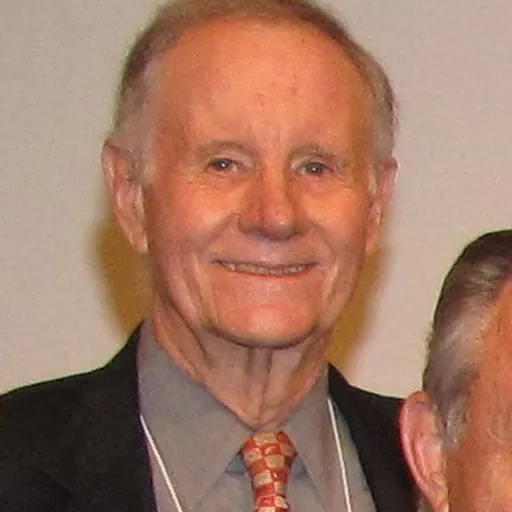
About Joseph Blatchford
Lived 1934 – 2020 (aged 86). Joseph Blatchford was an American civil servant.
Joseph Blatchford (June 7, 1934 – October 7, 2020) was the third Director of the United States Peace Corps succeeding Jack Vaughn. Blatchford was appointed Peace Corps Director in 1969 by President Richard Nixon.
Early life and education Blatchford was born in Milwaukee, Wisconsin on June 7, 1934. Blatchford attended Christian Science Sunday School growing up; however, in a profile published in the New York Times in 1970 Blatchford went on tennis tours of Europe Blatchford then attended Berkeley Law and completed his JD. This started Blatchford, then a student at University of California, thinking about what could be done to restore the traditional friendship in the hemisphere. "Playing tennis exhibitions, trying to use sports and music as a door opener, handles as they say, to get to know students, politicians, labor leaders. We came back rather critical of American foreign policy and American ways of doing things in these countries," said Blatchford. Burdick became an advisor to Accion.
The New York Times reported on January 28, 1966, that Blatchford had been invited by business leaders in Rio de Janeiro to help organize activities in Brazil based on the Venezuelan model.
Blatchford ran Accion for nine years and at one time during his tenure had 300 volunteers in Latin American and an annual budget of $2 million.
Peace Corps Director
In 1968 Blatchford won the Republican nomination for the House of Representatives
In May 1969 Blatchford was appointed Peace Corps director by President Richard Nixon.
Serving in the Nixon administration Blatchford was an unusual Nixon appointee.
Blatchford had the confidence and support of President Nixon as Peace Corps Director. According to a May 1989 Washington Post story by Marci McDonald, the incident prompted Nixon to joke that he should send Agnew into then-war-torn Cambodia armed with a tennis racket.
"Untying some Apron Strings" Blatchford immediately set about making changes in Volunteer support services, eliminating some, changing others, and consolidating other services. Among the services eliminated were Peace Corps booklockers, the pre-service clothing allowance, and payment for unaccompanied air freight and footlockers. Blatchford said the purpose of "new directions" was to revitalize the Peace Corps by reversing declining trends in both the number of applicants applying to serve as volunteers and the number of requests from host countries for volunteers.
Blatchford also wanted to increase minority recruitment.
C. Payne Lucas and Kevin Lowther in their seminal book about the Peace Corps from 1960 to 1977, Keeping Kennedy's Promise, noted that although Blatchford said the Peace Corps could only survive by providing more technically skilled volunteers, the great majority of programs continued to be designed around generalists.
Vietnam protests Protests against the Vietnam war continued to affect the Peace Corps under Blatchford's administration just as it had under his predecessor, Jack Vaughn.
Meanwhile, Peace Corps volunteers who had completed their service joined protesters of the Vietnam war in the United States.
The New York Times reported on June 3, 1970, that Blatchford received petitions protesting the war signed by hundreds of volunteers serving in South Korea, Panama, Dominican Republic, and Guatemala.
Blatchford just like Director Vaughn before him believed that volunteers had every right to protest through the media at home as long as they did not publicly identify themselves with political issues in their host countries.
Merger of Peace Corps into Action On March 24, 1971, Nixon officially requested Congress to act on the plan for merging nine volunteer programs: the Peace Corps; VISTA and a small special program from the Office of Economic Opportunity; Foster Grandparents and the Retired Senior Volunteer Program from the Department of Health, Education, and Welfare; and the Service Corps of Retired Executives and the Active Corps of Executives from the Small Business Administration.
Blatchford endorsed the new agency unwilling to question any plan of President Nixon who Blatchford thought supported the Peace Corps. Blatchford believed that combining the Peace Corps with domestic programs like VISTA might shield it from critics of foreign aid by adding VISTA supporters to its constituency. Opposition to the merger was led by liberal Democrats who thought the reorganization would diminish volunteer interest in the various programs and permit the Administration to dismantle VISTA which had been under the Office of Economic Opportunity.
Budget crisis at the Peace Corps Historian Elizabeth Cobbs Hoffman, in her book All You Need is Love: The Peace Corps and the Spirit of the 1960s, says that Nixon had decided to dismantle the Peace Corps. "Our whole budget doesn't amount to half the price of a submarine," said Blatchford.
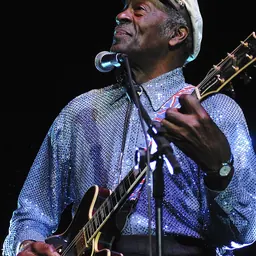
It was time for Blatchford to play hardball. In a memorandum announcing his decision, Blatchford called on staff members with over five years service to "relinquish their position so that others may serve." who hosted the program for a week. He spoke about his vision for the Peace Corps, and his belief in service, foreign aid, and cross-cultural understanding and partnership. In describing his philosophy, he said, “We simply present ourselves as people. We have a great faith that not with a government label or any religion or any ideology that we can come across. And not just on a tour, you know, or a goodwill thing. We find if we stay in a town or village overseas and really remain there, we become acculturated to them, and they to us, and we start working together, whether we’re building a school or putting in a water main, or training someone in a job, the cultural barriers start breaking down, and in the long run that’s maybe the way we’re going to find world peace.” Another guest on the same show with Blatchford was one of Lennon's idols, Chuck Berry, who dueted with Lennon on Berry's big hit "Memphis Tennessee" during the two hour program.
After Nixon's overwhelming victory in the presidential election in November 1972, Nixon called for the resignation of all his appointees.
Post governmental career In 1974, Blatchford helped Republican Houston Flournoy campaign for Governor of California. In 1974 Blatchford also looked into the California Senate race but found that money to promote a young candidate was unavailable.
In 1977, Blatchford founded his private law practice, Summit Communications, in the field of international trade and public affairs.
In 1978, Blatchford represented 13 defectors from Reverend Jim Jones' cult who were with Congressman Leo Ryan when he was killed at the airstrip near Jonestown in Guyana.
In 1983, Blatchford joined the law and lobbying Firm of O’Connor & Hannan, where he assisted his clients, including many foreign governments, in obtaining U.S. economic assistance and maintaining U.S. markets for their products.
In 1989, Blatchford was the principal lawyer for his firm representing Alfredo Cristiani, the president of El Salvador.
Blatchford was active in helping negotiate and obtain passage of the North American Free Trade Agreement (NAFTA), the Caribbean Basin Initiative (CBI), and the Andean Trade Preference (ATPA). Blatchford was also the co-founder of Caribbean/Latin American Action (CLAA), which fosters trade and economic growth development in the Caribbean Basin, and was the Deputy Undersecretary of the Department of Commerce.
Throughout his career, Blatchford received numerous honorary degrees and in 2019 he received the Albert Nelson Marquis Lifetime Achievement Award by Marquis Who's Who.
Personal life In 1967 Blatchford married the former Winifred A. Marich, The Blatchfords have four children: Andrea, Nicholas, and Antonia Blatchford, and Anwar McQueen. Joe has twin sisters. Beatrice Ballance is a television and stage actress. Barbara Winslow is a Psychotherapist. Blatchford is a serious opera and jazz fan. Joseph Blatchford died on October 7, 2020.
Don’t just read it —
keep it.
Full-length biographies made to live with: read them, listen on the way to work, watch them tonight.
- E-book
- Audio
- Video
Instant download · yours to keep · every purchase keeps this site free
Important facts
People in Joseph Blatchford's life
Named in this biography and alive at the same time




Related people
Same field, nearest in time
Contemporaries
People whose lives overlapped Joseph Blatchford's






Frequently asked questions
Who was Joseph Blatchford?
Director of the US Peace Corps
When was Joseph Blatchford born?
Joseph Blatchford was born on 7 June 1934 in Milwaukee.
When did Joseph Blatchford die?
Joseph Blatchford died on 7 October 2020.
What was Joseph Blatchford's occupation?
Joseph Blatchford was a civil servant.
What nationality was Joseph Blatchford?
Joseph Blatchford was American.
Sources & further reading
· Wikipedia: Joseph Blatchford
Cite this page
APA: Biography.guide. (2026). Joseph Blatchford. https://biography.guide/joseph-blatchford/
MLA: "Joseph Blatchford." Biography.guide, https://biography.guide/joseph-blatchford/.
Chicago: "Joseph Blatchford." Biography.guide. https://biography.guide/joseph-blatchford/.
Data last updated: 2026-09-20 · Spot an error? Report a correction.
Page generated 2026-09-27 05:09 UTC