
About Josef Weiss
Lived 1864 – 1945 (aged 80–81). Josef Weiss was a composer, philologist, historian, writer, pianist and archivist.
Josef Weiss (also Weiß, 5 November 1864 – 1945) was a Hungarian composer and pianist. He began his career as a concert pianist in 1877 at the age of 13. He performed in concert halls internationally through 1924, and was particularly admired for his performances of the works of Johannes Brahms, Frédéric Chopin, and Franz Liszt; the latter of whom was his teacher. He made several recordings for Berlin-based and Berlin music publisher Carl Simon published a number of his compositions. He was notably the first composer to write a film score for a German language film, writing music that accompanied the premiere of The Student of Prague in 1913. His piano score for that film was later orchestrated for presentations of that film at music festivals internationally in 2013. A victim of the Holocaust, he died while interned in the Budapest Ghetto in 1945.
Weiss was a gifted concert pianist who played best when in lower pressure situations. High stress environments had a negative impact on both his playing, and temperament. His other teachers there included Ferenc Erkel and Robert Volkmann. He then studied music composition at the Vienna Conservatory where one of his classmates and friends was Leoš Janáček.
Career as pianist, composer, and teacher 1911 shellac record made by Anker-Record with Weiss performing a work by Chopin. Like many musician composers of his era, Weiss divided his time between performing, composing, and teaching. After graduating from the Vienna Conservatory he joined the faculty of Theodor Kullak's music school, the Neue Akademie der Tonkunst. He returned periodically to New York, most notably serving as accompanist to Emma Nevada for performances at the Metropolitan Opera.
Weiss made his home in Germany, living in both Leipzig Several of his compositions were published by the Berlin music publisher Carl Simon, and he also made several recordings with the Berlin-based record company Anker-Record. He gained a reputation as a great interpreter of the works of Johannes Brahms, Frédéric Chopin, and Liszt.
In 1913 Weiss wrote a piano score to accompany the silent film The Student of Prague (Der Student von Prag); a groundbreaking work regarded as the first German art film. It was the first score ever composed for a German film, and Weiss performed the music at its premiere. Weiss had intended to orchestrate the score, but this never occurred. At the centennial of the film, his piano score was presented in an arrangement for chamber orchestra that was orchestrated by Bernd Thewes which was recorded for presentations of the film at international film festivals in 2013. At times, his behavior in concerts displayed eccentric and erratic behavior which historian Gregor Benko considered similar to, but more aggressive than, that of concert pianist Vladimir de Pachmann; another pianist of that period known for an odd demeanor in concerts. Accounts vary, with some sources claiming the men merely shouted and exchanged rude words with one another which ended with Weiss slamming the piano shut and leaving the rehearsal. Other accounts suggest that Weiss merely threw his score angrily on the ground, but not at Mahler. Regardless, Weiss's decision to leave the rehearsal required that the orchestra find a last minute soloist for their impending concert,
Later life and death With the rise of Nazi Germany Weiss fled Berlin in 1936 and made his way to the city of Košice. Unable to take much with him beyond what he could carry in a suitcase, he had little resources and was homeless. He had a nomadic existence over the next few years, spending time first in Italy and then in Switzerland before returning to Hungary in 1939 where he settled in Budapest.
Weiss was a victim of the Holocaust. He was involuntarily interned in the Budapest Ghetto and was one of the first 80 people placed in that Nazi ghetto in November 1944. He died in that ghetto in 1945 in unknown circumstances. It is possible that he may have died doing forced labor or participating in a death march.
Don’t just read it —
keep it.
Full-length biographies made to live with: read them, listen on the way to work, watch them tonight.
- E-book
- Audio
- Video
Instant download · yours to keep · every purchase keeps this site free
Important facts
People in Josef Weiss's life
Named in this biography and alive at the same time


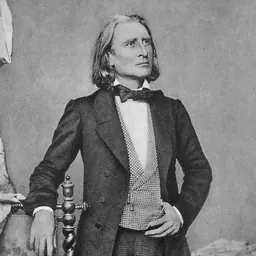




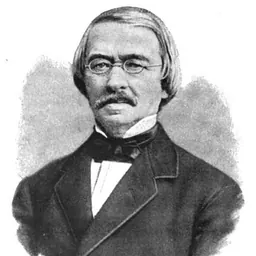
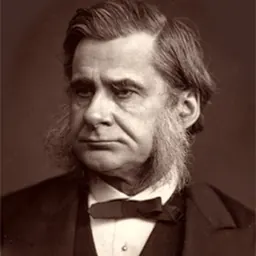
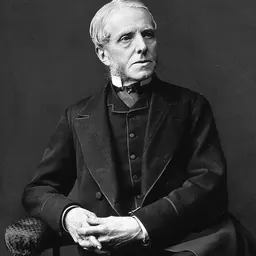
Related people
Same field, nearest in time
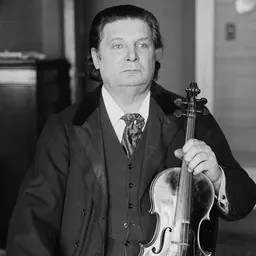
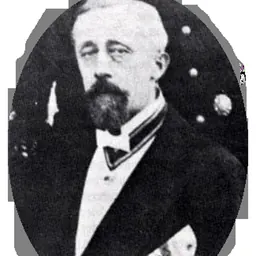
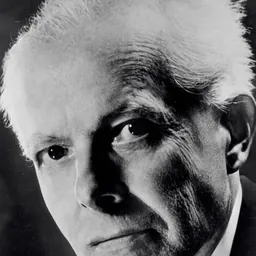

Contemporaries
People whose lives overlapped Josef Weiss's



Frequently asked questions
Who was Josef Weiss?
Hungarian-Jewish composer and pianist (1864–1945)
When was Josef Weiss born?
Josef Weiss was born on 12 March 1864 in Košice.
When did Josef Weiss die?
Josef Weiss died in 1945 in Budapest Ghetto.
What was Josef Weiss's occupation?
Josef Weiss was a composer, philologist, historian, writer, pianist and archivist.
Sources & further reading
Cite this page
APA: Biography.guide. (2026). Josef Weiss. https://biography.guide/josef-weiss/
MLA: "Josef Weiss." Biography.guide, https://biography.guide/josef-weiss/.
Chicago: "Josef Weiss." Biography.guide. https://biography.guide/josef-weiss/.
Data last updated: 2026-09-20 · Spot an error? Report a correction.
Page generated 2026-09-27 05:23 UTC