
About Josef Šíma
Lived 1891 – 1971 (aged 80). Josef Šíma was a French painter, visual artist, illustrator, graphic artist, translator and draftsperson.
Josef Šíma (baptised Josef Jan Radim Šíma; 19 March 1891 – 24 July 1971), often known in France as Joseph Sima, was a Czech-born French painter, draughtsman, printmaker, illustrator and designer of stained glass. Trained in Prague and active in the Czech avant-garde before settling in France, he became an intermediary between Czech and French modernism. He acquired French citizenship in 1926 but maintained close cultural and artistic ties with Czechoslovakia throughout much of his life.
Šíma was a founding member and artistic director of the French avant-garde group and magazine Le Grand Jeu. His meeting with the poets René Daumal and Roger Gilbert-Lecomte proved decisive for the development of his work. He designed the spiral cover of the magazine, provided drawings and other visual material, hosted meetings in his studio, exhibited with the group and painted portraits of its writers. The National Gallery Prague describes him as the group's chief artist during 1929–1931.
Although he is frequently classified as a Surrealist, Šíma's work developed within a wider field that included Poetism, Symbolism, non-figurative painting and the distinct metaphysical programme of the Grand Jeu. His recurring motifs include eggs, crystals, trees, rocks, floating torsos, lightning, mythical figures and luminous landscapes. His later paintings increasingly concentrated on light, transparency and the dissolution of visible form.
Šíma also maintained long creative friendships with poets, particularly Pierre Jean Jouve, and illustrated or designed more than seventy books in Czech and French. His late public work included the stained-glass windows of the Church of Saint-Jacques in Reims.
Life
Family and education
Šíma was born at Jaroměř in the Kingdom of Bohemia on 19 March 1891. He came from a family involved in the visual arts. His grandfather was a sculptor and stonemason, while his father, also named Josef Šíma, taught drawing at a craft school and pursued an interest in ethnography. Šíma was the eldest of three sons. The family moved to Brno in 1904 when his father was appointed to the State Industrial School.
After completing secondary school in 1909, Šíma studied for a year at the School of Applied Arts in Prague under Emanuel Dítě Jr. From 1910 to 1914 he attended the Academy of Fine Arts in Prague, where his teachers included Jan Preisler and Vlaho Bukovac. He also studied civil engineering at the Brno University of Technology between 1913 and 1915. His father hoped that the combination of artistic and technical education would prepare him to become a drawing teacher.
Šíma retained a lifelong interest in mathematics, geometry, architecture, machinery and scientific invention. As a child and young man he read the scientific romances of Jules Verne, an enthusiasm he later shared with the actor and writer Jiří Voskovec.
First World War and Brno avant-garde
Šíma's studies were interrupted when he was called into the Austro-Hungarian army in 1915. He served in Galicia, was wounded in the leg and, after recovering, was sent to the Italian front. Following the establishment of Czechoslovakia, he served briefly in the new Czechoslovak army and was posted to Slovakia in 1919.
After returning to Brno, Šíma worked as an assistant in technical drawing at the university and established a studio in Žabovřesky. In 1919 he helped found the Aleš Club of Visual Artists in Brno with Jaroslav Král, Eduard Milén, František Süsser and others, and was elected its secretary.
In 1920 he became a founding member of Devětsil, the Czech avant-garde association that brought together visual artists, writers, architects and theatre practitioners. In France he generally exhibited and published under the unaccented form “Joseph Sima”.
Pierre Jean Jouve and literary collaboration
Šíma's friendships with poets became central to his artistic life. One of the earliest and longest was with Pierre Jean Jouve. Their collaboration joined portraiture, landscape, book design and shared symbolic motifs, particularly the crystal, the storm, sacrifice and spiritual transformation.
Šíma made a portrait for Jouve's Prière in 1924 and provided engravings or illustrations for works including:
Beau Regard (1927); La Symphonie à Dieu (1930); Kyrie (1938); Le Paradis perdu (1938); Langue (1952), to which André Masson and Balthus also contributed.
His drawings and prints for Le Paradis perdu are considered among his principal achievements as a book illustrator. The National Gallery Prague later devoted an exhibition to this collaboration. His spiral design for the first issue became the group's emblem. Donna Roberts interprets the descending spiral as joining microcosm and macrocosm, the Grand Jeu's search for depersonalisation and its repeated imagery of descent towards an inner or metaphysical point.
Šíma was not merely an illustrator of literary ideas devised by the poets. His paintings helped shape the group's understanding of perception, participation and the instability of individual form. The National Gallery Prague describes his involvement with the Grand Jeu as one of the decisive impulses in his work.
Portraits
Between the late 1920s and early 1930s, Šíma painted approximately thirty portraits of friends and associates. Their pale faces often emerge from dark or indeterminate backgrounds. Sitters included Nadine Šíma, the photographer Berenice Abbott, Gilbert-Lecomte, Daumal, Hélène Povolozky and members of the Czech and French literary avant-gardes.
Several portraits were based on photographs taken by Harfaux. The translation from photograph to painting nevertheless transformed the subjects: modelling, outlines and surrounding space were altered so that the sitter appeared less as a stable individual than as a presence emerging from or returning to darkness.
In Šíma's 1929 portrait of Gilbert-Lecomte, the poet's face and upper body appear to dissolve beyond their own contours. Roberts reads the work as a visual equivalent of Gilbert-Lecomte's desired escape from fixed identity and his idea that personality was transitional rather than permanent.
The Musée des Beaux-Arts de Reims similarly describes Šíma's encounter with Daumal and Gilbert-Lecomte as the event through which he deepened the metaphysical dimension of his work. The museum holds a major group of his paintings, drawings and stained-glass designs.
Landscapes and Midi
Šíma's Midi (1928), formerly known as Midi le Juste or Méridien, depicts a vertical white form rising through a landscape of fields, rocks, shrubs and blue cloud-like shapes.
Rather than obeying ordinary gravity and perspective, the natural elements appear to float, separate and merge. Roberts interprets the painting as a visual formulation of the Grand Jeu's philosophy of participation: landscape is treated as a process of becoming rather than as a collection of stable forms.
The painting is owned by the Centre Pompidou and has been deposited at the Musée des Beaux-Arts de Reims since 2006.
Exhibitions and collective criticism
Šíma exhibited with Harfaux, Henry and Mayo at the first Grand Jeu group exhibition, held at the Galerie Bonaparte in Paris in June 1929. Gilbert-Lecomte and Daumal supplied theoretical texts for the catalogue.
His exhibition Figures humaines at the Galerie Povolozky in 1930 prompted a collective series of essays and tributes. Contributors included Daumal, Gilbert-Lecomte, Renéville, Pierre-Quint, Cassou, Ribemont-Dessaignes, Zdenko Reich, Audard, Henry and Delons. The texts were later reprinted in Cahiers du Sud.
Marc Thivolet later called Šíma the Grand Jeu's “official” artist, meaning that his paintings provided the clearest public visual form for the group's ambitions. Thivolet contrasted him with Henry, whose drawings recorded its intimate and comic life, and Harfaux, whose photographs and photomontages supplied its visual chronicle.
Relations with Surrealism
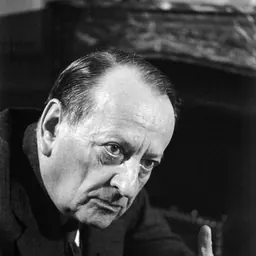
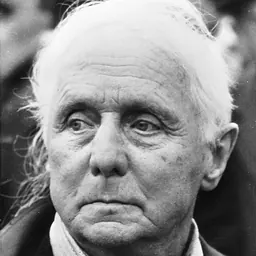
Šíma met André Breton and Max Ernst in the mid-1920s and remained close to the broader Surrealist milieu. The Grand Jeu, however, was not a subordinate branch of Breton's organisation. It shared Surrealism's rejection of rationalist convention, interest in dreams and desire to transform life, while placing greater emphasis on metaphysics, initiation, Hindu philosophy and the deliberate overcoming of individual consciousness.
Relations between the groups became openly hostile at the Bar du Château meeting of March 1929. Breton criticised the Grand Jeu's use of mystical and religious language and attempted to recruit several of its members individually. Šíma remained with the independent group until its dissolution in 1932.
It is therefore more precise to describe Šíma as an artist working in close proximity to Surrealism, and later frequently exhibited within its history, rather than as a straightforward adherent of Bretonian Surrealism.
Czech–French cultural relations
Šíma maintained extensive connections with the Czech avant-garde after becoming resident in France. He corresponded with Teige, Seifert, Voskovec, Hoffmeister and Zrzavý, met Czech artists visiting Paris and continued exhibiting in Czechoslovakia.
He wrote reports on Parisian exhibitions and modern art for Czech periodicals including Lidové noviny, Život, Disk, Stavba, Bytová kultura, Rozpravy Aventina, Volné směry and Světozor. These articles made him one of the principal intermediaries through whom developments in French art were communicated to Czech readers.
He joined the Brno branch of Devětsil in 1924 and became a member of Umělecká beseda in 1930. In 1932 he helped organise the international exhibition Poesie at the Mánes building in Prague.
Šíma's position was reciprocal. He promoted Czech poetry and visual art in France while introducing French modernism to Czech audiences. His work combined rather than abandoned the traditions of both countries: Czech Poetism and landscape painting remained active within a Parisian practice shaped by Purism, abstraction, Symbolism, Surrealism and the Grand Jeu.
Later life
The 1930s
Following the dissolution of the Grand Jeu, Šíma continued painting imaginative landscapes, portraits and mythological compositions. Classical myths became increasingly important during the political crises of the 1930s.
Works including The Return of Theseus (1933), The Fall of Icarus (1936) and The Despair of Orpheus reinterpreted myth without conventional archaeological settings. Isolated bodies, falling figures, labyrinths and barren spaces gave the ancient subjects contemporary psychological and political meanings.
The Return of Theseus was purchased by the city of Prague in 1936 and later entered the collection of the Prague City Gallery. The work's labyrinthine and homecoming imagery also provided the title for a later collection of Šíma's writings on modern art.
Šíma's 1930s work increasingly registered anxiety concerning the political future of Europe. Myth served less as escape from contemporary history than as a structure through which catastrophe, exile, sacrifice and return could be contemplated.
Second World War
After the outbreak of the Second World War in 1939, Šíma and his family moved to Treignac in the Corrèze department and later to a house near Nice. He participated in Resistance-related activity and lived under conditions in which his family was at times endangered.
He painted relatively little during the war. The occupation of Czechoslovakia, the destruction affecting his French and Czech circles and the deaths of several members of the Grand Jeu weighed heavily upon him.
After the Liberation, Šíma participated in the restoration of cultural relations between France and Czechoslovakia. In 1946 he organised or curated the exhibition Art tchécoslovaque 1938–1946 at the Galerie La Boëtie in Paris.
He travelled in Slovakia after the war with the painter František Hudeček, seeking new material in its landscapes and folklore. These contacts diminished after the Communist takeover of Czechoslovakia and the establishment of the Iron Curtain.
Return to painting
Šíma resumed sustained painting around 1950 after a period of reduced activity. His post-war work gradually simplified its repertory of objects and figures. Landscape remained present, but it was increasingly constituted through translucent planes, veils, horizons and emanations of light.
He participated in documenta 2 at Kassel in 1959. His work was also shown in major exhibitions of post-war abstraction, Czech modernism and Surrealism.
In 1967 he was appointed a Chevalier of the Ordre des Arts et des Lettres, with the decoration presented under the authority of André Malraux.
A major retrospective opened in 1968 at the Musée national d'art moderne in Paris and subsequently travelled to the National Gallery in Prague, the Moravian Gallery in Brno and the Slovak National Gallery in Bratislava.
The commission also brought Šíma's career into renewed contact with the city from which the founding writers of the Grand Jeu had emerged. The Musée des Beaux-Arts de Reims now holds paintings, drawings and numerous studies related to the windows.
Legacy
Šíma is regarded as an important mediator between the Czech and French avant-gardes and as one of the principal visual artists associated with the Grand Jeu. His work resists a simple division between Czech and French art, figuration and abstraction, or Surrealism and Symbolism.
Later scholarship has increasingly treated his Grand Jeu period as central rather than episodic. Roberts argues that his paintings gave the group's philosophy of participation its most developed visual form, while exhibitions in Brno and Prague have presented his encounter with its poets as a turning point in his career.
Don’t just read it —
keep it.
Full-length biographies made to live with: read them, listen on the way to work, watch them tonight.
- E-book
- Audio
- Video
Instant download · yours to keep · every purchase keeps this site free
Important facts
more
J. J. SimahPeople in Josef Šíma's life
Named in this biography and alive at the same time




Related people
Same field, nearest in time

Contemporaries
People whose lives overlapped Josef Šíma's


Frequently asked questions
Who was Josef Šíma?
Czech painter (1891–1971)
When was Josef Šíma born?
Josef Šíma was born on 18 March 1891 in Jaroměř.
When did Josef Šíma die?
Josef Šíma died on 24 July 1971 in 12th arrondissement of Paris, Paris.
What was Josef Šíma's occupation?
Josef Šíma was a painter, visual artist, illustrator, graphic artist, translator and draftsperson.
What nationality was Josef Šíma?
Josef Šíma was French.
Sources & further reading
Cite this page
APA: Biography.guide. (2026). Josef Šíma. https://biography.guide/josef-sima/
MLA: "Josef Šíma." Biography.guide, https://biography.guide/josef-sima/.
Chicago: "Josef Šíma." Biography.guide. https://biography.guide/josef-sima/.
Data last updated: 2026-09-25 · Spot an error? Report a correction.
Page generated 2026-09-27 05:12 UTC