
About Josef Menges
Lived 1850 – 1910 (aged 59–60). Josef Menges was an explorer, animal trader, trapper, travel writer, zoological collector and ethnologist.
Jakob Josef Menges (7 October 1850– 4 January 1910) was a German explorer, naturalist, zoologist, cartographer, trader and author. During the 1870s and until the end of the 19th century, Menges undertook commercial and scientific expeditions in Northeast Africa and the Horn of Africa.
His routes took him through the Turco-Egyptian Sudan, the interior of British Somaliland and Abyssinia in modern-day Ethiopia. To fund his journeys, Menges published travel and research reports on the region's geography, zoology and ethnology in German scientific journals. Later in life, he focused on animal trading, supplying exotic animals to European zoos, as well as facilitating human shows of Somali people in Europe.
Biography
Early life and education Josef Menges was the son of Joseph Menges and his wife Maria Josepha Diefenbach. His father was the last Thurn-und-Taxis postmaster of Limburg an der Lahn, actively involved in local politics and elected mayor in 1877. Josef Menges attended the Realgymnasium in Limburg and completed training as a railway official in Frankfurt am Main.
Travels After the opening of the Suez Canal in 1869, the coastal regions of the Horn of Africa drew growing attention from foreign governments, companies, and private actors, all seeking to capitalize on their strategic, economic, and logistical advantages. As Menges was especially interested in Northeast Africa, he applied to serve under British Major-General Charles George Gordon in the Turco-Egyptian Sudan. As Gordon’s secretary, he journeyed from 1873 to 1874 along the White Nile from Khartoum down to Gondokoro in present-day South Sudan.
The Mahdist War in Sudan (1881–1899) severely disrupted Hagenbeck’s animal trade, effectively halting exports from the region. In response, Menges expanded his operations into Abyssinia, French Somaliland (modern-day Djibouti), and British Somaliland. At that time, the Somali territories were rich in wildlife, much of which was either shipped to Europe in large quantities or pursued locally as game.
Apart from Menges, other explorers had travelled and mapped regions of Northeast Africa. In 1860 Theodor von Heuglin had collaborated with Hassenstein on a map of the Red Sea and the Gulf of Aden. In 1874 Gustav Adolf Haggenmacher and August Petermann produced a map of the Berbera hinterland of Somaliland, and in 1885 Philipp Paulitschke, Hassenstein and Carl Barich mapped the route from the town of Zayla in Somaliland to Harar in Ethiopia. and Globus – Illustrirte Zeitschrift für Länder und Völkerkunde. and the Somali wild ass. In 1883, he obtained a foal of the same rare animal and transported it to Hamburg, where it was kept in captivity for a period.
In addition to English, French and Italian, Menges learned several African dialects. To obtain information and establish his position, he depended largely on the support of local inhabitants. In a letter of 11 April 1883 to the editors of Petermanns Geographische Mitteilungen, he wrote: Postcard of Somali people and zebras exhibited by Carl Hagenbeck, c. 1895 At first, Menges enlisted the Somali leader Hersi Egeh Gorseh, who would later emerge as the leader of a Somali troupe as well as a trusted associate of Carl Hagenbeck and his family. Hersi, who was based in the port city of Berbera, was engaged to organize the capture and transport of wild animals from the northern Somali coast and the hinterland, assembling teams of trappers from his clan. After several successful shipments had demonstrated his reliability, Menges persuaded him to take his group of Somali people to Europe to participate in ethnographic exhibitions, called Völkerschau in German. The first Somali troupe, led by Hersi Egeh and organized by Hagenbeck in collaboration with Menges, reached Hamburg in 1895.
Reception In the 1880s, reports by Menges were mentioned in the Scottish Geographical Magazine and the Proceedings of the Zoological Society of London. In his 1886 book about the history of the Second Punic War between Rome and Carthage, English writer William Thomas Arnold reported about two letters Menges had published in the Cologne Gazette about the possibility of taming African elephants as beasts of burden. As the British Army had used Indian elephants under general Gordon in Egyptian Sudan, Menges had suggested that the African species could be tamed as well.
In 2017, a biography was published in German, largely based on his extensive personal archive, consisting of his correspondence with the geographers from the Perthes publishing house, travel notebooks, business and private letters. According to the biographer, these documents, archived in the Perthes Collection at the University of Erfurt, allowed her to provide a portrayal that links an individual life story to the broader historical setting. the Digital Library of Chambéry in France and the library of the University of Illinois. Other items collected by Menges are held in the collections of the Ethnological Museum of Berlin as well as in other public collections in Germany.
Don’t just read it —
keep it.
Full-length biographies made to live with: read them, listen on the way to work, watch them tonight.
- E-book
- Audio
- Video
Instant download · yours to keep · every purchase keeps this site free
Important facts
People in Josef Menges's life
Named in this biography and alive at the same time
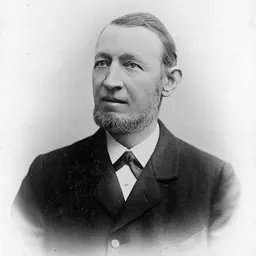



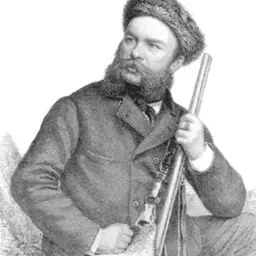

Related people
Same field, nearest in time
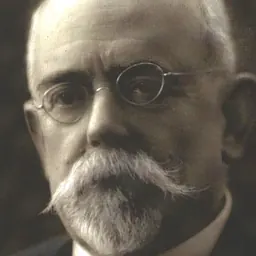

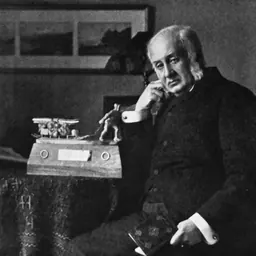

Contemporaries
People whose lives overlapped Josef Menges's


Frequently asked questions
Who was Josef Menges?
German animal trader and trapper (1850-1910)
When was Josef Menges born?
Josef Menges was born in 1850 in Limburg an der Lahn.
When did Josef Menges die?
Josef Menges died on 4 January 1910 in Limburg an der Lahn.
What was Josef Menges's occupation?
Josef Menges was an explorer, animal trader, trapper, travel writer, zoological collector and ethnologist.
Sources & further reading
Cite this page
APA: Biography.guide. (2026). Josef Menges. https://biography.guide/josef-menges/
MLA: "Josef Menges." Biography.guide, https://biography.guide/josef-menges/.
Chicago: "Josef Menges." Biography.guide. https://biography.guide/josef-menges/.
Data last updated: 2026-09-20 · Spot an error? Report a correction.
Page generated 2026-09-27 05:29 UTC