
José Treviño Morales
Mexican drug money launderer
About José Treviño Morales
José Treviño Morales was a Mexican drug trafficker, horse breeding, horse racing and money laundering.
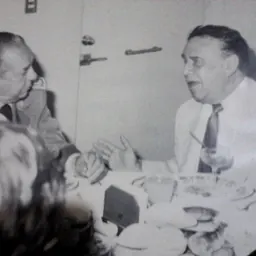
José Treviño Morales is a Mexican former money launderer for Los Zetas, a Mexican criminal organization. He is the brother of the former Zetas leaders Omar Treviño Morales (alias Z-42) and Miguel Treviño Morales (alias Z-40). In 2008, Treviño funded a horserace operation in Oklahoma with money he made through money laundering. Nonetheless, he was arrested by the FBI along with seven others in a horse-breeding ranch in Lexington, Oklahoma on 12 June 2012. He was found guilty of money laundering in May 2013, and was sentenced to 20 years in prison by a U.S. federal court in September of that same year.
Events On 12 June 2012, federal agents raided some stables and a house ranch of Treviño Morales in New Mexico and Oklahoma respectively. Prosecutors accuse Treviño Morales and several others of running a money laundering operation connected with Mexico's most ruthless criminal organization, Los Zetas. Los Zetas are one of Mexico's most dangerous criminal groups, notorious for kidnapping, decapitating, and completely dismembering their victims to maintain their violent reputation. His older brother, Miguel Treviño Morales, the second-in-command of the cartel, is in the list of the most-wanted drug lords by the United States and Mexico; one of his favorite brutal techniques is known as the "guiso" (stew), where enemies are forcibly placed in a 55-gallon drums and then burned alive. Currently, there are no charges against Treviño Morales in Mexico.
The indictment alleges how Treviño Morales, his brothers, and his close associates arranged a network where they quietly purchased race horses with drug proceeds at auctions, to then disguise the source of the funds used by them to cover up the involvement of Los Zetas. The operation, Tremor Enterprises LLC, started small but quickly generated huge profits and worked in plain sight. In fact, some of the horses used for the races had references to the drug world, like Coronita Cartel and Number One Cartel, to name a few. Over time, the horses of the operation were placed among the best in their industry. One of them named Mr. Piloto won $1 million at a race in Ruidoso Downs Race Track on Labor Day in 2010, going off the odds of 22–1. His successful record allowed him to gain social status and get a popular magazine to cover his daughter's wedding, where many well-known figures in the horse racing industry attended.
After a number of wins, Treviño "stunned the quarter-horse world," winning competition after competition with unknown horses, and rising as a well-known figure within the racing community, where he even gave interviews. The raid in Oklahoma netted to Treviño Morales and his associates; however, several other raids were carried out by federal agents across the states of Texas, New Mexico, and Oklahoma, where he had properties. Federal agents and prosecutors are trying to seize their properties, bank accounts, and horses. Authorities issued a seizure warrant for 41 horses that deemed most valuable to the money laundering operation in an effort to prevent them from being sent south into Mexico.
Raising suspicions A day after Treviño Morales was arrested by federal agents, people in the Oklahoma ranching community claimed that he was a "good neighbor". Others recall Treviño as a "family-oriented, hardworking bricklayer" who had just moved from Texas to Oklahoma to raise horses. Nonetheless, his ranch – the Zule Farms – was seen suspiciously by many of his neighbors. but he somehow managed to buy a giant spotlight for his ranch, buy huge portions of land during an economic recession, and make significant improvements to a company that was not known for making large profits. While it is common for foreigners to pay in cash for their transactions in the horse racing industry, the payments of Treviño Morales were "noteworthy in value." The message asked Americans to be aware of the incident involving Treviño Morales' arrest, and asked them to be prepared for any violent retaliation by Los Zetas for the arrests. The embassy stated that given the history and resources of the drug trafficking organizations, Americans in Mexico should maintain low profile and heighten their awareness. Moreover, the communiqué urged Americans to defer non-essential travels to the state of Tamaulipas and register at their nearest embassy online, via phone call, or in person. Previously in February 2012, the United States Department of State issued security warnings to Americans in Mexico, but particularly in Tamaulipas. It prohibited Americans to travel outside the city limits of Reynosa, Nuevo Laredo, and Matamoros due to the risks of armed robberies and carjackings. The department also encouraged them to not frequent casinos or adult entertainment establishments within the cities, and established a midnight to 6 a.m. curfew. In their defense, the Mexican authorities noted that Tamaulipas is safeguarded by federal forces, and that there is currently no correlation between the arrest in the U.S. state of Oklahoma and the situation in Matamoros and the rest of Tamaulipas. Moreover, Julio Almanza Armas, a politician from Tamaulipas, stated through Milenio that the reality in Mexico is not how the U.S. portrays it. He said that the drug-related violence that occurs in Tamaulipas often happens in isolated circumstances. |Richard Weber Horse racing is a "perfect vehicle" for laundering money from drug proceeds and hiding it from the authorities. The drug industry makes billions of dollars a year, so drug traffickers often find themselves unable to ship the cash back to Mexico, and end up laundering it in the United States. Buying ranches across the U.S. is a viable way of laundering money. Of these, the state of Arizona was identified by federal agents in 2012 as the "consolidation point" for drug earnings. According to InSight Crime, what is more amazing than the Zetas' operation is the blatant manner in which they carried it out in the U.S. This attack is one of the most profitable money laundering schemes of Los Zetas, and is considered by the U.S. authorities as essential for the war on drugs, since it will hurt the Zetas financially and help dismantle the violent criminal syndicate.
Series of Zeta arrests On 15 June 2012, three days after the arrest of Treviño Morales, his nephew – Juan Francisco Treviño (a.k.a. El Quico) – was arrested in the industrial city of Monterrey. He was accompanied by a cousin, two unidentified women, and a couple of AR-15 rifles. Jesús Chávez García, his cousin, was wanted by the United States for drug trafficking, and was one of the inmates that escaped during a massive jailbreak inside a prison in Nuevo Laredo, Tamaulipas in 2010. Days later, Francisco Antonio Colorado Cessa, a businessman from the Mexican state of Veracruz with deep ties with Los Zetas, turned himself in to the Mexican authorities. He was accused of acting as a straw purchaser of racehorses and securing contracts with worth up to $100 million in Mexico's national oil company, Pemex. Finally, Gregorio Villanueva Salas, nicknamed the Czar of Piracy for his involvement in the production and distribution of piracy products, was arrested by the on 14 June 2012. Aside from being a senior member in the Zetas' financial sector, Villanueva was responsible for carrying out grenade attacks on schools, media outlets, and military bases in the border city of Matamoros, Tamaulipas.
These series of arrests target those who were suspected of laundering millions of dollars for Los Zetas in the legitimate economy. This attack on the Zetas is a response to the long-standing criticisms made to Felipe Calderón for his security policies. In addition, it fits the proposed strategy of his likely successor, Enrique Peña Nieto. Nonetheless, it is still unclear whether attacking the financial sectors of the drug cartels will bring down the violence. Treviño Morales, along with eight others, were set to go on trial on 22 October 2012 and the trial was expected to take two weeks in length.
Federal prosecutors stated they would present 30,000 pages of documents and over 2,000 recorded phone conversations to prosecute him.
On 9 May 2013, Treviño Morales was found guilty of money laundering by a Texan jury and faced up to 20 years in prison. On 5 September 2013, he was found guilty of the charges in a federal court in Austin, Texas and sentenced to 20 years.
Bank of America laundering scheme According to the Federal Bureau of Investigation (FBI), Los Zetas used several accounts at the Bank of America corporation to hide money and invest it in the horse racing operation headed by Treviño Morales. The money was allegedly held in bank accounts in Charlotte, North Carolina with the ultimate goal of appearing as a legitimate source of income for Treviño Morales' purchases. Bank of America is not accused of any wrongdoing, and according to reports of The Wall Street Journal, the bank is actually cooperating with the FBI.
Don’t just read it —
keep it.
Full-length biographies made to live with: read them, listen on the way to work, watch them tonight.
- E-book
- Audio
- Video
Instant download · yours to keep · every purchase keeps this site free
Important facts
Related people
Same field, nearest in time




Frequently asked questions
Who was José Treviño Morales?
Mexican drug money launderer
What was José Treviño Morales's occupation?
José Treviño Morales was a drug trafficker, horse breeding, horse racing and money laundering.
What nationality was José Treviño Morales?
José Treviño Morales was Mexican.
Sources & further reading
· Wikipedia: José Treviño Morales
· DBpedia: José Treviño Morales
Cite this page
APA: Biography.guide. (2026). José Treviño Morales. https://biography.guide/jose-trevino-morales/
MLA: "José Treviño Morales." Biography.guide, https://biography.guide/jose-trevino-morales/.
Chicago: "José Treviño Morales." Biography.guide. https://biography.guide/jose-trevino-morales/.
Data last updated: 2026-09-22 · Spot an error? Report a correction.
Page generated 2026-09-27 05:04 UTC