
José Miguel Barandiarán
Basque anthropologist, etnologist and archaeologist
About José Miguel Barandiarán
Lived 1889 – 1991 (aged 101). José Miguel Barandiarán was a Spanish catholic priest, anthropologist, archaeologist and ethnologist.
Early life He was born in 1889 as the youngest of nine children to Francisco Antonio Barandiaran and María Antonia Ayerbe in the family baserri Perune-Zarre in Ataun. Encouraged by his mother, he entered the priesthood aged 14 in Baliarrain and was ordained as a priest in 1914 in Burgos. Ordained a priest in 1914, the following year he obtained a degree in Theology. In 1916, he joined the Faculty of Philosophy of the Vitoria Seminary as a science professor, teaching the subjects of Physics and Chemistry, Geology, Human Paleontology, Prehistory and History of Religions. He lasted for twenty years as a professor, simultaneously exercising managerial positions such as that of vice-rector.
Career as an ethnographer Soon after being ordained as a priest, he took up ethnographic studies of Basque culture and archeology around 1916 in the Aralar Mountains. He carried out invaluable research into folk traditions and collecting accounts and tales related to Basque mythology. His contribution to the paleontological study of the Basque people. Magismo, which presented in Bilbao in 1919, strongly interested the great ethnologist Wilhelm Schmidt, founder of the magazine Anthropos in Vienna. This offered him the position of correspondent for Spain and invited him to participate in the International Week of Religious Ethnology that was going to be celebrated in the Dutch town of Tilburg in 1922. There he delivered his communication . When the Spanish Civil War began, he had to go into exile in September 1936, considered a suspect simply because of his dedication to Basque culture. In 1953, he returned from exile and opened at the University of Salamanca, at the request of its rector, Don Antonio Tovar, the Larramendi Chair with a course on the current state of Basque studies. The following year, within the Aranzadi Science Society, he created the Ethnology Seminar and, after twenty years of interruption, in 1955, published volume XV of the Eusko Folklore Yearbook, with studies on pastoral and agricultural life followed by others dedicated to popular industries and crafts.
Awards In 1989, he received the Gold Medal for Merit in Fine Arts from the Ministry of Education, Culture and Sports Ministry of Education, Spanish Culture and Sports.
Don’t just read it —
keep it.
Full-length biographies made to live with: read them, listen on the way to work, watch them tonight.
- E-book
- Audio
- Video
Instant download · yours to keep · every purchase keeps this site free
Important facts
People in José Miguel Barandiarán's life
Named in this biography and alive at the same time

Related people
Same field, nearest in time
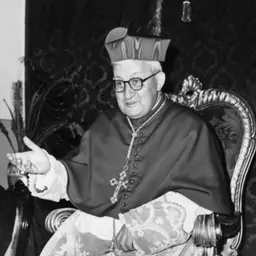
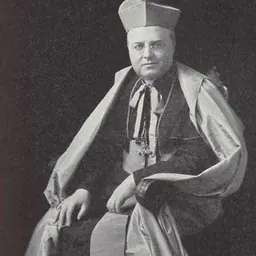
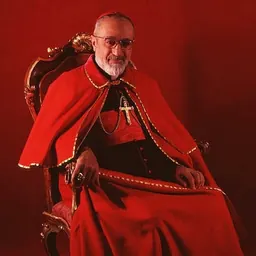
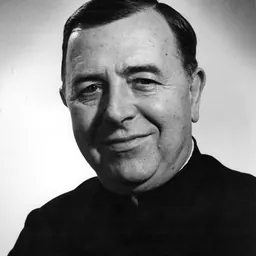


Contemporaries
People whose lives overlapped José Miguel Barandiarán's


Frequently asked questions
Who was José Miguel Barandiarán?
Basque anthropologist, etnologist and archaeologist (1889–1991)
When was José Miguel Barandiarán born?
José Miguel Barandiarán was born on 31 December 1889 in Ataun.
When did José Miguel Barandiarán die?
José Miguel Barandiarán died on 21 December 1991 in Ataun.
What was José Miguel Barandiarán's occupation?
José Miguel Barandiarán was a catholic priest, anthropologist, archaeologist and ethnologist.
What nationality was José Miguel Barandiarán?
José Miguel Barandiarán was Spanish.
Sources & further reading
· Wikipedia: José Miguel Barandiarán
· DBpedia: Jose Miguel Barandiaran
Cite this page
APA: Biography.guide. (2026). José Miguel Barandiarán. https://biography.guide/jose-miguel-barandiaran/
MLA: "José Miguel Barandiarán." Biography.guide, https://biography.guide/jose-miguel-barandiaran/.
Chicago: "José Miguel Barandiarán." Biography.guide. https://biography.guide/jose-miguel-barandiaran/.
Data last updated: 2026-09-25 · Spot an error? Report a correction.
Page generated 2026-09-27 05:09 UTC