
About José Maria Xavier
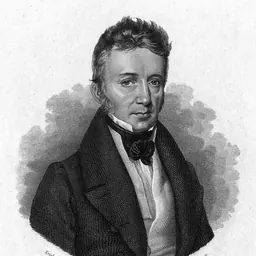
Lived 1819 – 1887 (aged 67). José Maria Xavier was a Brazilian composer.
José Maria Xavier (23 August 1819 – 22 January 1887) was a Brazilian Roman Catholic priest, composer, instrumentalist, and music teacher from São João del-Rei, Minas Gerais. Born into a family of church musicians, he sang in its ensemble as a child and later worked as a clarinetist, violinist, and violist. He entered the Seminary of Mariana in 1845, was ordained the following year, and spent most of his priesthood in São João del-Rei, where he taught music and served churches, brotherhoods, schools, and charitable institutions.
Xavier grew up among musicians on his mother's side. His maternal grandfather, José Joaquim de Miranda, founded the ensemble that became the Orquestra Lira Sanjoanense. Four of Xavier's maternal uncles performed with the group. One of them, Francisco de Paula Miranda, directed one of the city's church choirs and gave Xavier his first music lessons.
Xavier learned his first letters from Guilherme José da Costa. He went on to study Latin, French, history, geography, and philosophy with teachers in São João del-Rei. His lessons with Francisco de Paula Miranda covered singing, violin, and clarinet, and he also learned to play the viola, piano, and guitar.
In February 1847, Xavier became vicar of Rio Preto. He remained there until May 1848, when poor health led him to seek permission to return to São João del-Rei. He spent the rest of his life in his native city.
A few works fall outside the vocal liturgy. The catalogue lists instrumental minuets and an overture, as well as Pensamento sentimental, dated in Ouro Preto in 1886.
Xavier also wrote for the feasts arranged by the brotherhoods and third orders in which he served. His dated novenas include Novena de Nossa Senhora da Boa Morte from 1855, Novena de São Gonçalo Garcia from 1856, Novena de Nossa Senhora das Dores from 1867, Novena de São Sebastião from 1869, and Novena da Santíssima Trindade from 1875. He composed matins for Christmas, the Assumption, the Immaculate Conception, Pentecost, Saint Cecilia, Saint Joseph, and the Sacred Heart. His masses were written for the Assumption, the Holy Spirit, Holy Saturday, cathedral services, and funerals.
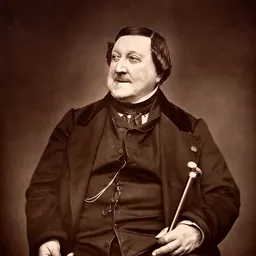
Four manuscripts name Gioachino Rossini as the source of adapted melodies. The 1839 Qui sedes and Quoniam, written for bass solo, are based on a Rossini trio. Creator alme siderum uses music from Mosè in Egitto, an arranged Mass draws on Le siège de Corinthe, and Jam nunc Paterna claritas uses music from Semiramide. Most Brazilian sacred scores printed in the nineteenth century paired a solo voice with piano, organ, or harmonium. Xavier's two editions were issued for choir and orchestra. Minas Gerais Decree No. 4,185, issued on 5 March 1954, renamed it the Conservatório Estadual de Música Padre José Maria Xavier. The conservatory moved to its own building on Rua Padre José Maria Xavier in 1960. He is also the patron of Permanent Chair No. 13 of the Instituto Histórico e Geográfico de São João del-Rei.
In August 2019, the institute held a roundtable for the bicentenary of Xavier's birth. Teachers from the conservatory discussed his life and music, and students performed during the program. The event was organized with the conservatory, the municipal library, and the education and culture departments of São João del-Rei. Adoramus te Christe and Popule meus are sung during the Feast of Our Lord of the Steps, while Adoramus te Christe is also used for the Adoration of the Cross on Good Friday. The orchestra recorded more of Xavier's music in 1980 for an album devoted to the Novena of Our Lady of Mount Carmel.
The Ofício de Trevas was recorded in two CD volumes conducted by Marcelo Ramos. Volume I, released in 2004, was performed by the Orquestra Sinfônica de Minas Gerais and the Coral Lírico do Palácio das Artes. Volume II followed in 2005 with the Orquestra e Coro dos Inconfidentes. It contains music for Holy Saturday and Easter morning. Carol A. Hess reviewed the second volume in the Journal of the Society for American Music in 2011.
The titles printed on the two CDs do not always match Xavier's autograph scores. The piece labeled Ofício de Quinta-feira Santa on Volume I bears the title Ofício de Quarta-feira de Trevas in the autograph. The work called Matinas de Sábado Santo on Volume II is Xavier's Ofício de Sexta-feira Santa. These differences follow the days on which the works are performed in São João del-Rei, but the CD booklets do not explain the change in names. Xavier's music is present across more than 100 Holy Week programs and newspaper notices from São João del-Rei dated between 1884 and 2025.
Don’t just read it —
keep it.
Full-length biographies made to live with: read them, listen on the way to work, watch them tonight.
- E-book
- Audio
- Video
Instant download · yours to keep · every purchase keeps this site free
Important facts
People in José Maria Xavier's life
Named in this biography and alive at the same time
Related people
Same field, nearest in time


Contemporaries
People whose lives overlapped José Maria Xavier's




Frequently asked questions
Who was José Maria Xavier?
Brazilian composer (1819–1887)
When was José Maria Xavier born?
José Maria Xavier was born on 23 August 1819 in São João del Rei.
When did José Maria Xavier die?
José Maria Xavier died on 22 January 1887 in São João del Rei.
What was José Maria Xavier's occupation?
José Maria Xavier was a composer.
What nationality was José Maria Xavier?
José Maria Xavier was Brazilian.
Sources & further reading
· Wikipedia: José Maria Xavier
Cite this page
APA: Biography.guide. (2026). José Maria Xavier. https://biography.guide/jose-maria-xavier/
MLA: "José Maria Xavier." Biography.guide, https://biography.guide/jose-maria-xavier/.
Chicago: "José Maria Xavier." Biography.guide. https://biography.guide/jose-maria-xavier/.
Data last updated: 2026-09-20 · Spot an error? Report a correction.
Page generated 2026-09-27 05:32 UTC