
About José María Rubio
Lived 1864 – 1929 (aged 64). José María Rubio was a Spanish catholic priest and catholic theologian.
Jose Maria Rubio, SJ (22 July 1864 – 2 May 1929) was a Spanish Jesuit, known as the "Apostle of Madrid". He was canonised in 2003 by Pope John Paul II.
Childhood and adolescence Son of farmers and the oldest of thirteen brothers, born to Francisco Rubio and Mercedes Peralta, he grew up in the town of Dalías, until in 1876 he entered the diocesan seminary of Almeria, where he studied Human Studies and Philosophy.
In 1911 the International Eucharistic Congress in Madrid instituted the "Guard of Honor of the Sacred Heart" and entrusted it to Rubio. He developed his work in towns and suburbs, and founded and organized several associations such as the work of the "Marys of the Tabernacles", and social schools in Ventilla neighborhoods, aided by young teachers Juan and Demetrio de Andrés, known as "Ventilla martyrs" killed during the Civil War, 1936.
He died in Madrid on May 2, 1929, sitting in an armchair, after directing that his spiritual notes be burned. When he died, the Archbishop of Madrid, Leopoldo Eijo y Garay, called him "apostle of Madrid" and wrote a pastoral letter on his example to the clergy of his diocese.
Canonization During his life miraculous events were reported, such as bilocation, healings, prophecy and clairvoyance, some, perhaps legendary, but others ratified by numerous witnesses. What dominates is the testimony of his example and his word next to the message that holiness is available to all who simply surrender to the will of God. His motto was: "Do what God wants and want what God does." He was beatified by John Paul II in Rome (October 6, 1985) and canonized in Madrid by the same pontiff (May 4, 2003). His remains are venerated in the church of San Francisco de Borja and the Sacred Heart of the Society of Jesus in Madrid. The extraordinary fact, considered as a miracle by the Congregation for the Causes of Saints in order for his canonization, was the healing of lung cancer of the Jesuit José Luis Gómez Munten (1988).
Anecdotes in the life of José María Rubio Rubio was a famous confessor. People came from long distances and queued for several hours to be shriven by Fr. Rubio.
Visit to the dying One day a lady came and gave him the directions to a man who had to confess soon, as he was dying. That evening, Rubio went to visit the dying, and following the directions, he had to go to a third floor without a lift. When he finally arrived, knocked and asked for the gentleman, "It's me" the gentleman said "but I think that someone has played a practical joke on you, as you see I'm in perfect health. Come on, man! have a drink and relax after you have had to climb so many stairs." Entering the room, Rubio saw a portrait on the wall, and while the man served him a drink. Rubio said that the lady was the one who sent him. The man laughed and said that the lady was his mother who died some years ago. Then, the gentleman said; "Look, anyway, as you are here, I'm going to confess because it's been years since I entered a church, and so your journey will not have been in vain". He confessed and died that night.
The seamstress
A seamstress from Madrid told in confession that her father hated the faith, and considered the Christian religion a swindle and a lie. Thus, she was afraid of the eternal damnation of her father. Rubio said that she should not be worried, as her father would be saved.
Some days after the confession, during a retreat and preaching, that seamstress came late. At the moment when she arrived, Rubio paused for a moment in his speech and said in loud voice: "At this very moment one of you just received a very special grace. Really very, very big. In a few days you will know what it is and whoever of you has received this, that lucky person has to thank our Lord Jesus Christ".
All women who were there present took note of the time and day, as he was already famous for these prophecies that were fulfilled. The seamstress in a few days noticed that his father died holy, and just at that time when Rubio was preaching, her father was confessing and receiving the last sacraments.
Reflection by José María Rubio
Don’t just read it —
keep it.
Full-length biographies made to live with: read them, listen on the way to work, watch them tonight.
- E-book
- Audio
- Video
Instant download · yours to keep · every purchase keeps this site free
Important facts
People in José María Rubio's life
Named in this biography and alive at the same time


Related people
Same field, nearest in time

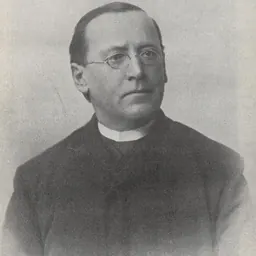
Contemporaries
People whose lives overlapped José María Rubio's

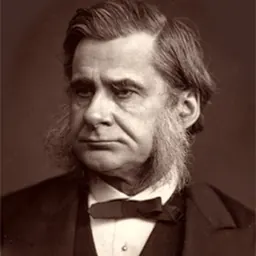

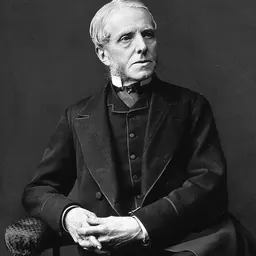


Frequently asked questions
Who was José María Rubio?
Spanish Jesuit and saint (1864-1929)
When was José María Rubio born?
José María Rubio was born on 22 July 1864 in Dalías.
When did José María Rubio die?
José María Rubio died on 2 May 1929 in Aranjuez.
What was José María Rubio's occupation?
José María Rubio was a catholic priest and catholic theologian.
What nationality was José María Rubio?
José María Rubio was Spanish.
Sources & further reading
Cite this page
APA: Biography.guide. (2026). José María Rubio. https://biography.guide/jose-maria-rubio/
MLA: "José María Rubio." Biography.guide, https://biography.guide/jose-maria-rubio/.
Chicago: "José María Rubio." Biography.guide. https://biography.guide/jose-maria-rubio/.
Data last updated: 2026-09-20 · Spot an error? Report a correction.
Page generated 2026-09-27 05:31 UTC