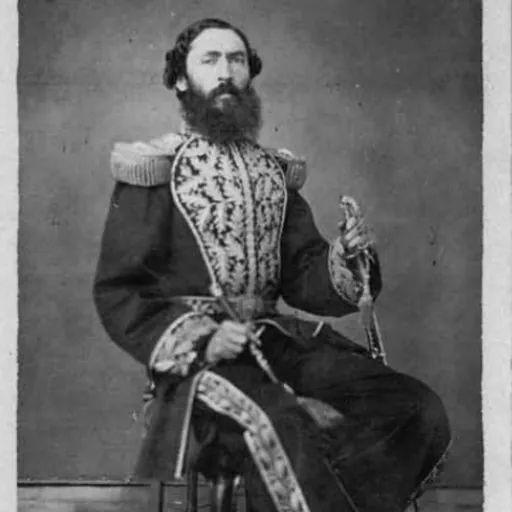
About José María Calderón
Lived 1820 – 1872 (aged 52). José María Calderón was a Bolivian military personnel.
José María Calderón (12 October 1820 – 18 October 1872), also known as el Cachorro, was a Bolivian military officer. Known to be brave in the battlefield, he rose through the ranks and eventually aligned himself with the dictatorship of Mariano Melgarejo. José María de Achá would sentence Calderón to death in 1861. In order to avoid the sentence, Calderón fled to the Bolivian interior where he spent years in the Llanos de Moxos.
Early life He was born in La Paz to Daniel Calderón Rada and Eulalia Roberta Bittencourt Jones. His father was a wealthy landowner, son of Felipe Calderón de la Barca Lopetegui and Fernanda Josefina Rada Guzmán de Mendoza y Rivero.
In the Bolivian Army Calderón started his classes in the Military College of La Paz when he was 18 years old. However, while he was still training to become a military officer, the Peruvian–Bolivian War of 1841–42 erupted. Spearheaded by the efforts of Agustín Gamarra, Bolivia's independence was at great risk.
Calderón enlisted in the army and was at the Battle of Ingavi under the command of General José Ballivián. He is said to have acted with great valour during the battle, where he was wounded. For his actions, he was promoted to first lieutenant.
Rebel within the army Calderón remained loyal to General Ballivián until 1846. That year, he was persuaded to join the efforts of José Miguel de Velasco to oust the ballivianistas from power. In 1847, Velasco ousted Ballivián. However, Eusebio Guilarte took command of the country. Within days, Velasco defeated the remaining ballivianistas in Bolivia, becoming President of Bolivia. For his loyalty, Calderón was promoted to the rank of captain.
Calderón did not hesitate to abandon Velasco when Manuel Isidoro Belzu challenged the President. Now an adherent to the belcista cause, Calderón helped overthrow Velasco less than a year after the coup that ousted Ballivián. As a reward he was promoted to the rank of major.
For his continued loyalty toward Belzu, the caudillo promoted him to the rank of lieutenant colonel in 1855. However, despite having been an ardent supporter of Belzu for years, Calderón supported the cause of José María Linares, which sought to end the rule of the belcista President Jorge Córdova. On September 9, 1857, the linaristas overthrew the government of President Córdova. Linares promoted Calderón to the rank of colonel for his loyalty.
Marriage and family He married Gertrudis Peñailillo Borda in may 1861 in La Paz. She was the daughter of general Ambrosio Peñailillo.
Don’t just read it —
keep it.
Full-length biographies made to live with: read them, listen on the way to work, watch them tonight.
- E-book
- Audio
- Video
Instant download · yours to keep · every purchase keeps this site free
Important facts
People in José María Calderón's life
Named in this biography and alive at the same time

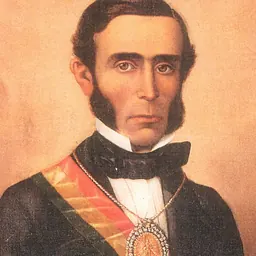
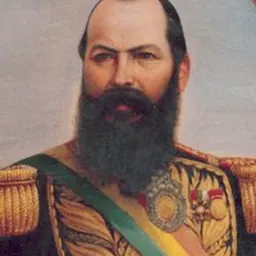

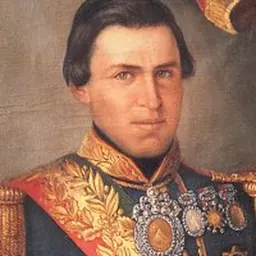
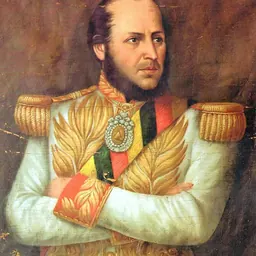
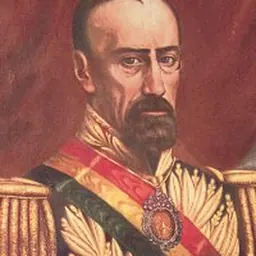

Related people
Same field, nearest in time
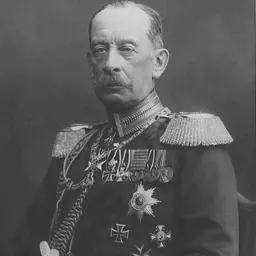
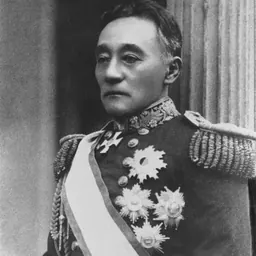
Contemporaries
People whose lives overlapped José María Calderón's




Frequently asked questions
Who was José María Calderón?
Bolivian military personnel (1820-1872)
When was José María Calderón born?
José María Calderón was born on 12 October 1820 in La Paz.
When did José María Calderón die?
José María Calderón died on 18 October 1872 in Japan, Shibushi, Kagoshima.
What was José María Calderón's occupation?
José María Calderón was a military personnel.
What nationality was José María Calderón?
José María Calderón was Bolivian.
Sources & further reading
· Wikipedia: José María Calderón
· DBpedia: José María Calderón
Cite this page
APA: Biography.guide. (2026). José María Calderón. https://biography.guide/jose-maria-calderon/
MLA: "José María Calderón." Biography.guide, https://biography.guide/jose-maria-calderon/.
Chicago: "José María Calderón." Biography.guide. https://biography.guide/jose-maria-calderon/.
Data last updated: 2026-09-24 · Spot an error? Report a correction.
Portrait: Wikimedia Commons · author & licence
Page generated 2026-09-27 05:08 UTC