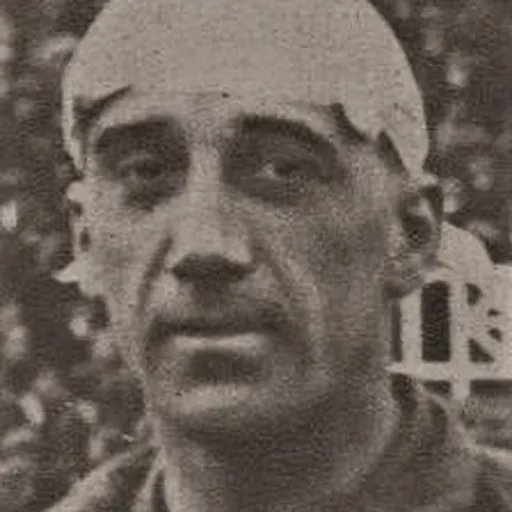
José María Belauste
Spanish footballer
About José María Belauste
Lived 1889 – 1964 (aged 75). José María Belauste was a Spanish association football player, lawyer and association football coach.
José María de Belausteguigoitia Landaluce (3 September 1889 – 4 September 1964), known as Belauste, was a Spanish footballer who played as a midfielder.
Club career Born in Bilbao, Biscay, Belauste played with Athletic Bilbao from the age of 15 to 36. His game was based on a physical display, as he stood at 1.93 meters and weighed 95 kilograms.
He made his debut for his only club on 4 April 1909 in a 2–4 loss against Club Ciclista de San Sebastián, and won six Copa del Rey trophies during his tenure.
International career Belauste won three caps for Spain, representing the nation at the 1920 Summer Olympics in Belgium and helping it win silver, as captain. His debut came during the tournament in a 1–0 win against Denmark, and in the second game, against Sweden, he was immortalized in the annals of Spanish football: in the play that led to the 1–1 equaliser, he reportedly shouted to teammate Sabino Bilbao "¡A mí el pelotón, Sabino, que los arrollo!" ("Send me that ball, Sabino, I'll crush them!" in Spanish). This was subsequently viewed as the reason why the national team was dubbed Furia Roja (Spanish Fury). between 1913 and 1915 – winning the Copa del Rey in 1914 and 1915 – and Patxo between 1919 and 1922, lifting the trophy in 1921 before he moved to Paris to study alongside Marie Curie.
Belauste was also active in politics, being affiliated to the Basque Nationalist Party and responsible for its sports section. During a meeting in 1922, he shouted "Death to Spain!"; additionally, he almost did not receive his Olympic medal, due to the fact he refused to carry the Spanish flag in the parade.
After his voluntary exile, first to France, then Algeria, Argentina and Brazil, Belauste returned home, but left for Mexico after the start of the Spanish Civil War. He died on 4 September 1964 in Mexico City at the age of 75, from lung cancer.
Honours Club Copa del Rey: 1910, 1911, 1914, 1915, 1916, 1921 Biscay Championship: 1913–14, 1914–15, 1915–16, 1919–20, 1920–21
International Summer Olympic Games: Silver medal 1920
Don’t just read it —
keep it.
Full-length biographies made to live with: read them, listen on the way to work, watch them tonight.
- E-book
- Audio
- Video
Instant download · yours to keep · every purchase keeps this site free
Important facts
People in José María Belauste's life
Named in this biography and alive at the same time

Related people
Same field, nearest in time



Contemporaries
People whose lives overlapped José María Belauste's




Frequently asked questions
Who was José María Belauste?
Spanish footballer (1889–1964)
When was José María Belauste born?
José María Belauste was born on 3 September 1889 in Bilbao.
When did José María Belauste die?
José María Belauste died on 4 September 1964 in Mexico City.
What was José María Belauste's occupation?
José María Belauste was an association football player, lawyer and association football coach.
What nationality was José María Belauste?
José María Belauste was Spanish.
Sources & further reading
· Wikipedia: José María Belauste
· DBpedia: José María Belauste
Cite this page
APA: Biography.guide. (2026). José María Belauste. https://biography.guide/jose-maria-belauste/
MLA: "José María Belauste." Biography.guide, https://biography.guide/jose-maria-belauste/.
Chicago: "José María Belauste." Biography.guide. https://biography.guide/jose-maria-belauste/.
Data last updated: 2026-09-22 · Spot an error? Report a correction.
Portrait: Wikimedia Commons · author & licence
Page generated 2026-09-27 05:04 UTC