
About José Luis González
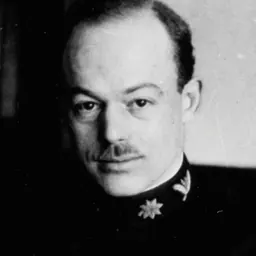
Lived 1926 – 1996 (aged 70). José Luis González was a Mexican, American and Puerto Rican writer and short story.
José Luis González (March 8, 1926 – December 8, 1996) was a Puerto Rican Marxist essayist, novelist, short story writer, university professor, and journalist who lived most of his life in exile in Mexico due to his pro-independence political views. He is considered to be one of the most important Puerto Rican authors of the 20th century, particularly for his book Puerto Rico: The Four-Storeyed Country and Other Essays, which was first published in Spanish in 1980.
Biography José Luis González Coiscou was born in the Dominican Republic, the son of a Puerto Rican father and Dominican mother. His family left the country and moved to Puerto Rico after the dictator Rafael Leónidas Trujillo assumed power in 1930. González was raised in Puerto Rico and went on to obtain a Bachelor's degree in political science at the University of Puerto Rico, Rio Piedras Campus. He also studied in the United States, and received a master's degree and Doctorate in Philosophy and Letters at the National Autonomous University of Mexico. A renowned Marxist,
Puerto Rico: The Four-Storeyed Country
José Luis González published the original Spanish essay "El País De Cuatro Pisos" within a collection of seven essays in 1980 under the Edition stamp Hurricane, Inc. in San Juan, Puerto Rico. The English translation, Puerto Rico: The Four-Storeyed Country was published on April 1, 1990 by Waterfront Press.The book consists of seven essays, all varying in length and focus. José Luis González wrote The Four-Storeyed Country in response to a conversation of Puerto Ricans and their relationship with independence. Additionally, The Four Storeyed Country was also written to answer the question posed by one of his students in 1979 during one of his Latin American Studies seminars, "How do you think the Puerto Rican culture has been affected by the North American colonial intervention and how do you see it?" Traditionally, the national culture is going to be the dominant one. In Puerto Rican history, even the elite culture has been dominated by another culture. The first stage developed from 1810–1820 and consisted of refugees from the Spanish-American wars of independence. The second stage (1840–1860) consisted of several migratory waves in which came Corsicans, Catalans, Canaries, among others, attracted by the promises of land and economic benefits. The stories give a representation that accounts for its geographical area and focuses on the issues of injustice and poverty, as well as to make visible the consequences in those who suffer them. González's piece resonated with the people of Puerto Rico because his stories gave truth to what was happening. "He was able to capture the first criollismo touches that Puerto Rico knew". If the Puerto Rican society would have evolved from then on in the same way that other islands of the Caribbean, our current 'national culture' would be that popular culture of that time. Puerto Ricans after reading González's work can feel pride within their nationality, culture, and personality but they must accept that their culture comes from within American culture. Accordingly, the conversation about independence movements is impacted by González's work. "We are at a crucial moment in our history as people. A crucial moment which is more than a moment to determine our political condition. It is a moment crucial because it is time to rebuild the Puerto Rican society … but not backward, to the past … but forward, toward a future that relies on the tradition of the popular masses, rediscover and rescue the essential Caribbean of our collective identity. We must understand that the natural destiny of Puerto Rico is the same as all other insular and continental people of the Caribbean".
Works
Fiction En la sombra. Prologue by Carmen Alicia Cadilla. San Juan, Puerto Rico: Imp. Venezuela, 1943. Cinco cuentos de sangre. Prologue by Francisco Matos Paoli. San Juan, Puerto Rico: Imp. Venezuela, 1945. El hombre en la calle. Santurce: Puerto Rico, Bohique, 1948. Paisa —un relato de la emigración—. Prologue by Luis Enrique Délano. México: Fondo de Cultura Popular, 1950. En este lado. México: Los Presentes, 1954. La galería y otros cuentos. México: Era, 1972. Mambrú se fue a la guerra (y otros relatos). México: Joaquín Mortiz, 1972 excerpt Dunkle Nacht. (La noche en que volvimos a ser gente) in Ein neuer Name, ein fremdes Gesicht. 26 Erzählungen aus Lateinamerika. Sammlung Luchterhand, 834. Neuwied, 1987, pp 274-290 Cuento de cuentos y once más. México: Extemporáneos, 1973. En Nueva York y otras desgracias. Prologue by Ángel Rama. México: Siglo XXI, 1973. Veinte cuentos y Paisa. Prologue by Pedro Juan Soto. Río Piedras, Puerto Rico: Cultural, 1973. Balada de otro tiempo. Rio Piedras, Puerto Rico: Ediciones Huracán, 1978. El oído de Dios. Río Piedras, Puerto Rico: Cultural, 1984. Las caricias del tigre. México, Joaquín Mortiz, 1984. Antología personal. Río Piedras, Puerto Rico: Editorial de la Universidad de Puerto Rico, 1990. Todos los cuentos. México, U.N.A.M., 1992.
Essays and Memoirs El país de cuatro pisos y otros ensayos. Río Piedras, Puerto Rico: Huracán, 1980. La luna no era de queso: Memorias de infancia. Río Piedras, Puerto Rico: Cultural, 1988. Literatura y sociedad de Puerto Rico: De los cronistas de Indias a la Generación del 98. México: Fondo de Cultura Económica, 1976. Nueva visita al cuarto piso. Madrid: Flamboyán, 1986.
Don’t just read it —
keep it.
Full-length biographies made to live with: read them, listen on the way to work, watch them tonight.
- E-book
- Audio
- Video
Instant download · yours to keep · every purchase keeps this site free
Important facts
People in José Luis González's life
Named in this biography and alive at the same time








Related people
Same field, nearest in time

Contemporaries
People whose lives overlapped José Luis González's


Frequently asked questions
Who was José Luis González?
Puerto Rican essayist, novelist and journalist
When was José Luis González born?
José Luis González was born on 8 March 1926 in Santo Domingo.
When did José Luis González die?
José Luis González died on 8 December 1996 in Mexico City.
What was José Luis González's occupation?
José Luis González was a writer and short story.
What nationality was José Luis González?
José Luis González was Mexican, American and Puerto Rican.
Sources & further reading
· Wikipedia: José Luis González
· DBpedia: José Luis González (writer)
Cite this page
APA: Biography.guide. (2026). José Luis González. https://biography.guide/jose-luis-gonzalez/
MLA: "José Luis González." Biography.guide, https://biography.guide/jose-luis-gonzalez/.
Chicago: "José Luis González." Biography.guide. https://biography.guide/jose-luis-gonzalez/.
Data last updated: 2026-09-20 · Spot an error? Report a correction.
Page generated 2026-09-27 05:08 UTC