
About Jose Luis Cuevas
Lived 1934 – 2017 (aged 83). Jose Luis Cuevas was a Mexican sculptor, painter, television actor, illustrator, printmaker and engraver.
José Luis Cuevas (February 26, 1934 – July 3, 2017) was a Mexican artist who worked as a painter, writer, draftsman, engraver, illustrator, and printmaker. Cuevas was one of the first to challenge the then dominant Mexican muralism movement as a prominent member of the Generación de la Ruptura (English: Breakaway Generation). He was a mostly self-taught artist, whose styles and influences are moored to the darker side of life, often depicting distorted figures and the debasement of humanity. He remained a controversial figure throughout his career, not only for his often shocking images, but also for his opposition to writers and artists who he felt participated in corruption or created only for money. In 1992, the José Luis Cuevas Museum was opened in the historic center of Mexico City holding most of his work and his personal art collection. His grandson Alexis de Chaunac is a contemporary artist.
Biography Childhood José Luis Cuevas was born on February 26, 1934, to a middle-class family in Mexico City. He was born on the upper floor of the paper and pencil factory belonging to his paternal grandfather, Adalberto Cuevas.
When he was ten years old, he began studies at the National School of Painting and Sculpture "La Esmeralda", and he also started to illustrate newspapers and books. and despite his lack of formal training, he taught art history classes at Coronet Hall Institute.
Generación de la Ruptura Cuevas was sometimes described as vain, a pathological liar and a hypochondriac, obsessed with sickness and death, especially his own. Cuevas stated that he did not believe that he was vain and says that idea started in 1955 when he decided to take a picture of himself every day, which he continued to do up to the end of his life. One ludicrous story states that he visited a “vampire brothel” where they scratch and paw at customers. Other story relates him to a 70-year-old woman named Gloria who he tried to seduce and another one that Marlene Dietrich threw herself at him.
In the 1960s, he went to Morocco to study Islamic art, meeting painter Francis Bacon in Tangiers. Cuevas died on July 3, 2017, in Mexico City at the age of 83.
Marriage
José Luis Cuevas, exposición en la Galería de la Secretaría de Hacienda y Crédito Público, Centro Histórico de la Ciudad de México, 1984. Cuevas married his first wife, Bertha Riestra, in 1961. In 2000, Berta Riestra, his wife and, at the time, the director of the José Luis Cuevas Museum, died due to breast cancer and leukemia. The following year, he met Beatriz del Carmen Bazán, whom he married in 2003 at the museum. There have been solo exhibitions od Cuevas's work in museums and galleries throughout the world. His first exhibition was when he was only fourteen at the Seminario Axiologico but no one came, the works came off the walls and were stepped on. His critiques focus on how these artists depicted Mexican social intertwine and how much their art was influenced by government propaganda through sponsorship.
His initial opposition to the Mexican cultural status quo was with the muralists, calling them and the government that supported them the “nopal cactus curtain,” acting against newer artists and innovations. His first essay against the “nopal cactus curtain,” was to be published by Excélsior but ultimately rejected by the periodical, although he later renamed and published it as “Letter to Siqueiros” in a magazine titled "Perfumes y Modas" ("Perfumes and Fashions") and dropped off a copy of the magazine at Siqueiros's house. Later, with the help of Carlos Fuentes he published in "Museo en la Cultura" ("Museum in Culture"), a supplement of Novedades newspaper, where he continued his critique towards the Mexican muralist movement. Throughout this time, he became friends with a number of other writers such as Fernando Benítez, José Emilio Pacheco, José de la Colina, Carlos Monsiváis who, along with writer Carlos Fuentes, were known as “La Maffia” a critique group of Mexico's then-current culture. It also earned him scorn and critique, especially from Leopoldo Méndez and Raúl Anguiano, as well as strong opposition from many at the Academy of San Carlos. Despite this opposition, Siqueiros wanted Cuevas to become part of the muralist group, saying that his work had an Orozco quality. ")
His work reates controversy to the end and his appearance attracted large numbers of women. Premio Nacional de Arte from the Mexican government in the same year, and the International Prize from the World Council of Engraving in the United States. Because of the opposition in some essential artistic statements between José Luis Cuevas and some professors in the Academia de San Carlos, which is located half a block to the south, the artistic community in this art school say "el vecino de enfrente" (neighbor from across the street" to refer to the now late artist and the Museum).
The Museum's collection includes more than 1860 pieces by various artists, mostly from Latin America. The pieces are rotated among the various building's rooms. One of the main pieces is "La Giganta" ("The Giantess") by Cuevas, which is situated in the central courtyard. The androgynous sculpture was created in 1991 and inspired by a poem by Baudelaire. The museum is considered to be controversial in no small part due to the “Erotic Room," filled with Cuevas's own drawings on the theme and of actual bordellos and cabarets, and the presence of a large brass bed on which he claimed he had many sexual encounters. The museum also contains a library with 45 large volumes with over 11,500 newspaper clippings as well as 500 books dedicated to Cuevas's work.
Don’t just read it —
keep it.
Full-length biographies made to live with: read them, listen on the way to work, watch them tonight.
- E-book
- Audio
- Video
Instant download · yours to keep · every purchase keeps this site free
Important facts
People in Jose Luis Cuevas's life
Named in this biography and alive at the same time



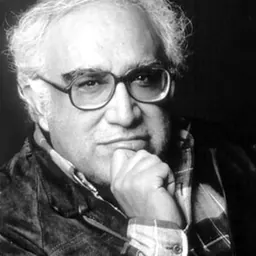
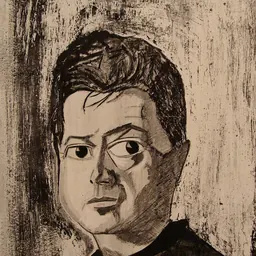


Related people
Same field, nearest in time


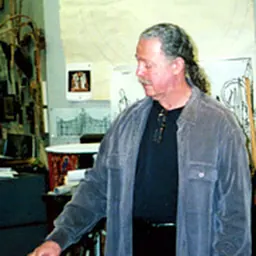
Contemporaries
People whose lives overlapped Jose Luis Cuevas's




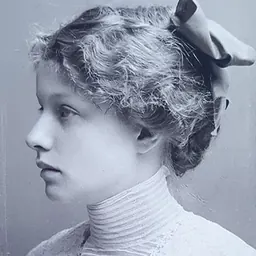
Frequently asked questions
Who was Jose Luis Cuevas?
Mexican artist (1934–2017)
When was Jose Luis Cuevas born?
Jose Luis Cuevas was born on 26 February 1934 in Mexico City.
When did Jose Luis Cuevas die?
Jose Luis Cuevas died on 3 July 2017 in Mexico City.
What was Jose Luis Cuevas's occupation?
Jose Luis Cuevas was a sculptor, painter, television actor, illustrator, printmaker and engraver.
What nationality was Jose Luis Cuevas?
Jose Luis Cuevas was Mexican.
Sources & further reading
Cite this page
APA: Biography.guide. (2026). Jose Luis Cuevas. https://biography.guide/jose-luis-cuevas-sculptor/
MLA: "Jose Luis Cuevas." Biography.guide, https://biography.guide/jose-luis-cuevas-sculptor/.
Chicago: "Jose Luis Cuevas." Biography.guide. https://biography.guide/jose-luis-cuevas-sculptor/.
Data last updated: 2026-09-20 · Spot an error? Report a correction.
Page generated 2026-09-27 05:23 UTC