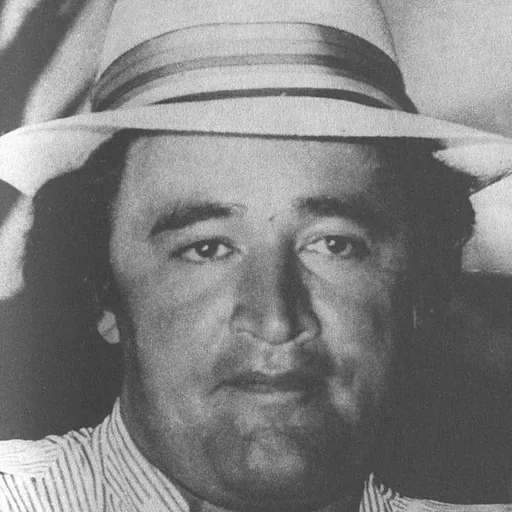
José Gonzalo Rodríguez Gacha
Colombian mob boss
About José Gonzalo Rodríguez Gacha
Lived 1947 – 1989 (aged 42). José Gonzalo Rodríguez Gacha was a Colombian.
José Gonzalo Rodriguez Gacha (14 May 1947 – 15 December 1989), also known by the alias of El Mexicano , was a Colombian drug lord who was one of the leaders of the Medellín Cartel along with the Ochoa brothers and Pablo Escobar. At the height of his criminal career, Rodriguez was acknowledged as one of the world's most successful drug dealers. In 1988, Forbes magazine included him in their annual list of the world's billionaires.
Early years José Gonzalo Rodríguez Gacha was born in May 1947 in the small town of Veraguas, near Pacho in the department of Cundinamarca. He came from a poor family of cheese vendors, and it is said that his formal education did not extend beyond grade school. He left school in the early 1970s and moved to Muzo, Boyacá, the center of the emerald exploitation in Colombia. There he began to work under Gilberto Molina Moreno, who at the time was called the "tsar" of emeralds in Boyacá, as part of his security, developing a fearsome reputation as a killer. As he started to go up in the ranks among Molina's men, he also became acquainted with drug traffickers. At some point, Rodríguez Gacha decided that the drug business was more profitable and became independent. He moved to Bogotá and became associated up with Verónica Rivera de Vargas, a pioneering drug trafficker who was known as the "queen of cocaine," by murdering the family of her main rival. Rivera introduced him to Pablo Escobar and to Mexican drug lord, Miguel Ángel Félix Gallardo.
Rise of the Medellín Cartel As he started to prosper in the drug trafficking business, Rodríguez Gacha started to buy larger amounts of land in the Middle Magdalena region in the valley bordering the departments of Antioquia, Boyacá, and Santander. After moving to Medellín in 1976, Rodríguez Gacha associated with the Ochoa family, Pablo Escobar, and Carlos Lehder in establishing an alliance that eventually strengthened into what would become known as the Medellín Cartel. The traffickers cooperated in the manufacturing, distribution and marketing of cocaine. During the late 1970s, Rodríguez advanced in the organizational hierarchy, pioneering new trafficking routes through Mexico and into the United States, primarily Los Angeles, California and Houston, Texas. He is often said to have been the first to establish cooperation strategies with drug trafficking cartels in Mexico. When the M-19 guerrilla kidnapped Martha Nieves Ochoa, the sister of fellow drug lord Jorge Luis Ochoa, the cartel decided to create what would be one of the first far-right paramilitary groups to fight the guerrillas, the "Muerte a Secuestradores" (MAS) [Death to Kidnappers] movement. Rodríguez Gacha became one of the main economic supporters of the group. He soon became the de facto military leader of the cartel and thanks to his immense riches, he managed to form the largest paramilitary organization in the country, composed of around 1,000 men, all trained and armed, originally devoted to his security but soon becoming an anti-communist army directed particularly against the FARC, and then against the Unión Patriótica political party.
Cartel-linked paramilitary groups
Paramilitary groups (or self-defense groups, autodefensas as they are frequently referred to in Colombia), were created with the support of landowners and cattle ranchers who had been under pressure from the guerrillas as well as from groups affiliated with narcotics traffickers such as the Muerte a Secuestradores movement (MAS – Death to Kidnappers). As made clear in a 2004 judgment of the Inter-American court of Human Rights, numerous independent reports and from what the paramilitaries themselves have said, in at least some cases they were given support by the state itself. The top leaders of the Medellín Cartel created private armies to guarantee their own security and protect the property they had acquired. According to The Washington Post, in the mid-1980s, Rodríguez and Pablo Escobar bought huge tracts of land in the Magdalena Department (as well as Puerto Boyacá, Rionegro and the Llanos) which they used to transform their self-defense groups from poorly trained peasant militias into sophisticated fighting forces. By the late 1980s Medellin traffickers controlled 40% of the land in the Middle Magdalena, according to a Colombian military estimate, and also funded most of the paramilitary operations in the region.
Throughout the 1980s, Rodríguez helped catalyze the Medellín Cartel's explosive rise to power by financing the importation and implementation of expensive foreign technology and expertise. According to the report by the Departamento Administrativo de Seguridad (Colombia's Administrative Security Department), between December 1987 and May 1988, Rodríguez hired Israeli and British mercenaries to train teams of assassins at remote training camps in Colombia. Yair Klein, a retired Israeli lieutenant colonel, acknowledged having led a team of instructors in Puerto Boyacá in early 1988. It is not clear whether Klein's mercenary activities in Colombia coincided with those of a group of British mercenaries who had allegedly trained paramilitary squads for the cocaine cartels.
American fight against drugs By 1989, the Drug Enforcement Administration (DEA) estimated that 80 percent of cocaine consumed in the United States was imported from Colombia by the Medellín Cartel and its rival, the Cali Cartel. The newly elected administration of President George H. W. Bush was under considerable pressure to combat the increasing drug usage and drug-related violence plaguing scores of American cities. Much of the government strategy concentrated on restricting drug supply by extraditing Colombian cartel leaders to the United States for prosecution. On August 21, 1989, Attorney General Dick Thornburgh released a list of the twelve Colombian drug kingpins (commonly referred to as the "dirty dozen") most wanted by the United States and said the names would be shared with the Colombian government and Interpol. The list included Pablo Escobar, Jorge Luis Ochoa, and José Gonzalo Rodríguez, the leading members of the Medellín Cartel.
Financial crackdown President Bush declared money laundering a critical target in the war on drugs, allocating $15 million to launch a counteroffensive. Only hours after Bush unveiled his antidrug offensive in September 1989, a federal task force began taking shape. The Financial Crimes Enforcement Network (FINCEN) was designed to zero in on money launderers with computer programs capable of spotting suspicious movements of electronic money. On December 6, 1989, Attorney General Dick Thornburgh announced that authorities had frozen accounts in five countries holding $61.8 million belonging to Rodriguez Gacha. According to the Justice Department, the money represented long-term high-yield stocks and investments and was held in bank accounts in England, Switzerland, Austria, Luxembourg and the United States. An additional $20 million of Gacha's drug money was suddenly transferred to Panama, where it was protected from American authorities.
Rodríguez Gacha's final years The growth of Rodríguez Gacha's criminal empire had allowed him to increase his fortune but also made him a lot of enemies. By 1987, animosity started with the Cali Cartel, his previous partners in MAS, as he attempted to move in on the New York City market. The animosity turned into an open cartel war in 1988, moved mostly by the personal vendetta of Pablo Escobar against Pacho Herrera. As the military leader of the cartel, Rodríguez Gacha was instrumental in many assassinations and distribution violent actions against the Cali Cartel.
Furthermore, he was already in an open war against the FARC guerrilla and on a crusade against the Colombian government and the DEA. His push to join his properties in his hometown in Pacho with his many lands in the middle Magdalena region soon put him in conflict with his old allies in the emerald business, as the emerald region of Muzo was in between. Later, he detonated a bomb in the offices of Tecminas in Bogotá, which were property of Victor Carranza, the new emerald tsar, whose nephew's murder he also ordered.
El Mexicano was later charged in Colombia and the United States for his involvement in a number of killings, including the assassination of the president of the leftist Patriotic Union party, Jaime Pardo Leal on October 12, 1987, in retaliation for guerrilla attacks on drug traffickers in the eastern plains area known as the "llanos orientales". Rodriguez Gacha started 1989 (year of horror in Colombia) massacring 12 judicial officials to allegedly remove them the judicial files. Pablo Escobar and Rodríguez contracted hitmen trained by Yair Klein for the slaying of popular presidential candidate Luis Carlos Galán on August 18, 1989, who was considered likely to be elected Colombia's next president. After the murder of Galán, Rodriguez Gacha begun to have a less active role in the terrorist attacks of the Medellin cartel. When the police arrived there, Gacha fled to Tolú by motorboat. At the destination, the drug lord was accompanied by his son Freddy, Gilberto Rendón Hurtado (alias "mano de yuca" – the alleged No. 8 man in the Medellín Cartel and who had then control over the network to transport cocaine from the Caribe Coast), four bodyguards and El Navegante. El Navegante again gave information on Gacha's location to the police after he left in the evening on December 14, 1989. With this new information, the police intercepted his motorboat and placed him on one of the two Colombian military helicopters prepared for the offensive.
At noon on December 15, 1989, twenty-two policemen (seventeen of whom were from the elite police) boarded the two artillery helicopters and flew over El Tesoro, a village between Coveñas and Tolú where the police were told that the target was hidden. By talking through a loudspeaker, the police demanded that Rodríguez Gacha surrender, but Gacha and his men, disguised as farm workers, waited for the police to withdraw. Still, the two helicopters kept flying over the zone. When the fugitives got an opportunity, they ran to a red truck parked near the village and drove away, and were pursued by the police.
Funeral Thousands of mourners thronged the streets of the town of Pacho for Rodriguez Gacha's funeral on Sunday, December 17, 1989. Residents of Pacho said he donated money to renovate buildings, and some viewed him as a public benefactor. About 3,000 people surrounded the cemetery because access to the funeral was limited to relatives. A newspaper estimated the number of mourners as high as 15,000.
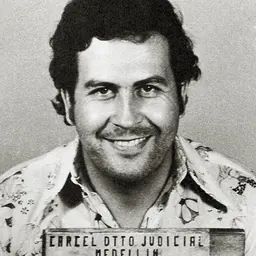
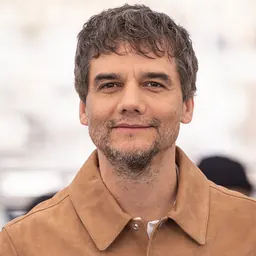
In popular culture In the TV series Escobar, el Patrón del Mal, Rodriguez Gacha is portrayed by the Colombian actor Juan Carlos Arango as the character Gustavo Ramirez Rocha "El Mariachi". In 2013 TV Series Tres Caínes, Rodríguez Gacha is portrayed by the Colombian actor Rodolfo Silva (who portrayed Roberto Escobar in the previous series) as the character of Gonzalo Mahecha. In the 2015 TV thriller-drama series Narcos, produced by Netflix, Rodriguez Gacha is portrayed by Luis Guzmán. Narcos follows drug kingpin Pablo Escobar (played by Brazilian actor Wagner Moura), as well as the ruthless Medellín Cartel. In the 2013 based on a true story TV series Alias El Mexicano, Gonzalo Rodriguez Gacha is portrayed by Colombian actor Juan Sebastián Calero. Calero has portrayed before a younger version of Gustavo Gaviria in Escobar, el patrón del mal. Calero reprises his role in TV Series Diomedes, el cacique de la junta. In the 2016 TV series Bloque de búsqueda is portrayed by the Colombian actor Elkin Díaz as the character of Gonzalo Rodríguez Largacha. In the same year 2016, Rodríguez Gacha is portrayed by the Colombian actor Andrés Soleibe in TV Series En la boca del lobo as the character of Jaime Gonzalo Ramírez Lacha. In the 2019 TV Series El General Naranjo, Rodríguez Gacha is portrayed by the Colombian actor Walter Luengas.
Don’t just read it —
keep it.
Full-length biographies made to live with: read them, listen on the way to work, watch them tonight.
- E-book
- Audio
- Video
Instant download · yours to keep · every purchase keeps this site free
Important facts
People in José Gonzalo Rodríguez Gacha's life
Named in this biography and alive at the same time




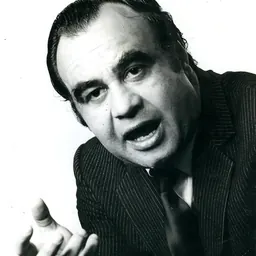
Contemporaries
People whose lives overlapped José Gonzalo Rodríguez Gacha's



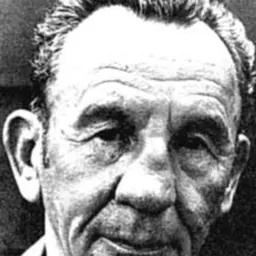

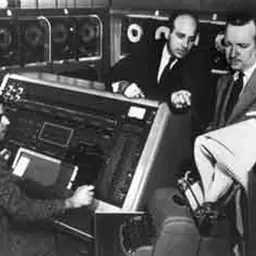
Frequently asked questions
Who was José Gonzalo Rodríguez Gacha?
Colombian mob boss (1947-1989)
When was José Gonzalo Rodríguez Gacha born?
José Gonzalo Rodríguez Gacha was born on 14 May 1947 in Pacho.
When did José Gonzalo Rodríguez Gacha die?
José Gonzalo Rodríguez Gacha died on 15 December 1989 in Tolú.
What nationality was José Gonzalo Rodríguez Gacha?
José Gonzalo Rodríguez Gacha was Colombian.
Sources & further reading
· Wikipedia: José Gonzalo Rodríguez Gacha
· DBpedia: José Gonzalo Rodríguez Gacha
Cite this page
APA: Biography.guide. (2026). José Gonzalo Rodríguez Gacha. https://biography.guide/jose-gonzalo-rodriguez-gacha/
MLA: "José Gonzalo Rodríguez Gacha." Biography.guide, https://biography.guide/jose-gonzalo-rodriguez-gacha/.
Chicago: "José Gonzalo Rodríguez Gacha." Biography.guide. https://biography.guide/jose-gonzalo-rodriguez-gacha/.
Data last updated: 2026-09-22 · Spot an error? Report a correction.
Portrait: Wikimedia Commons · author & licence
Page generated 2026-09-27 05:02 UTC