
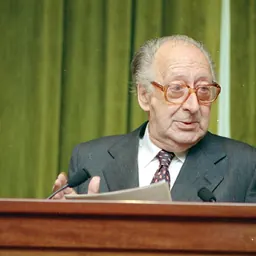
José Ferrater Mora
Spanish philosopher, professor and writer
About José Ferrater Mora
Lived 1912 – 1991 (aged 78). José Ferrater Mora was a Spanish philosopher, writer and university teacher.
José María Ferrater Mora (; 30 October 1912 – 30 January 1991) was a Spanish philosopher, essayist and writer. He is considered the most prominent Catalan philosopher of the 20th-century Subjects he worked on include ontology, history of philosophy, metaphysics, anthropology, the philosophy of history and culture, epistemology, logic, philosophy of science, and ethics. He also directed several films.
Ferrater Mora was known for his inclusion of humans and non-human animals within the same moral sphere, or continuum, arguing that the difference was one of degree, not kind.
Biography Ferrater Mora was born in 1912 in Barcelona, Spain. He studied at Santa Maria del Collell, then at the University of Barcelona, where he earned a BA in 1932 and his BPhil in 1936. In 1949, Ferrater Mora was hired by Bryn Mawr College to teach philosophy and Spanish literature, where he worked till his retirement in 1981. He married Priscilla Cohn (his former doctoral student) in 1980.
Ferrater Mora died from a heart attack, on 30 January 1991, while visiting Barcelona.
Philosophy Ferrater Mora is the creator of a philosophical method he called integrationism, with which he sought to integrate opposite systems of thought. He argued that irreducible concepts, which are the source of many disputes and divisions in philosophy, do not denote existing realities in themselves but are "limit concepts"; that is to say, these "opposite poles" do not exist absolutely. They exist only as trends or directions of reality and therefore are complementary and are useful to talk about it.
His philosophical work also focused on questions of an ontological nature. He called his ontological position "monism sui generis", since it unites monism and pluralism; it is an emergentism in which the elements assemble themselves by virtue of their properties or functions, or properties-functions. Each structure, although it depends on the elements that compose it, is not reducible to them because it acquires new properties-functions that cannot be explained based on those of the elements. The structure also becomes an element for a new structure. Self-assembly begins from the physical level to the point where structures acquire more complex properties, functions, and of a different order to give rise to a new biological level, and thus the continuum progresses until reaching the social and then the cultural level. It is a continuum that does not break and that goes from matter to reason.
He was one of the first philosophers to introduce applied ethics to the Spanish-speaking world and was a staunch supporter of animal rights.
His works combine a wide variety of influences, including the Spanish philosophers Miguel de Unamuno, Eugenio d'Ors and José Ortega y Gasset and numerous other representatives of both continental and analytic philosophy.
Legacy In January 1991, Ferrater Mora made public the decision to donate his personal library to the University of Girona. The collection consists of 7,255 books, 156 journal titles and correspondence, with 6,748 letters. The correspondence includes letters between Ferrater Mora and his friends, politicians and intellectuals of the time. This collection also includes letters from his departure into exile in the 1940s (Cuba, Chile and the United States), until his death in 1991. Other documents of interest include related writings, with politics and culture sent by personalities of the time: Xavier Benguerel, Enrique Tierno Galván, Néstor Almendros and Josep Trueta, among many others.
Founded in 1989, the Ferrater Mora Chair in Contemporary Thought regularly organizes seminars and lessons on contemporary philosophy. In 1982, he was awarded the Cross of the Order of Isabella the Catholic. In 1984, he was awarded the Creu de Sant Jordi of the Generalitat de Catalunya and the Grand Cross of the Civil Order of Alfonso X, the Wise. In 1985, he was awarded the Prince of Asturias Award for Communication and Humanities. In addition to being a numerus clausus member of the International Institute of Philosophy and various academic societies, he belonged to the North American Academy of the Spanish Language.
Don’t just read it —
keep it.
Full-length biographies made to live with: read them, listen on the way to work, watch them tonight.
- E-book
- Audio
- Video
Instant download · yours to keep · every purchase keeps this site free
Important facts
People in José Ferrater Mora's life
Named in this biography and alive at the same time
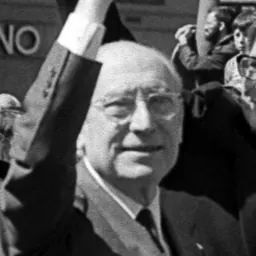
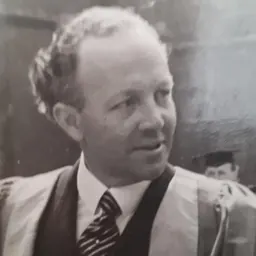
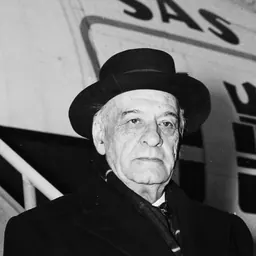



Related people
Same field, nearest in time
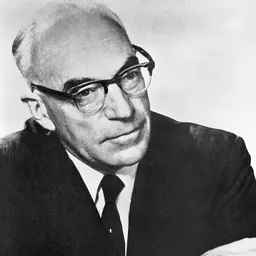



Contemporaries
People whose lives overlapped José Ferrater Mora's





Frequently asked questions
Who was José Ferrater Mora?
Spanish philosopher, professor and writer (1912-1991)
When was José Ferrater Mora born?
José Ferrater Mora was born on 30 October 1912 in Barcelona.
When did José Ferrater Mora die?
José Ferrater Mora died on 30 January 1991 in Barcelona.
What was José Ferrater Mora's occupation?
José Ferrater Mora was a philosopher, writer and university teacher.
What nationality was José Ferrater Mora?
José Ferrater Mora was Spanish.
Sources & further reading
· Wikipedia: José Ferrater Mora
Cite this page
APA: Biography.guide. (2026). José Ferrater Mora. https://biography.guide/jose-ferrater-mora/
MLA: "José Ferrater Mora." Biography.guide, https://biography.guide/jose-ferrater-mora/.
Chicago: "José Ferrater Mora." Biography.guide. https://biography.guide/jose-ferrater-mora/.
Data last updated: 2026-09-20 · Spot an error? Report a correction.
Page generated 2026-09-27 05:28 UTC