
About Jørgen Iversen Dyppel
Lived 1638 – 1683 (aged 44–45). Jørgen Iversen Dyppel was a Danish governor.
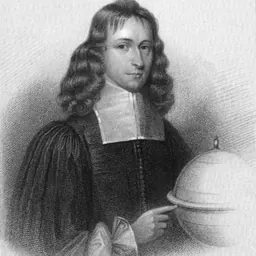
Jørgen Iversen Dyppel (February 25, 1638 – 1683), also called George Iversen or Ifversen, or sometimes Doppel in Knox, was the first governor of the renewed establishment of St. Thomas in the Danish West Indies, from 1672 to 1680. His rule was marked by the work to construct a functioning colony and the difficulties of such a task.
Biography
Early life
Dyppel was born in Helsingør, Denmark-Norway as the son of a baker from Holstein or Sønderjylland and Else Pedersdatter. The name Dyppel comes from Dybbøl in Southern Jutland.
After Dyppel's education, he went to the West Indies as an indentured servant. Krarup presumes he went with Carib. Partie's ship in 1654. He drafted a letter to Charles II of England, but never sent it due to the rising tension between Denmark and England.
Governorship Danish West India Company was organized in December 1670 and formally chartered on March 11, 1671. Dyppel bought a share for 1000 rdl. Due to his experiences in the West Indies, he was recommended to be the first governor by company director Peter Petersen Lerche, and took the position on April 29. Dyppel's vessel Færøe had departed on October 20, 1671 and did not arrive until May 23 the following year. This delay was caused by a leak incurred in November 1671, and subsequent docking in Bergen for 3 months, during which time Dyppel had quite a task with controlling the crew which consisted partly of indentured servants and partly of convicted felons conscripted for duty.
Sources disagree on the exact date of his officially taking the gubernatorial position, as Bricka & Krarup has the date as May 26, 1672, where Westergaard has May 25 and Taylor has May 23.
At the time when Danish West India Company claimed St. Thomas, it had been abandoned by the previous English settlers, although some Dutch were there upon Dyppel's arrival.
The estates of the present settlers were confirmed in deeds issued by Dyppel in 1678. Such estates were taxed for a capon or a turkey, which were used for a banquet each year. Future governors Nicolai and Adolph Esmit are named as land owners in the 1678 deeds.
His first orders included mandatory church attendance for all settlers (and piousness for white servants), the stocking of arms (swords and guns), and a curfew for black slaves. Additionally, a system of alarms were set up in the case of hostile ships. A settler who spotted a ship was to fire his gun and alert his neighbor, who would in turn alert the next. Any rule broken resulted in a fine of 10 to 1000 pounds of tobacco, depending on the offense. Taylor notes that none may leave the island without the governor's permission under penalty of 500 to 1000 pounds of tobacco, and that Dyppel was a strict disciplinarian in these matters.
The system of alarms was, according to Knox, instated due to the "Spaniards, at Porto Rico, still jealous of other nations possessing islands in their vicinity, [seeking] to annoy [St. Thomas] by every means in their power. They often descended by night upon the island, and stole negroes and cattle." Another concern was French and English buccaneers at Tortuga.
Among Dyppel's initial tasks included organizing the clearing of forests, building roads and plantations. move his house, as "it is not advantageous to the Fort, but at some time or other might be prejudicial that Baggert build his house so much higher than the Fort, insomuch that everyone who comes to him can completely overlook it." Baggert would later prove to be a factor in some of Dyppel's problems.
Due to the Danes not being used to the climate (Krarup mentions that the Danes had trouble with "the poisonous fumes" of the tropical forest, as well as the foreign food, whereas the Dutch were better acclimatized ), as well as the Franco-Dutch and Anglo-Dutch wars, this proved a complex undertaking. Dyppel obtained some help from the British settlers of Tortola, mainly in the form of sugar cane captured from Tortola's former Dutch settlers.
At this time, the reputation of the Danish West India Company had reached a low among the Danish populace. The directors wrote that, "our company is among the common people of such ill repute, that they feel that serving in West India is a worse task than serving barbarians." Soon, Dyppel offered the company to add a year to his original 3-year contract, which was accepted with gratitude. and the company started using convicted prisoners, lured with the promise of freedom, to a high degree. Dyppel proved a harsh governor for such elements, and physical punishment was common.
Slave trade was a significant part of the new colony's economy. Krarup relates the story of a Portuguese ship running aground in the vicinity, and how the slaves were salvaged. Due to their emaciated condition, they were given such names as "Benrad, Indtørret, Uden Bug, Sur Øje [etc]" ("Bones, Dried-up, No Gut, Sour Eye"). Likewise, Krarup mentions that Indian slaves were removed from the colony, as they were "worse escapees than the negros", to avoid inspiring the latter. One such Indian, Jan Indian, had his foot cut off to "curb his eagerness [for escape]".
On February 2, 1678, St. Thomas was attacked by the French, and albeit they were repelled, they abducted a number of slaves. Dyppel started improving the fortifications, a project which was finished on May 2, 1680. All hands on the island were involved in this, and during this time, they lodged in the fort. The task of defending St. Thomas proved taxing on Dyppel, and according to Krarup, Dyppel later said he sought refuge in "strong drinks". In 1679, Dyppel and a Pieter Jansen had a physical altercation outside the Reformed Church, and Dyppel put him in prison and kept him there without due process. Esmit was welcomed with warmly.
Later life
About the transfer of the colony from Dyppel to Esmit, Krarup notes the accomplishments of Dyppel with great appreciation. Esmit even writes home to the company, speaking highly of the state of the island, expressing confusion at the displeasure with Dyppel on the part of plantationers such as the aforementioned Carl Baggert. Rumors flourished that some signatures on the declaration had been forced, and Dyppel asked the settlers in front of Esmit if this was so, to which they all replied no.
Esmit, however, proclaimed himself the protector of Jansen, and warned Dyppel that he would not be allowed self-defence, even if Jansen physically attacked him.
After returning to Denmark where he landed in Helsingør on February 24, 1681, Dyppel wrote a letter to the company saying that he would stay there a week to go to the altar at the church, not having done so in 9 years. He wrote that Esmit was not of "a good Danish mindset" and that he himself was "not affectionate of the German". He knows about the charges, but rebuts them firmly, which according to Krarup has a significant effect in their juxtaposition with the pious sinner that shines through the first part of the letter. They met as Dyppel's son had found employ in Jensen's house.
It was proclaimed that the colony would give free passage to St. Thomas if prospective settlers would pay their own upkeep, and that any interested parties should announce themselves to Dyppel. However, none showed. Instead, all life-serving prisoners from the Holmen prison, as well as 20 women convicted of prostitution were selected.
Death
The royal ship Havmanden (The Merman or Neptunus) left Helsingør for St. Thomas on November 10. Dyppel writes home December 15, mentioning among other things that his wife has born a daughter on November 30, but nothing more is heard from the ship until it runs aground in Marstrand, Sweden.
In the subsequent investigation, it comes forth that the prisoners of the ship mutinied around New Year's Eve, 1683 somewhere in the Atlantic. They shot the captain and decapitated seven or eight crew members. The ship had come under the leadership of the prisoner Hans Borman, "an ungodly person", and Dyppel was thrown overboard with his newborn daughter and wife. where he married Anna van Ockeren (daughter of Dutch plantation owner Simon van Ockeren), who upon becoming a widow married future Governor Claus Hansen. Iver and Anna had one daughter, Birgitte Iversdatter, who was sickly and had no children with her husband, surgeon Constantin Christian Cornetzsky. Thus ended Dyppel's bloodline.
Dyppel's legacy according to Biografisk Lexikon is that of an honest man and a hard worker.
Don’t just read it —
keep it.
Full-length biographies made to live with: read them, listen on the way to work, watch them tonight.
- E-book
- Audio
- Video
Instant download · yours to keep · every purchase keeps this site free
Important facts
Related people
Same field, nearest in time






Contemporaries
People whose lives overlapped Jørgen Iversen Dyppel's




Frequently asked questions
Who was Jørgen Iversen Dyppel?
Governor of the Danish West Indies
When was Jørgen Iversen Dyppel born?
Jørgen Iversen Dyppel was born on 25 February 1638 in Helsingør.
When did Jørgen Iversen Dyppel die?
Jørgen Iversen Dyppel died in 1683 in sea.
What was Jørgen Iversen Dyppel's occupation?
Jørgen Iversen Dyppel was a governor.
What nationality was Jørgen Iversen Dyppel?
Jørgen Iversen Dyppel was Danish.
Sources & further reading
· Wikipedia: Jørgen Iversen Dyppel
· DBpedia: Jørgen Iversen Dyppel
Cite this page
APA: Biography.guide. (2026). Jørgen Iversen Dyppel. https://biography.guide/jorgen-iversen-dyppel/
MLA: "Jørgen Iversen Dyppel." Biography.guide, https://biography.guide/jorgen-iversen-dyppel/.
Chicago: "Jørgen Iversen Dyppel." Biography.guide. https://biography.guide/jorgen-iversen-dyppel/.
Data last updated: 2026-09-20 · Spot an error? Report a correction.
Page generated 2026-09-27 05:21 UTC