
About Jorge Ibargüengoitia
Lived 1928 – 1983 (aged 55). Jorge Ibargüengoitia was a Mexican writer, playwright, novelist and journalist.
Jorge Ibargüengoitia Antillón (January 22, 1928 – November 27, 1983) was a Mexican novelist and playwright who achieved great popular and critical success with his satires, three of which have appeared in English: The Dead Girls, Two Crimes, and The Lightning of August. His plays include Susana y los Jóvenes and Ante varias esfinges, both dating from the 1950s. His work also includes short stories and chronicles. He is considered one of the most influential writers in Latin American literature.
Ibargüengoitia was born in Guanajuato, Mexico. In 1955, he received a Rockefeller grant to study in New York City; five years later he received the Mexico City literary award. He died in Avianca Flight 011, which crashed on November 27, 1983, while it attempted to land in Madrid, Spain.
Biography Jorge Ibargüengoitia was born in 1928 in the city of Guanajuato. His father, Alejandro Ibargüengoitia Cumming, died when he was eight months old. His mother, María de la Luz Antillón, moved with Jorge to Mexico City to be close to her family after losing her husband, so Ibargüengoitia was brought up by his mother and by other women of her family. During his early education, he studied in schools that belonged to the Marist Brothers and was a boy scout. In 1947 he attended the 6th World Scout Jamboree, after which he travelled through France, Italy, Switzerland and England for three months. The painter Manuel Felguérez, a friend who went to the same trip, told years later that both had considered the trip an amazing experience and had decided that they should do something with their lives that allowed them to continue travelling. He wrote: "I grew up surrounded by women who adored me. They wanted me to be an engineer: they had had money, but had lost it and hoped I would make up for it [...] When I had two years left to finish the engineering degree, I decided to drop out to focus on writing. The women of the house spent 15 years bemoaning that decision [...] Later on they got used to it." After dropping out, he moved back to the state of Guanajuato, where his family still had lands.
After he finished his studies, Ibargüengoitia started teaching. He even got his teacher Rodolfo Usigli's position, together with Luisa Josefina Hernández, when Usigli retired. and in it, the style that would characterise most of his further work was already present: taking real-life stories and subjecting them to a whimsical, sardonic treatment.
Ibargüengoitia died before he finished his seventh novel, which would have been set in the period of the Second Mexican Empire of Maximilian I and Carlota. It was never published.
Aside from historical periods, Ibargüengoitia often wrote about details, anecdotes and problems of his daily life. His native state of Guanajuato was also frequently used as a set for his stories, although he almost always used fictional names, such as Cuévano, Plan de Abajo, Muérdago or Pedrones, to stand in for it or its cities.
The writer has been quoted as saying he never meant to make anyone laugh, that he thought laughter was useless and a pointless waste of time.
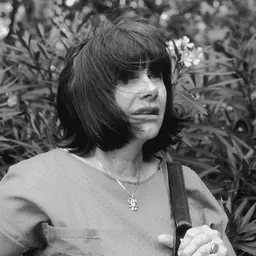
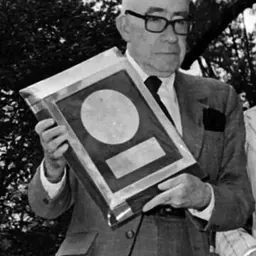
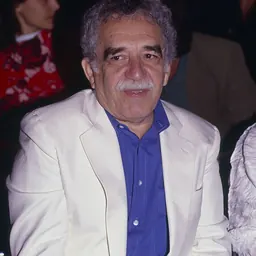
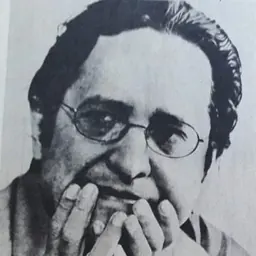
Death and legacy In 1983, Ibargüengoitia was invited by Gabriel García Márquez to the First Encounter of Hispanic-American Culture in Bogotá, Colombia. and boarded Avianca Flight 011 that departed from Paris and was due to land in Madrid. The plane, a Boeing 747, crashed near the Madrid-Barajas airport as it attempted to land, on November 27, 1983. He perished along with Peruvian poet Manuel Scorza, Uruguayan critic Ángel Rama, Argentinian academic Marta Traba, and 177 others.
He is buried in Antillón Park in Guanajuato, named in honour of his great-grandfather General Florencio Antillón, and where a talavera plaque marks his remains. In translation, it says simply, "Here lies Jorge Ibargüengoitia in the park of his great-grandfather, who fought against the French."
According to his publisher, Ibargüengoitia's books are still well received in libraries and bookstores, His personal archive is at the Firestone Library of Princeton University.
Don’t just read it —
keep it.
Full-length biographies made to live with: read them, listen on the way to work, watch them tonight.
- E-book
- Audio
- Video
Instant download · yours to keep · every purchase keeps this site free
Important facts
Family & relationships
People in Jorge Ibargüengoitia's life
Named in this biography and alive at the same time



Related people
Same field, nearest in time

Contemporaries
People whose lives overlapped Jorge Ibargüengoitia's



Frequently asked questions
Who was Jorge Ibargüengoitia?
Mexican writer (1928–1983)
When was Jorge Ibargüengoitia born?
Jorge Ibargüengoitia was born on 22 January 1928 in Guanajuato.
When did Jorge Ibargüengoitia die?
Jorge Ibargüengoitia died on 27 November 1983 in Madrid.
What was Jorge Ibargüengoitia's occupation?
Jorge Ibargüengoitia was a writer, playwright, novelist and journalist.
What nationality was Jorge Ibargüengoitia?
Jorge Ibargüengoitia was Mexican.
Sources & further reading
· Wikipedia: Jorge Ibargüengoitia
· DBpedia: Jorge Ibargüengoitia
Cite this page
APA: Biography.guide. (2026). Jorge Ibargüengoitia. https://biography.guide/jorge-ibarguengoitia/
MLA: "Jorge Ibargüengoitia." Biography.guide, https://biography.guide/jorge-ibarguengoitia/.
Chicago: "Jorge Ibargüengoitia." Biography.guide. https://biography.guide/jorge-ibarguengoitia/.
Data last updated: 2026-09-20 · Spot an error? Report a correction.
Page generated 2026-09-27 05:31 UTC