
About Jorge Eduardo Eielson
Lived 1924 – 2006 (aged 81). Jorge Eduardo Eielson was a Peruvian artist, poet, painter, writer, playwright and visual artist.
Jorge Eduardo Eielson (April 13, 1924 – March 8, 2006) was a Peruvian artist and writer. As an artist, he is known for his quipus, a reinterpretation of an ancient Andean device; they are considered precursors of conceptual art.
Life and career Eielson was born in Lima. His father died when he was seven years old so he was raised by his mother. At a young age, he developed artistic tendencies: he played the piano, drew copiously and recited poetry. Eielson switched schools several times until at the end of his secondary education he met the anthropologist and writer José María Arguedas who introduced him to the artistic and literary circles of Lima as well as to the knowledge of the ancient civilizations of Peru. Eielson started studies at the National University of San Marcos in 1941. He won the National Poetry Award three years later and the National Drama Award in 1948, when he also held a successful art exhibition at the Lima Gallery .
In the same year, he traveled to Paris under a French government scholarship, in that city he exhibited at the Colette Allendy gallery before traveling to Switzerland thanks to a UNESCO scholarship. In 1951, he traveled to Italy for a summer vacation and decided to settle permanently in Rome. During this period he wrote the collection of poems Habitación en Roma and two novels: El cuerpo de Giulia-No and Primera muerte de María. In the late 1950s, he abandoned avant-garde and resorts to using materials such as earth, sand and clay to sculpt in the canvas surface; at first he uses this technique to depict landscapes but gradually moves towards human figures represented through clothing of various kinds. In 1963, he started his first quipu, reinventing this ancient Andean device with fabrics of brilliant colors, knotted and tied on canvas. Eielson's quipus were exhibited in the 1964 Venice Biennale to wide acclaim. In the mid-1970s, he traveled to Peru where he devoted himself to the study of pre-Columbian art; during this period, the Instituto Nacional de Cultura (National Institute of Culture) published most of his poetry under the title Poesía escrita. He received a Guggenheim Fellowship in 1978 for a lecture in New York. Poetry Reinos (1944) Canción y muerte de Rolando (1944 and 1959) Mutatis mutandis (1967) Poesía escrita (1976) Canto visible (1977) Noche oscura del cuerpo (1989)
Novel El cuerpo de Giulia-No (1971)
Don’t just read it —
keep it.
Full-length biographies made to live with: read them, listen on the way to work, watch them tonight.
- E-book
- Audio
- Video
Instant download · yours to keep · every purchase keeps this site free
Important facts
People in Jorge Eduardo Eielson's life
Named in this biography and alive at the same time




Related people
Same field, nearest in time


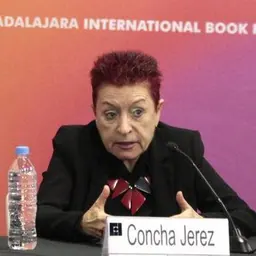

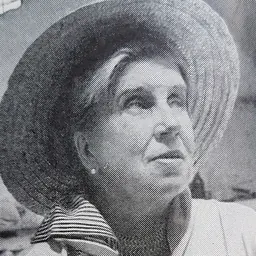
Contemporaries
People whose lives overlapped Jorge Eduardo Eielson's
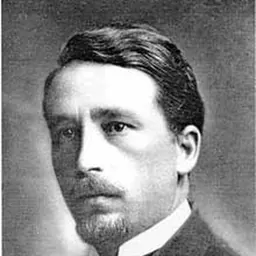
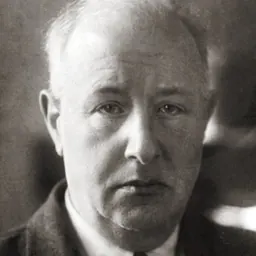

Frequently asked questions
Who was Jorge Eduardo Eielson?
Peruvian artist and writer (1924-2006)
When was Jorge Eduardo Eielson born?
Jorge Eduardo Eielson was born on 13 April 1924 in Lima.
When did Jorge Eduardo Eielson die?
Jorge Eduardo Eielson died on 8 March 2006 in Milan.
What was Jorge Eduardo Eielson's occupation?
Jorge Eduardo Eielson was an artist, poet, painter, writer, playwright and visual artist.
What nationality was Jorge Eduardo Eielson?
Jorge Eduardo Eielson was Peruvian.
Sources & further reading
· Wikipedia: Jorge Eduardo Eielson
· DBpedia: Jorge Eduardo Eielson
Cite this page
APA: Biography.guide. (2026). Jorge Eduardo Eielson. https://biography.guide/jorge-eduardo-eielson/
MLA: "Jorge Eduardo Eielson." Biography.guide, https://biography.guide/jorge-eduardo-eielson/.
Chicago: "Jorge Eduardo Eielson." Biography.guide. https://biography.guide/jorge-eduardo-eielson/.
Data last updated: 2026-09-25 · Spot an error? Report a correction.
Page generated 2026-09-27 05:11 UTC