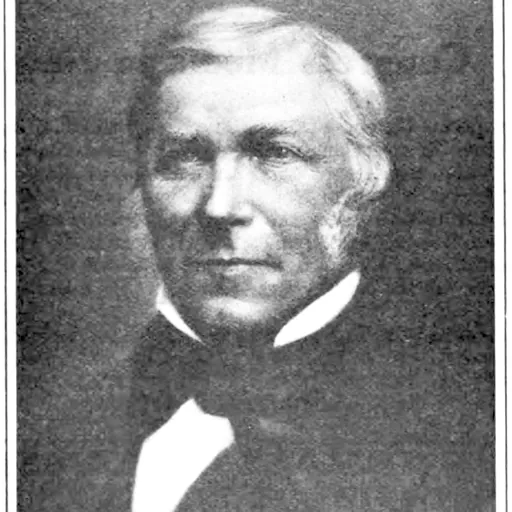
About Jonathan Knight
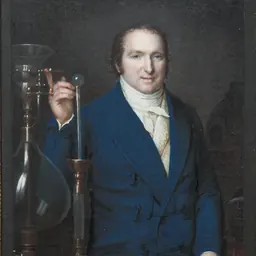
Lived 1787 – 1858 (aged 71). Jonathan Knight was an American politician, civil engineer and engineer.
Jonathan Knight (November 22, 1787 – November 22, 1858) was an American civil engineer and politician associated with early United States internal improvements. He served as a commissioner and engineer on the National Road, where he conducted route-location surveys in Ohio and Indiana beginning in the early 1820s and helped establish alignments and sectional divisions used for construction.
In 1828, Knight joined the Baltimore and Ohio Railroad and, following service on its initial Board of Engineers, became its chief engineer in 1830. His work included route evaluation, track design decisions, and the adaptation of British railway technology to American conditions during the railroad’s formative years.
Knight later served in the Pennsylvania Senate from 1822 to 1828 and in the U.S. House of Representatives from 1855 to 1857. Early life and education Jonathan Knight was born in Bucks County, Pennsylvania, the tenth child of Abel and Anna S. Knight. In 1801, he moved with his parents to East Bethlehem Township, Pennsylvania in Washington County, Pennsylvania. He attended the common schools, worked as a teacher, and later purchased a farm. Knight eventually became a surveyor and later practiced as a civil engineer.
In 1816, he was appointed by the state of Pennsylvania to prepare a map of Washington County, Pennsylvania.
Professional career Knight’s professional career combined survey work, internal-improvement engineering, and later railroad development. He assisted in preliminary surveys for the Chesapeake and Ohio Canal and the National Road between Cumberland, Maryland, and Wheeling, Virginia (now West Virginia), working under federal authority during the expansion of early transportation infrastructure.
In April 1828, Knight entered the service of the Baltimore and Ohio Railroad (B&O), where he later became its chief engineer during the railroad’s initial construction.
After leaving railroad service, he engaged in agricultural pursuits and served as secretary of an agricultural society in Washington County, Pennsylvania. In 1825 he was appointed a commissioner for the extension of the road, serving under federal authority to complete its location west of the Ohio River through Ohio and Indiana. Knight’s role as commissioner thus combined technical route-location work with administrative authority over the progress of the extension, an experience that informed his later work in railroad engineering and organization on the Baltimore and Ohio Railroad. Ohio route location and alignment studies Knight conducted comparative surveys of alternative alignments across Ohio, selecting routes that balanced grade, distance, and construction feasibility. He examined proposed deviations from earlier survey lines and recommended retaining the original alignments where alternatives did not provide sufficient engineering advantage. Rather than relying on formal analytical models, Knight adopted a comparative approach, examining alternative routes and selecting alignments based on observed terrain conditions and practical construction considerations. His work also reflects the administrative context of federal internal improvements, in which survey, location, contracting, and staged construction were closely coordinated through the commissioner system.
At its first meeting, the board appointed Caspar Wever superintendent of construction. Wever had worked on the National Road, and Long later stated that Knight’s favorable testimony contributed to Wever’s appointment.
Knight’s tenure extended through the initial construction of the B&O’s main line westward from Baltimore, including early work toward Harpers Ferry, Virginia, as well as development of the Washington Branch connecting Baltimore and Washington, D.C.. However, Knight was an unsuccessful candidate for reelection in 1856 and for election in 1858. Following his congressional service, Knight resumed agricultural pursuits near East Bethlehem Township, Pennsylvania, where he remained until his death in 1858.
Knight’s engineering work on the National Road and the Baltimore and Ohio Railroad places him among the early generation of American civil engineers who operated before the formalization of engineering education and professional practice. His career illustrates the transition from empirically based surveying and route location to more integrated forms of engineering design that incorporated materials, construction methods, and operational considerations.
On the National Road, Knight’s surveys in Ohio and Indiana contributed to the establishment of route alignments and sectional organization used for construction. His field notes and recommendations, including assessments of terrain, material availability, and bridge requirements, demonstrate the close relationship between surveying and design in early American infrastructure projects.
On the Baltimore and Ohio Railroad, Knight participated in adapting British railway technology to American conditions, including decisions regarding rail forms, track gauge, and track behavior. His work reflects the early development of railroad engineering as a system-level discipline integrating civil, mechanical, and operational factors.
Taken together, Knight’s career exemplifies the role of the early American civil engineer as a practitioner working across surveying, design, and construction in the formative period of the nation’s transportation infrastructure.
Don’t just read it —
keep it.
Full-length biographies made to live with: read them, listen on the way to work, watch them tonight.
- E-book
- Audio
- Video
Instant download · yours to keep · every purchase keeps this site free
Important facts
People in Jonathan Knight's life
Named in this biography and alive at the same time

Related people
Same field, nearest in time


Contemporaries
People whose lives overlapped Jonathan Knight's


Frequently asked questions
Who was Jonathan Knight?
politician (1787-1858)
When was Jonathan Knight born?
Jonathan Knight was born on 22 November 1787 in Bucks County.
When did Jonathan Knight die?
Jonathan Knight died on 22 November 1858 in East Bethlehem Township, Pennsylvania.
What was Jonathan Knight's occupation?
Jonathan Knight was a politician, civil engineer and engineer.
What nationality was Jonathan Knight?
Jonathan Knight was American.
Sources & further reading
· DBpedia: Jonathan Knight (railroader)
Cite this page
APA: Biography.guide. (2026). Jonathan Knight. https://biography.guide/jonathan-knight/
MLA: "Jonathan Knight." Biography.guide, https://biography.guide/jonathan-knight/.
Chicago: "Jonathan Knight." Biography.guide. https://biography.guide/jonathan-knight/.
Data last updated: 2026-09-22 · Spot an error? Report a correction.
Portrait: Wikimedia Commons · author & licence
Page generated 2026-09-27 05:03 UTC