
About Jon Wiener
Born 1944. Jon Wiener is an American historian, writer, journalist, author and political writer.
Jon Wiener (born May 16, 1944) is an American historian and journalist based in Los Angeles, California. He waged a 25-year legal battle to win the release of the FBI's files on John Lennon. A professor emeritus of U.S. history at the University of California, Irvine, and host of The Nations weekly podcast, Start Making Sense, he is a contributing editor for the progressive political weekly magazine The Nation.
Set the Night on Fire (2020) is a movement history of Los Angeles. The book chronicles LA's involvement in the civil rights, Black power, Chicano rights, women's liberation, gay liberation, and anti-war movements, as well as the battles between young people and the LAPD on Sunset Strip and at Venice Beach. The counterculture provides another focus—the Ash Grove folk music club, the LA Free Press, KPFK radio and the Free Clinic.
Early life Wiener was born in Saint Paul, Minnesota, He graduated from Central High School.
Wiener attended Princeton University in New Jersey, where he founded a chapter of the Students for a Democratic Society to protest the Vietnam War. He received a bachelor's degree from Princeton in 1966, and Past & Present. He led students on visits to the Nixon Library.
Journalism and political commentary
Since 1984, Wiener has been a contributing editor for The Nation magazine, He regularly publishes reviews of books pertaining to the American political left in the 1960s and '70s.
Wiener has hosted a weekly podcast called "Start Making Sense" for The Nation, and a weekly radio program for Pacifica Radio station KPFK 90.7 FM in Los Angeles.
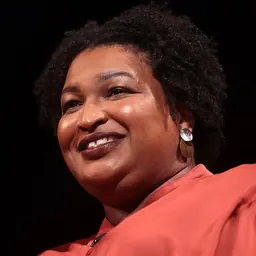
In his journalism, Wiener, writing in the Los Angeles Times at the beginning of 2020, correctly predicted that 2020 would be "The Worst Year of Trump’s Life." He interviewed Chinese dissident artist Ai Wei Wei about the international refugee crisis—the subject of Ai's film Human Flow. He interviewed Georgia's voting rights organizer Stacey Abrams about her work. And he spoke with the award-winning novelist Margaret Atwood about “the shocking relevance of “The Handmaid’s Tale.”
Wiener has also written on historical topics. On the 50th anniversary of the My Lai Massacre, he wrote about the "forgotten hero" who stopped the massacre, quoting from his interview for KPFK with U.S. Army helicopter pilot Hugh Thompson Jr. He wrote for the New York Times Book Review about how the Sixties are remembered in America. While Wiener is perhaps best known for his efforts to expose the FBI's surveillance of John Lennon, he also was instrumental in getting the FBI to release documents about its surveillance of comedian Groucho Marx.
Wiener and the Lennon FBI files + Chronology of Wiener v. FBIDatesEventNotes 1969 Lennon releases the single "Give Peace a Chance" 1971–1972 FBI closely monitors Lennon 1973-03 Judge rules Lennon must leaveUS in two months 1976-06 Lennon wins countersuit;can stay in US 1980-12-10 John Lennon murdered 1981 Wiener researches book on Lennon 2004 Federal judge orders remaining ten documents released
Background According to one report, FBI chief J. Edgar Hoover sent a memo to Nixon's chief of staff describing Lennon as a sympathizer of Trotskyist communists in England.
The legal battle between Wiener and the United States government was waged over two and a half decades, and has been examined by other historians. In the late sixties, many young Americans became opposed to the Vietnam War, and John Lennon became an antiwar advocate who made then-president Richard Nixon nervous about his reelection prospects in 1972. The consensus view is that Nixon asked the FBI to begin surveillance of Lennon, possibly after Lennon went to New York on a visa and met up with radical anti-war activists.
The attempt to deport Lennon The Immigration and Naturalization Service, acting on a suggestion from Senator Strom Thurmond,
The Republican National Convention in August 1972; Nixon's wife Pat Nixon addressed the crowd. Nixon was reelected in November 1972. Reporter Adam Cohen writing in 2006 in The New York Times agreed that the FBI surveillance of Lennon had been motivated not only by antiwar concerns but by concerns of a political nature. According to Cohen, what was most revealing was that the timing of these events suggested there was an underlying political motivation behind the surveillance and deportation proceedings. wrote letters to the Immigration and Naturalization Service advocating that Lennon should be allowed to stay. According to Wiener, the FBI had succeeded in "neutralizing" Lennon's opposition to Nixon's reelection. of the files on the grounds that they contained "national security" information. The pages that were released were heavily blacked out with magic marker, or redacted.
In 1983, Wiener sued the FBI under the Freedom of Information Act with assistance from the ACLU of Southern California, in a case known as Wiener v FBI. In response, the FBI turned over some documents, but withheld others claiming they contained "national security information provided by a foreign government under an explicit promise of confidentiality" and added that releasing the documents could lead to "military retaliation against the United States." The papers, withheld 25 years, don't seem to bear that out. As a result, the FBI had to keep filing affidavits which had "sufficient detail" which allowed Wiener to keep advocating for their release, and for judges to "intelligently judge" the contest, according to several reports. A settlement with the FBI was reached in 1997 According to Wiener, the ten pages revealed there had been contacts between Lennon and leftist and anti-war groups in London in the early 1970s but that there had been no signs that government officials saw Lennon as a serious threat,
Chronicling the case Wiener wrote about his legal battles in his book, Gimme Some Truth: The John Lennon FBI Files, published by the University of California Press in 2000. The book includes copies of 100 key documents from the Lennon file, including "lengthy reports by confidential informants detailing the daily lives of anti-war activists, memos to the White House, transcripts of TV shows on which Lennon appeared, and a proposal that Lennon be arrested by local police on drug charges." He also wrote about the case and its significance for The Guardian, The Nation, the Los Angeles Times, and The New Republic.
Wiener's work provided the basis for the 2006 documentary The U.S. vs. John Lennon. Wiener served as a historical consultant to the production and appears in the film. He also appears in the documentary LENNONYC, which aired on the PBS show "American Masters" in 2010. He was interviewed about the Lennon FBI Files by Terry Gross on the NPR program "Fresh Air." ACLU attorney Mark Rosenbaum said that the Wiener v FBI case revealed "government paranoia at a pathological level and an attempt to shield executive branch abuse of civil liberties under the rubric of national security."
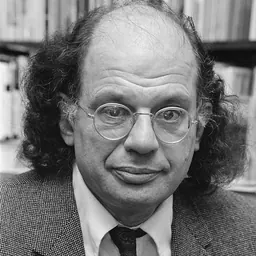
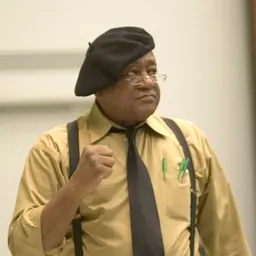
Books Wiener is the author of seven books. In addition to his co-authored 2020 book Set the Night on Fire: L.A. in the Sixties, Wiener also wrote Historians in Trouble: Plagiarism, Fraud and Power in the Ivory Tower. he examined various academic scandals and concluded that media spectacles end careers only when powerful, usually right-leaning external groups demand punishment. He also edited and wrote the introduction to Conspiracy in the Streets: The Extraordinary Trial of the Chicago Seven which included an abridged transcript of the 1968 Chicago Conspiracy trial; in that trial, Bobby Seale, Abbie Hoffman, Jerry Rubin, Dave Dellinger and others faced charges stemming from anti-war demonstrations at the Democratic National Convention, and witnesses included Timothy Leary, Norman Mailer, Arlo Guthrie, and Allen Ginsberg; the book includes an afterword by defendant Tom Hayden and drawings by Jules Feiffer. Wiener's earlier book How We Forgot the Cold War: A Historical Journey across America, based on his visits to Cold War monuments, museums, and memorials, emphasizes popular skepticism about America's victory.
Critical reaction Reactions by critics to Wiener's writings has been varied. Kirkus Reviews called Set the Night on Fire: L.A. in the Sixties "a richly detailed portrait of a city that seethed with rebellious energy." The reviewer for the Los Angeles Times described it as "a dense, detailed read" that was “authoritative and impressive.” The LA Review of Books called it "a monumental history of rebellion and resistance." Some reviewers found problems with the book – Publishers Weekly said it was an "overstuffed and often disjointed account" but declared that "Davis and Wiener write with passion and deep knowledge,” and concluded that the book was “an indispensable portrait of an unexplored chapter in history." In The Guardian, Ben Ehrenreich called it "a vital primer in resistance, a gift to the future from the past", while Sean O'Hagan praised the book's "epic sweep and questioning tone".
Among Wiener's earlier books, the New York Times Book Review wrote that Come Together: John Lennon in His Time "stands out as one of the few books that don't want to deify, dish the dirt about or otherwise exploit the slain former Beatle." A review of Historians in Trouble: Plagiarism, Fraud, and Politics in the Ivory Tower faulted Wiener for having a left-leaning bias. "Civil War, Cold War, Civil Rights: The Civil War Centennial in Context, 1960-1965". In The Memory of the Civil War in American Culture. Edited by Alice Fahs and Joan Waugh. Chapel Hill: The University of North Carolina Press, 2004. . Historians in Trouble: Plagiarism, Fraud, and Politics in the Ivory Tower. New York: The New Press, 2005. . Conspiracy in the Streets: The Extraordinary Trial of the Chicago Seven. Edited with an introduction by Jon Wiener; afterword by Tom Hayden; drawings by Jules Feiffer. New York: The New Press, 2006. .
How We Forgot the Cold War: A Historical Journey across America. Berkeley: University of California Press, 2012. . Set the Night on Fire: L.A. in the Sixties. London: Verso Books, 2020. Co-written with Mike Davis. .
Don’t just read it —
keep it.
Full-length biographies made to live with: read them, listen on the way to work, watch them tonight.
- E-book
- Audio
- Video
Instant download · yours to keep · every purchase keeps this site free
Important facts
Family & relationships
People in Jon Wiener's life
Named in this biography and alive at the same time




Related people
Same field, nearest in time


Contemporaries
People whose lives overlapped Jon Wiener's



Frequently asked questions
Who is Jon Wiener?
American writer
When was Jon Wiener born?
Jon Wiener was born on 16 May 1944 in Saint Paul.
What is Jon Wiener's occupation?
Jon Wiener is a historian, writer, journalist, author and political writer.
What nationality is Jon Wiener?
Jon Wiener is American.
Sources & further reading
Cite this page
APA: Biography.guide. (2026). Jon Wiener. https://biography.guide/jon-wiener/
MLA: "Jon Wiener." Biography.guide, https://biography.guide/jon-wiener/.
Chicago: "Jon Wiener." Biography.guide. https://biography.guide/jon-wiener/.
Data last updated: 2026-09-26 · Spot an error? Report a correction.
Page generated 2026-09-27 05:13 UTC