
About Jon Hol
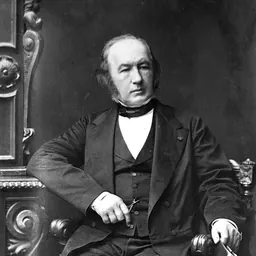
Lived 1851 – 1941 (aged 89–90). Jon Hol was a Norwegian politician, engineer, editing staff, trade unionist and city engineer.
Jon Gundersen Hol (c. 1851 – 1941) was a Norwegian engineer and activist. He is known for his pamphlet Rifleringen, published in February 1884, that resulted in his arrest for lèse majesté. In the pamphlet, he called for soldiers and civilians to arm themselves and encircle the Parliament of Norway Building, creating a "Ring of Rifles", should the need arise. The political situation in Norway at the time was unstable, with an ongoing impeachment case against the conservative government started by political liberals. King Oscar II of Sweden and Norway supported the conservative politicians, and Hol believed that a political and military counter-offensive was planned, hence the need for guarding the Parliament. The tensions between liberals and conservatives drew Hol into politics in the first place in 1880. Before this, he was an engineer by occupation and a writer, albeit apolitical. He increased his writing after 1880, and also involved himself in non-socialist trade unions, including the unsuccessful attempt of establishing a national trade union center in Kristiania.
When the conservatives lost the Impeachment case, there was a change of government and the charges against Hol were dropped. Two years later, he received an economic compensation from the Parliament. After some quiet years in which he concentrated on engineering work, Hol returned to politics as a member of the municipal council of Skien Municipality, representing the local temperance movement. He stood for parliamentary election twice, without success.
Early life Hol was born at the farm Ekornhol in Nord-Odal Municipality, the son of Gunder Johnsen and Rønnaug Haakonsdatter. He began a military education in 1869, and later conducted self-studies as well as attending various schools, including the Norwegian National Academy of Craft and Art Industry. In 1876, he married Karen Pedersdatter, a farmers' daughter from Sør-Odal Municipality and in 1878, he was hired by the city engineering corps of Kristiania.
Political activism Background While studying, Hol became interested in journalism. He began writing for the apolitical magazine Norsk Nationaltidende in 1877, but found his interest in politics growing as he observed the mounting political turmoil at the time. This required altering the Constitution, a move which the executive branch, led by King Oscar II of Sweden and Norway, continuously vetoed. The conservatives in Parliament also opposed this, fearing that the increasingly liberal-dominated parliament would use constitutional change to check the executive branch, and thereby infringe upon the separation of powers. The first royal veto came in 1872, after which the proposition was slightly altered, but it was vetoed again in 1874. Two identical propositions followed, and were defeated, in 1877 and 1880. After 1880, the question about ministers faded into the background; instead the disagreement centered around the King's right to a veto in constitutional cases. According to the Constitution, the King had the right to postpone a non-constitutional act three times. On the other hand, the Constitution did not mention any veto in constitutional cases. Three views became distinct: some argued that the King had no veto at all, the middle ground was held by people who would allow a postponing veto, while the government and the King claimed an absolute veto. The King was above the law, but the Prime Minister and his cabinet could be tried for Impeachment for advising the King to act out an unconstitutional veto. The Impeachment Court consisted of Supreme Court Justices and elected politicians from the Lagting, and as the latter group held a two-thirds majority, an Impeachment trial with a fairly certain outcome could start as soon as the liberals won control over the Lagting seats through general elections. which had been started in 1882 and edited by David Dietrichson for a short while before Hol took over.
Rifle associations and the military Hol eventually came to believe that King Oscar II and his supporters, if opposed by the Norwegian Parliament, would usurp political power with the help of the Norwegian Army. Otto Nyquist, a personal friend of the King, was instated in 1882 as commander of the battalion stationed in Kristiania. In late 1883, Oscar suggested that the storage of bolts of rifles in depots around the country be disconnected, to prevent a situation in which uprising peasantry turned the Army's own weapons against them. Secret talks on a coup d'état supported by the military were held between Oscar and Christian Selmer at the Scanian castle Sofiero Palace in 1883, and the newspaper Morgenbladet publicly supported such a solution.
One of the means to counter this development, was the formation of semi-military forces. All over the country, local rifle associations had sprung up. The first rifle association—Centralforeningen for Udbredelse af Legemsøvelser og Vaabenbrug of 1861—was politically conservative, but a great number of the newer associations, especially in rural districts, supported the political liberals and radicals. They exercised as regular troops, but did not commit acts of political violence. Rather, a latent purpose was to deter a possible conflict. If conservative Commanders of the Army were to use force to subdue the parliamentary process, it was clear that rifle associations, too, could march upon Kristiania, possibly aided by "rogue" commanders such as Albert Jacobsen. was arrested on the same day, and the apprehension of Jon Hol followed on 10 February. He remained in custody until 26 February, and was indicted on 11 March, for lèse majesté. Upon the arrests, the newspaper Verdens Gang noted that no conservative writers had been sanctioned, despite openly calling for a coup d'état.
In the meantime, Christian Selmer was impeached on 27 February; his cabinet members followed one by one, the last being impeached on 1 April. On 11 March, Selmer resigned. Two acting Prime Ministers were drawn from his cabinet; Ole Bachke from 11 to 29 March and Niels Mathias Rye from 29 March to 3 April. Then, a new cabinet led by Selmer's former Minister of Finance Christian Homann Schweigaard was formed, but in reality it stood no chance of surviving as it faced the Liberal-dominated Parliament, whose means of pressuring the executive branch had been strengthened following the Impeachment trial. In June, as Schweigaard entered his last month as Prime Minister, the King summoned mathematics professor Ole Jacob Broch to form a compromise cabinet, but this failed owing to Conservative opposition, spearheaded by up-and-coming politician Emil Stang. In August 1884, workers at Akers Mekaniske Verksted faced a 10% pay cut. A debate had been held in Kristiania Arbeidersamfund on 30 July, and the meeting decided to call a strike effective as of 1 August. In addition, Jon Hol took the initiative to found a national trade union center, Det norske Arbeiderforbund. Representatives from seventeen factories elected Hol as the secretary of Det norske Arbeiderforbund. The printer Nikolai Olsen became treasurer. On 7 October, a new board was elected, and the first point of their manifesto was "Law-abidingness — moral conduct — sobriety".
Later life Hol had been fired from his municipal job on 13 February 1884. After 1884, he laid low for a few years, but on 26 May 1886 he was given by the Liberal-dominated Parliament as compensation for lost income. In 1887 he was again publicly employed, assisting in the construction of the Bandak-Nordsjø Canal. He was hired as the city engineer of Skien in 1891, holding this position for almost twenty-five years, and later worked in Notodden, Kongsberg and Risør. among other subjects, in the magazine Teknisk Ukeblad.
He became active again in politics and the public sphere. He wrote for the liberal newspaper Dagbladet and the temperance magazine Folket, as well as for the local press. He also represented the temperance movement in the city council of Skien for twenty years. In 1906 he ran in the parliamentary elections in the constituency Skien, but was not elected. He has been called an independent candidate.
Hol stood for election again in the 1924 parliamentary election, when the voting system had changed completely. The constituency was now Market towns of Telemark and Aust-Agder counties, and it was a plural-member constituency where representatives were selected from the party lists with the most votes. Hol was fielded as the second candidate on the ballot of the Radical People's Party (Labour Democrats), the new name of the Labour Democrats. The first candidate was A. Jørgensen, police chief of Kragerø. The Radical People's Party fared well in Skien and Kragerø. With 1,050 votes in Kragerø the party prevailed over the Social Democrats and Communists. With 2,075 votes in Skien the party prevailed over Labour. However, it fared much worse in the other six cities, carried 4,571 votes in total and lost the election in the Market towns of Telemark and Aust-Agder counties.
Hol died in 1941, and was buried on 16 May 1941 at Vestre gravlund.
Don’t just read it —
keep it.
Full-length biographies made to live with: read them, listen on the way to work, watch them tonight.
- E-book
- Audio
- Video
Instant download · yours to keep · every purchase keeps this site free
Important facts
People in Jon Hol's life
Named in this biography and alive at the same time

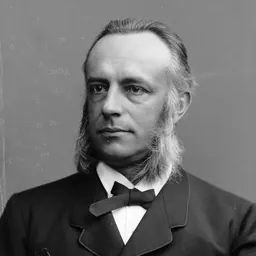
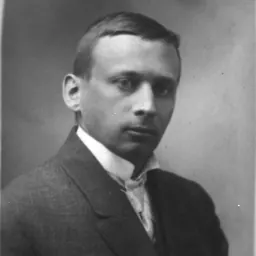
Related people
Same field, nearest in time






Contemporaries
People whose lives overlapped Jon Hol's


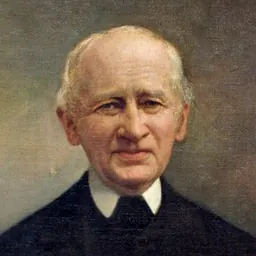
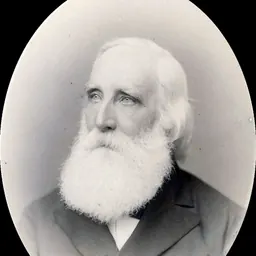

Frequently asked questions
Who was Jon Hol?
Norwegian engineer and activist
When was Jon Hol born?
Jon Hol was born on 1 September 1851 in Nord-Odal Municipality.
When did Jon Hol die?
Jon Hol died in 1941.
What was Jon Hol's occupation?
Jon Hol was a politician, engineer, editing staff, trade unionist and city engineer.
What nationality was Jon Hol?
Jon Hol was Norwegian.
Sources & further reading
Cite this page
APA: Biography.guide. (2026). Jon Hol. https://biography.guide/jon-hol/
MLA: "Jon Hol." Biography.guide, https://biography.guide/jon-hol/.
Chicago: "Jon Hol." Biography.guide. https://biography.guide/jon-hol/.
Data last updated: 2026-09-26 · Spot an error? Report a correction.
Page generated 2026-09-27 05:16 UTC