
About Johnny Hodges
Lived 1906 – 1970 (aged 63). Johnny Hodges was an American jazz saxophonist, songwriter, saxophonist, jazz musician, musician and bandleader.
John Cornelius "Johnny" Hodges (July 25, 1907 – May 11, 1970) was an American alto saxophonist, best known for solo work with Duke Ellington's big band. He played lead alto in the saxophone section for many years. Hodges was also featured on soprano saxophone, but refused to play soprano after 1940. Along with Benny Carter, Hodges is considered to be one of the definitive alto saxophone players of the big band era.
After beginning his career as a teenager in Boston, Hodges began to travel to New York and played with Lloyd Scott, Sidney Bechet, Luckey Roberts, and Chick Webb. When Ellington wanted to expand his band in 1928, Ellington's clarinet player Barney Bigard recommended Hodges. His playing became one of the identifying voices of the Ellington orchestra. From 1951 to 1955, Hodges left the Duke to lead his own band, but returned shortly before Ellington's triumphant return to prominence – the orchestra's performance at the Newport Jazz Festival in 1956.
Biography
Early life John Cornelius Hodges was born in the Cambridgeport neighborhood of Cambridge, Massachusetts, to John H. Hodges and Katie Swan Hodges, both originally from Virginia.
When Hodges was 14, he went with his eldest sister to see Sidney Bechet play in Jimmy Cooper's Black and White Revue in a Boston burlesque hall. Charlie Parker called him "the Lily Pons of his instrument." John Coltrane considered Hodges his first model on the saxophone, even calling him “the world's greatest saxophone player.” In performance: Hodges with Ellington, Frankfurt, Germany, February 6, 1965. Ellington's practice of writing tunes specifically for members of his orchestra resulted in the Hodges specialties "Confab with Rab", "Jeep's Blues", "Sultry Sunset", and "Hodge Podge". Other songs recorded by the Ellington Orchestra which prominently feature Hodges's smooth alto saxophone sound were "Magenta Haze", "Prelude to a Kiss", and "Haupe", from Anatomy of a Murder – also notable are the "seductive" and hip-swaying "Flirtibird", featuring the "irresistibly salacious tremor" by Hodges, "The Star-Crossed Lovers" from Ellington's Such Sweet Thunder suite, "I Got It Bad (and That Ain't Good)", "Blood Count", and "Passion Flower". and "Rabbit" – according to Johnny Griffin because "he looked like a rabbit, no expression on his face while he's playing all this beautiful music."
Saxophones In the 1940s, Hodges played a Conn 6M (recognizable by its octave-key mechanism being on the underside of the neck) and later on a Buescher 400 (recognizable by its V-shaped bell-brace) alto saxophone. By the end of his career in the late 1960s, Hodges was playing a Vito LeBlanc Rationale alto (serial number 2551A), an instrument with unusual key-mechanisms (providing various alternative fingerings) and tone-hole placement, which gave superior intonation. Fewer than 2,000 were ever made. Hodges's Vito saxophone was silver-plated and extensively engraved on the bell, bow, body and key-cups of the instrument.
Death Hodges's last performances were at the Imperial Room in Toronto, less than a week before his May 11, 1970, death from a heart attack, suffered during a visit to the office of a dental surgeon. His last recordings are featured on the New Orleans Suite, which was only half-finished when he died. He was married twice; he had a daughter with his first wife, Bertha Pettiford, and a son (John C. Hodges II) and a daughter (Lorna Lee) with his second wife, Edith Cue.
The loss of Hodges's sound prompted Ellington, upon learning of the musician's death from a heart attack, to lament to JET magazine: "The band will never sound the same without Johnny." In Ellington's eulogy of Hodges, he said, "Never the world's most highly animated showman or greatest stage personality, but a tone so beautiful it sometimes brought tears to the eyes—this was Johnny Hodges. This is Johnny Hodges."
Discography As leader or co-leader 1946: Passion Flower (RCA) with Willie Cook, Roy Eldridge, Quentin Jackson, Russell Procope, Ben Webster, Sam Woodyard 1951: Caravan (Prestige) with Taft Jordan, Harold Baker, Juan Tizol, Duke Ellington, Billy Strayhorn, Oscar Pettiford, Sonny Greer 1951–52: Castle Rock (Norgran) 1952: In a Tender Mood (Norgran) 1952–54: The Blues (Norgran) 1951–54: More of Johnny Hodges (Norgran) 1951–54: Memories of Ellington (Norgran), also released as In a Mellow Tone 1954: Used to Be Duke (Norgran) 1952–55: Dance Bash (Norgran), also released as Perdido 1955: Creamy (Norgran) 1956: Ellingtonia '56 (Norgran) 1956: Duke's in Bed (Verve) 1957: The Big Sound (Verve) 1958: Blues A-Plenty (Verve) 1958: Not So Dukish (Verve) 1959: Johnny Hodges and His Strings Play the Prettiest Gershwin (Verve) 1959: Back to Back: Duke Ellington and Johnny Hodges Play the Blues (Verve) with Duke Ellington 1959: Side by Side (Verve) with Duke Ellington 1960: A Smooth One (Verve) 1960: Gerry Mulligan Meets Johnny Hodges (Verve) with Gerry Mulligan 1961: Blue Hodge (Verve) with Wild Bill Davis 1961: Johnny Hodges with Billy Strayhorn and the Orchestra (Verve) 1961: Johnny Hodges at Sportpalast Berlin (Pablo) with Ray Nance, Lawrence Brown, Al Williams 1962: The Eleventh Hour (Verve) arranged and conducted by Oliver Nelson 1963: Buenos Aires Blues (Johnny Hodges Quintet with Lalo Schifrin on piano) 1963: Sandy's Gone (Verve) 1963: Mess of Blues (Verve) with Wild Bill Davis 1964: Everybody Knows Johnny Hodges (Impulse!) 1964: Blue Rabbit (Verve) with Wild Bill Davis 1965: Con-Soul & Sax (RCA Victor) with Wild Bill Davis 1965: Joe's Blues (Verve) with Wild Bill Davis 1965: Wings & Things (Verve) with Wild Bill Davis 1965: Inspired Abandon (Impulse!) with Lawrence Brown 1966: Stride Right (Verve) with Earl Hines 1966: Blue Pyramid (Verve) with Wild Bill Davis 1966: Wild Bill Davis & Johnny Hodges in Atlantic City (RCA Victor) with Wild Bill Davis 1966: Blue Notes (Verve) 1967: Triple Play (RCA Victor) 1967: Don't Sleep in the Subway (Verve) 1967: Swing's Our Thing (Verve) with Earl Hines 1968: Rippin' & Runnin' (Verve) 1970: 3 Shades of Blue (Flying Dutchman) with Leon Thomas and Oliver Nelson
As sideman
Hodges was not a member of Ellington's Orchestra before 1928, or during 1951–55, or after May 11, 1970, when Hodges died. Duke Ellington's earliest recordings date from 1924 and he died on May 24, 1974. The two men's discographies thus match almost exactly, bar exceptions listed above and in this section. with Lawrence Brown Inspired Abandon (Impulse!, 1965) – billed as Lawrence Brown's All-Stars with Johnny Hodges with Coleman Hawkins Hawkins! Eldridge! Hodges! Alive! At the Village Gate! (Verve, 1962) with Joya Sherrill Joya Sherrill Sings Duke (20th Century Fox, 1965) with Billy Strayhorn Cue for Saxophone (Felsted, 1959) with Billy Taylor Taylor Made Jazz (Argo, 1959) With Clark Terry Duke with a Difference (Riverside, 1957)
Don’t just read it —
keep it.
Full-length biographies made to live with: read them, listen on the way to work, watch them tonight.
- E-book
- Audio
- Video
Instant download · yours to keep · every purchase keeps this site free
Important facts
People in Johnny Hodges's life
Named in this biography and alive at the same time







Related people
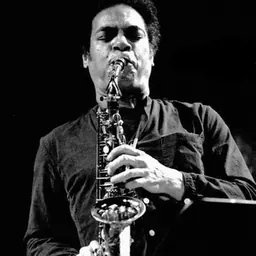
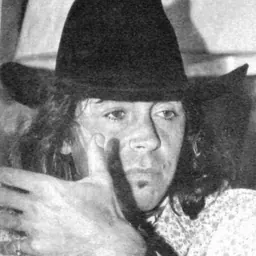
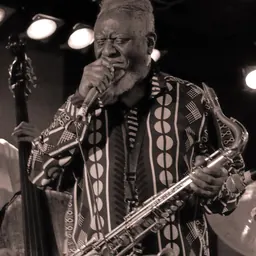
Same field, nearest in time


Contemporaries
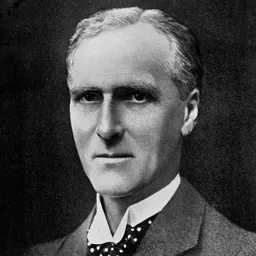
People whose lives overlapped Johnny Hodges's
Frequently asked questions
Who was Johnny Hodges?
American alto saxophonist (1907–1970)
When was Johnny Hodges born?
Johnny Hodges was born on 25 July 1906 in Cambridge.
When did Johnny Hodges die?
Johnny Hodges died on 11 May 1970 in New York City.
What was Johnny Hodges's occupation?
Johnny Hodges was a jazz saxophonist, songwriter, saxophonist, jazz musician, musician and bandleader.
What nationality was Johnny Hodges?
Johnny Hodges was American.
Sources & further reading
Cite this page
APA: Biography.guide. (2026). Johnny Hodges. https://biography.guide/johnny-hodges/
MLA: "Johnny Hodges." Biography.guide, https://biography.guide/johnny-hodges/.
Chicago: "Johnny Hodges." Biography.guide. https://biography.guide/johnny-hodges/.
Data last updated: 2026-09-20 · Spot an error? Report a correction.
Page generated 2026-09-27 05:24 UTC