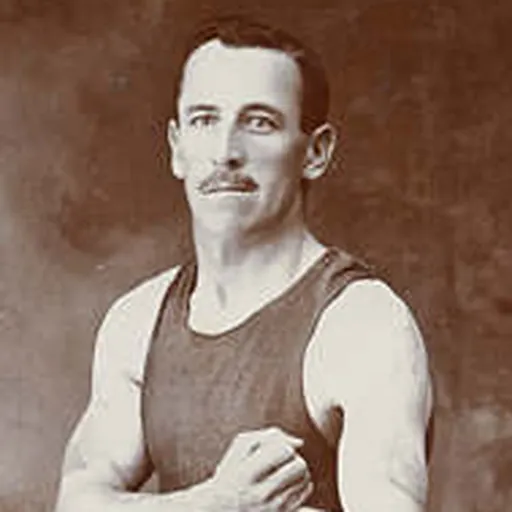
About Johnny Basham
Lived 1890 – 1947 (aged 56). Johnny Basham was a British boxer.
John Michael Basham (1890 – 7 June 1947) was a Welsh boxer who became British and European champion at both welter and middleweight. His professional career spanned over 20 years, from 1909 to 1929, and after being stationed in Wrexham through military service, he fought most of his bouts in nearby Liverpool.
Basham was the first welterweight to win the Lonsdale Belt outright, successfully defended his British welterweight title on two occasions and also took the Commonwealth Welterweight title in 1919. His career was defined not only by his successes, but also through the death in the ring of opponent Harry Price, which saw Basham face manslaughter charges, and his failed contests with Ted "Kid" Lewis towards his career's end.
Boxing career
Early career Johnny Basham was born in Newport in southern Wales in 1890. BoxRec have his first professional fight against Boxer Ryan on 18 October 1909, fought at Campbell Bannerman Hall in Newport. The six round fight only lasted until the third when Basham took the match via a knockout. Only one match is recorded for the second half of 1910, his first fight outside Wales, when he beat Jim Ashen in the first round at the Frank Gess' Pavilion in Gloucester. Basham began 1911 with a draw with Young Walters in Pontnewydd on 6 February.
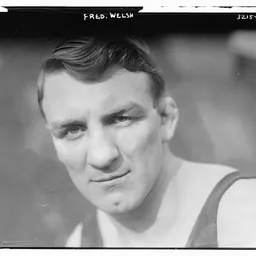
Harry Price and the British Welterweight title During the first half of 1913 Basham experienced a dip in form, losing three and drawing one of the first seven fights. The Grey River Argus recorded the fight being even up to the ninth, but in the tenth round Basham landed with a left hook that put Price down for a count of nine. Price recovered but in the eleventh he was knocked down again, but when he landed his head made "violent contact with the boards of the ring". Basham gained public sympathy for his plight, and he was acquitted when the magistrate in charge of the investigation concluded that the fight had been conducted "fairly and sportingly". A win over Gus Platts back in Liverpool led to Basham's first title fight, a contest against Johnny Summers for the British Welterweight belt. Summers, originally from Yorkshire, was a far more experienced boxer with over 140 fights behind him and had held the title in 1912. The bout, fought at the National Sporting Club, was scheduled for twenty rounds; but in the ninth round Summers was stopped via knock-out, giving Basham his first major title. becoming the first outright winner of the welterweight version of the belt. Tony Lee in his 2009 book All in My Corner, states that "By 1914, Freddie Welsh, Jim Driscoll, Newport's Johnny Basham and Jimmy Wilde had all won the Lonsdale Belts outright;". A Wrexham County Council heritage site records Basham taking the belt both in 1914 and in 1916. The National Library of Wales records Basham winning the Lonsdale Belt in 1916,
Basham's career as a professional fighter slowed during the First World War, with Boxrec only recording 13 fights for Basham during the war period. At the London Opera House in March 1915, Basham won a 15-round fight "on points" against Matt Wells. In May 1915, Basham fought against Summers in a non-title fight at Liverpool Stadium. The fight went the distance with Basham being given the decision on points. In May 1915 the National Sporting Club arranged Basham's first defence of his welterweight title, his opponent being Tom McCormick who had held the title briefly in 1914. The twenty round fight lasted until the thirteenth when Basham stopped McMormick through a technical knockout. Basham knocked out Dan Roberts during the seventh round at a 13 August fight in Liverpool. On 22 October 1915, a fight was arranged for the vacant EBU (European) welterweight title between Basham and Swiss fighter Albert Badoud. Basham has fought Badoud twice previously, both ending in wins for the Welshman, but in the title encounter Badoud stopped Basham through a ninth-round knockout.
In 1916 Basham defended his British title for the second time, again at the National Sporting Club in Covent Garden, facing Scotsman Eddie Beattie. The match went as far as the nineteenth before Beattie was stopped via a technical knockout.
On 27 January 1919, with the war behind him, Basham was again invited to the National Sporting Club where he beat American fighter Eddie Shevlin, who was introduced as the U.S. Navy's Welterweight Champion, after 15 rounds. Basham won on points, and after beating Kid Doyle in February, he was called for a rematch at Covent Garden against Shevlin, where Basham again won with a points decision. and then a win over London fighter Willie Farrell on 22 July in Liverpool, which opened up another shot at the European Welterweight title.
Albert Badoud had successfully defended the European Welterweight title in August 1919, against Frenchman Francis Charles, but by the following month he had vacated the title, which allowed both Charles and Basham to contest the welterweight belt. The fight was arranged for 2 September at the Olympia in London and was scheduled for 20 three-minute rounds. The bout went the full distance, with the result going to Basham on points, making him the European Welterweight Champion.
European Middleweight title and Ted "Kid" Lewis In November 1919, a contest was arranged between Basham and Matt Wells, He then successfully defended his Commonwealth belt from a challenge from Australian Welterweight champion Fred Kay, before facing former World Welterweight Champion Ted "Kid" Lewis on 9 June 1920.
Five months later, Basham was given an opportunity to challenge Lewis for the British and European titles he had lost in their first encounter. Contested at the Royal Albert Hall in London, Basham lasted until the nineteenth round when he was knocked out by Lewis. By 1921, Lewis had moved up to Middleweight, and Basham responded by doing the same. Gus Platts, a Sheffield fighter who had beaten Basham in Cardiff in 1911, was the present holder of both the British and European Middleweight titles, having won them respectively from Tom Gummer and Ercole de Balzac earlier in the year. Basham was allowed the first challenge for the two titles and faced Platts on 31 May 1921 at the Royal Albert Hall. The twenty round fight went the full distance and Basham was awarded the contest on points, becoming the new British and European Middleweight champion. Basham came out of retirement in 1929 to face "Kid" Lewis, but for the fourth time he was stopped within the distance. Basham died on 7 June 1947, aged 56.
Don’t just read it —
keep it.
Full-length biographies made to live with: read them, listen on the way to work, watch them tonight.
- E-book
- Audio
- Video
Instant download · yours to keep · every purchase keeps this site free
Important facts
People in Johnny Basham's life
Named in this biography and alive at the same time



Related people
Same field, nearest in time



Contemporaries
People whose lives overlapped Johnny Basham's

Frequently asked questions
Who was Johnny Basham?
British boxer
When was Johnny Basham born?
Johnny Basham was born on 13 September 1890 in Newport.
When did Johnny Basham die?
Johnny Basham died on 8 June 1947.
What was Johnny Basham's occupation?
Johnny Basham was a boxer.
What nationality was Johnny Basham?
Johnny Basham was British.
Sources & further reading
Cite this page
APA: Biography.guide. (2026). Johnny Basham. https://biography.guide/johnny-basham/
MLA: "Johnny Basham." Biography.guide, https://biography.guide/johnny-basham/.
Chicago: "Johnny Basham." Biography.guide. https://biography.guide/johnny-basham/.
Data last updated: 2026-09-21 · Spot an error? Report a correction.
Portrait: Wikimedia Commons · author & licence
Page generated 2026-09-27 04:59 UTC