
About John Y. Mason
Lived 1799 – 1859 (aged 60). John Y. Mason was an American politician, lawyer, judge and diplomat.
John Young Mason (April 18, 1799 – October 3, 1859) was an attorney, planter, judge, and politician from Virginia. Mason served in the U.S. House of Representatives after serving in both houses of the Virginia General Assembly, then became the United States district judge for the United States District Court for the Eastern District of Virginia (1841-1843), but resigned that position to hold important executive and diplomatic offices in the administrations of Presidents John Tyler, James K. Polk, Franklin Pierce, and James Buchanan, before his death in Paris, France, shortly before the American Civil War, including as the 16th and 18th United States Secretary of the Navy, the 18th Attorney General of the United States, and United States Minister to France.
Early life and education Mason was born on April 18, 1799, at Homestead plantation, four miles northwest of Hicksford (now Emporia), the county seat of Greensville County, Virginia. His mother was Frances Young, whose father was the deputy clerk of Isle of Wight County during the American Revolutionary War (and family members would serve as that county's clerks for 118 years, including successfully burying those important records during Tarleton's raids during the American Revolutionary War). His father, Edmund Mason (d. 1849), was the second clerk of Greensville County (1807-1834), as well as represented the county in the Virginia House of Delegates (1802-1805, when John was a boy). His grandfather, Col. James Mason, served as a patriot during the American Revolutionary War, but died before this boy's birth. These Southside Masons descended from Francis Mason, an Englishman who migrated to the Virginia colony's Hampton Roads area by the mid-1620s, and another Francis Mason began the family's political prominence by representing Surry County in the House of Burgesses in 1691-1692 (before the creation of Greensville and Southampton Counties), although another prominent Mason family in Virginia would trace its ancestry to George Mason I, who had emigrated to the Northern Neck of Virginia in the 1650s.
After a private education appropriate to his class, including at a neighborhood private school and possibly some home teaching using the family's library, Mason traveled to Chapel Hill, North Carolina, where he befriended James K. Polk (who graduated in 1818 and later became U.S. President). Mason received an artium baccalaureus degree in 1816 from the University of North Carolina at Chapel Hill. He then traveled to Connecticut to study law under the direction of Judge Tapping Reeve at the Litchfield Law School in 1819.
Career Planter and lawyer
Mason was admitted to the Virginia bar in 1819 and began a private legal practice, first in Greensville County (1819 to 1821), then neighboring Southampton County, Virginia (1821 to 1831). Mason was also one of the founding trustees of the Union Academy of Sussex in 1835. This was because his primary residence after 1823 was Fortsville plantation in western Southampton County (on its border with Sussex County), previously operated by his father-in-law Lewis Fort (who died in 1826). Mason continued to operate these plantations using overseers and enslaved labor. In 1831, Nat Turner's Rebellion occurred in his district, but was suppressed. Mason owned 39 male slaves and 48 female slaves in Southampton County in 1840 (among them one woman over 100 years old and another woman and man older than 55), among the 99 people in his household. A decade later, he owned 84 slaves in Southampton County, and an additional 11 slaves between ages 13 and 40 in Richmond, some of whom may have been leased to other individuals or corporations. A year after his death, Mason's estate continued to own 13 enslaved people in Greensville County, the oldest a 40-year-old woman, and the youngest two six-year-old boys and a three-year-old girl.
Virginia state legislator and constitutional convention delegate
One local historian of Southampton County considers this Jacksonian Democrat to be the most influential politician in that county for more than a decade. Southampton County voters elected Mason as one of their representatives in the Virginia House of Delegates in 1823 (when both John C. Gray and Francis Williamson died before the session began), and re-elected him twice (so he served alongside first Henry Briggs then Carr Bowers). Thus, Mason served until 1826, when Edmund Ruffin resigned his Virginia Senate seat in order to hold a federal office, and Mason won the election to succeed him in the district consisting of Southampton and Surry Counties, as well as Sussex, Surry, Prince George and Isle of Wight Counties, where he served until succeeded by Francis E. Rives in late 1831. Voters from a district containing the same counties of his state senate district elected Mason as one of their four representatives at the Virginia Constitutional Convention of 1829-1830, and he served alongside James Trezvant, Augustine Claiborne, and John Urquart. That constitution was overwhelmingly adopted by Virginia voters, including 259 of 261 Sussex County voters. Decades later, he represented a similar district (consisting of Greensville and Southampton counties, as well as Isle of Wight, Nansemond, Sussex and Surry Counties) alongside Robert Ridley, John R. Chambliss and A.S.H. Burgess during the Virginia Constitutional Convention of 1850, as well as served as its President after Ridley nominated him and fellow delegates elected him to that speakership. However, he, Ridley and Chambliss would ultimately vote against that instrument, which adopted universal white male voter suffrage, as well as explicitly accepted slaver, but it again was overwhelmingly ratified by Virginia voters as a whole, 75,748 to 11,060.
Congressman
Mason was elected as a Jacksonian Democrat from Virginia's 2nd congressional district to the United States House of Representatives of the 22nd, 23rd, and 24th United States Congresses and served from March 4, 1831, until resigning on January 11, 1837.
In 1853 President Franklin Pierce appointed Mason United States Minister to France for the United States Department of State, and the U.S. Senate confirmed the appointment later that winter. According to John S. Wise in The End of an Era, Mason became associated with Napoleon III. At a meeting in Ostend, Belgium in 1854, Mason met with Buchanan and Soule, the ambassadors to England and Spain, and drafted the Ostend Manifesto which iterated the United States' interest in purchasing Cuba. Its publication aroused outrage in the northern United States, with critics fearing it the beginning of a Caribbean slave empire. Nonetheless, President James Buchanan reappointed Mason, who thus served from January 22, 1854, until his death. Five sons and daughters reached adulthood, including Lewis Fort Mason (b. circa 1825), who survived the Civil War and became a schoolteacher in Southampton County. His sister Elizabeth Harris Mason (1830-1881) married Petersburg lawyer Roscoe Briggs Heath, who served as Assistant Adjutant General and Chief of Staff to C.S.A. General Joseph R. Anderson before resigning for health reasons and dying during the Civil War, and her sister married Archer Anderson. John Young Mason Jr. (1823-1862) also died in Virginia during the war and his mother's lifetime. St. George Tucker Mason (1844-1844) enlisted in the 12th Virginia Infantry without his mother's permission and later in the 13th Virginia Cavalry, and was wounded several times but survived the war, then was pardoned and graduated from the Virginia Military Institute (VMI), but returned to Europe and renounced his U.S. citizenship for that of France and enlisted in the French Foreign Legion and served in Algeria before dying of dysentery in what later became Saigon, Vietnam. Simon Blount Mason (1848-1925) graduated from VMI after the Civil War and became a merchant and railroad executive in Hanover County, Virginia.
Death and legacy
Mason died on October 3, 1859, in Paris in the French Empire, survived by his widow and several children.
USS Mason (DD-191) from 1920 to 1940, and USS Mason (DDG-87) from 2003 to present, were named in honor of Secretary of the Navy John Y. Mason, sharing the honor on DDG-87 with another individual of the same last name.
Electoral history
1831; Mason was elected with 57.88% of the vote, defeating Independent Richard Eppes. 1833; Mason was re-elected unopposed.
Don’t just read it —
keep it.
Full-length biographies made to live with: read them, listen on the way to work, watch them tonight.
- E-book
- Audio
- Video
Instant download · yours to keep · every purchase keeps this site free
Important facts
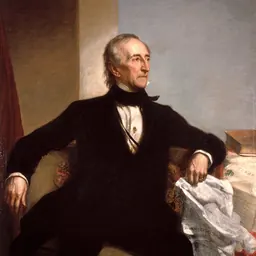
People in John Y. Mason's life
Named in this biography and alive at the same time
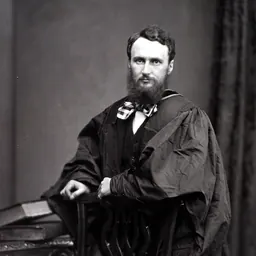
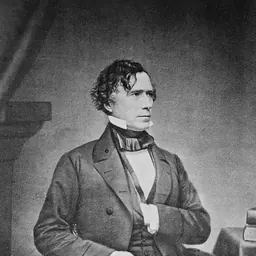
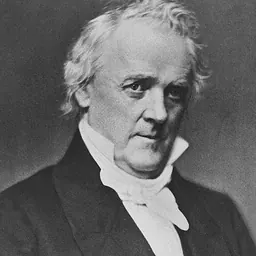


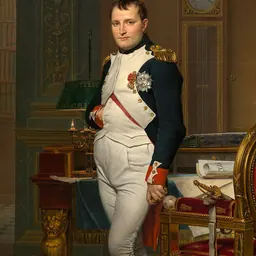
Related people
Same field, nearest in time



Contemporaries
People whose lives overlapped John Y. Mason's






Frequently asked questions
Who was John Y. Mason?
American politician (1799-1859)
When was John Y. Mason born?
John Y. Mason was born on 18 April 1799 in Greensville County, Emporia.
When did John Y. Mason die?
John Y. Mason died on 3 October 1859 in Paris.
What was John Y. Mason's occupation?
John Y. Mason was a politician, lawyer, judge and diplomat.
What nationality was John Y. Mason?
John Y. Mason was American.
Sources & further reading
Cite this page
APA: Biography.guide. (2026). John Y. Mason. https://biography.guide/john-y-mason/
MLA: "John Y. Mason." Biography.guide, https://biography.guide/john-y-mason/.
Chicago: "John Y. Mason." Biography.guide. https://biography.guide/john-y-mason/.
Data last updated: 2026-09-20 · Spot an error? Report a correction.
Page generated 2026-09-27 05:23 UTC