
About John Worgan
Lived 1724 – 1790 (aged 65–66). John Worgan was a British composer and harpsichordist.
John Worgan (1724–1790) was an organist and composer of Welsh descent. He is best known for playing the organ at Vauxhall Gardens, the London public pleasure garden in the mid 18th century.
Life
Worgan was born in London in 1724. He was one of six children to John Worgan and Mary Lambert. Their father was a surveyor of Welsh or Cambrian ancestry. George was an organist and pianoforte teacher, with a roster of students that included musicians' children and English nobility. with instruction in harpsichord John subsequently studied under organist Thomas Roseingrave and musical theorist/composer Francesco Geminiani. He also greatly admired the work of Domenico Scarlatti. upon his brother's death in 1753. British composer Harriet Wainwright was one of his students.
Worgan was a founder of the Royal Society of Musicians of Great Britain.
Compositions
John Worgan's compositions include two oratorios: Hannah (King's Theatre, Haymarket, 3 April 1, 1764) and Manasseh (Lock Hospital Chapel, 30 April 1766); 'We will rejoice in Thy salvation,' a thanksgiving anthem for victories (29 Nov 1759); many songs for Vauxhall Gardens, of which thirteen books (at least) were published; psalm tunes, glees, organ music, and sonatas and other pieces for the harpsichord. Some of his manuscripts are in the British Library (Add MSS 31670, 31693, 34609 and 35038).
Worgan is persistently credited with having composed the Easter hymn 'Christ the Lord Is Risen Today.' The tune, however, appeared anonymously in Lyra Davidica (1708), sixteen years before Worgan was born.
Tributes Four tributes demonstrated Worgan's traits as an organist, whose performances attracted crowds both of various positions:
George Frideric Handel said: "Mr. Worgan shall sit by me; he plays my music very well at Vauxhall." Richard Cecil wrote: "Admiration and feeling are very distinct from each other. Some music and oratory enchant and astonish, but they speak not to the heart... Dr. Worgan has so touched the organ at St. John's that I have been turning backward and forward over the prayer-book for the first lesson in Isaiah and wondered that I could not find Isaiah there!". Martin Madan, in a satirical song upon Joah Bates, issued anonymously, and set to music by Samuel Wesley, entitled 'The Organ laid open, &c.,' placed him as a player upon an equality with Handel: "Let Handel or Worgan go thresh at the organ". Burney refers to him as "a very masterly and learned fugueist on the organ."
Recordings Complete Harpsichord Music, played by Julian Perkins and Timothy Roberts (Toccata Classics) Complete Organ Music, played by Timothy Roberts (Toccata Classics)
Don’t just read it —
keep it.
Full-length biographies made to live with: read them, listen on the way to work, watch them tonight.
- E-book
- Audio
- Video
Instant download · yours to keep · every purchase keeps this site free
Important facts
People in John Worgan's life
Named in this biography and alive at the same time
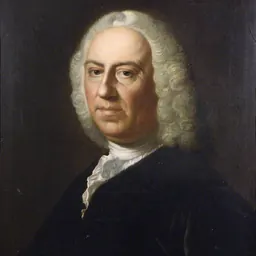



Related people
Same field, nearest in time
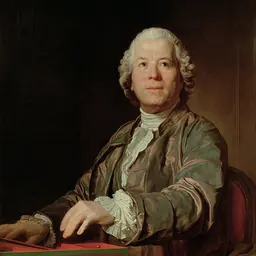
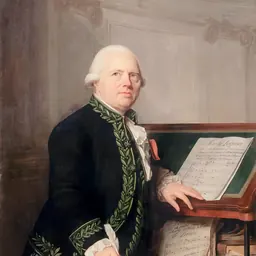
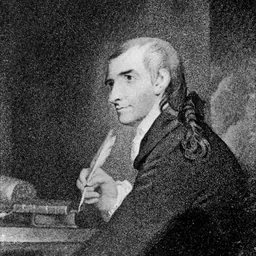
Contemporaries
People whose lives overlapped John Worgan's



Frequently asked questions
Who was John Worgan?
English organist
When was John Worgan born?
John Worgan was born in 1724 in London.
When did John Worgan die?
John Worgan died on 24 August 1790 in London.
What was John Worgan's occupation?
John Worgan was a composer and harpsichordist.
What nationality was John Worgan?
John Worgan was British.
Sources & further reading
Cite this page
APA: Biography.guide. (2026). John Worgan. https://biography.guide/john-worgan/
MLA: "John Worgan." Biography.guide, https://biography.guide/john-worgan/.
Chicago: "John Worgan." Biography.guide. https://biography.guide/john-worgan/.
Data last updated: 2026-09-20 · Spot an error? Report a correction.
Page generated 2026-09-27 05:26 UTC