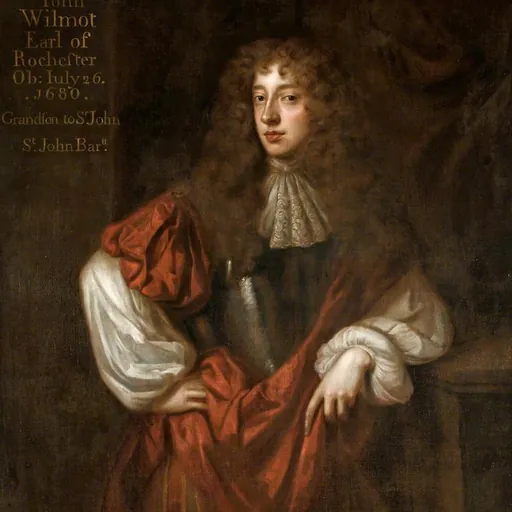
John Wilmot, 2nd Earl of Rochester
English poet, and peer of the realm
About John Wilmot, 2nd Earl of Rochester
Lived 1647 – 1680 (aged 33). John Wilmot, 2nd Earl of Rochester was an English poet, writer and playwright.
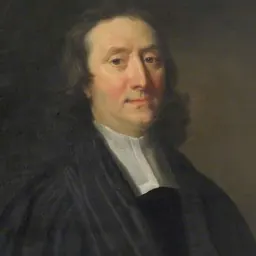
Death By the age of 33, Rochester was dying from what is usually described as the effects of tertiary syphilis, gonorrohea, or other venereal diseases, combined with the effects of alcoholism. Carol Richards has disputed this, arguing that it is more likely that he died of renal failure due to chronic nephritis (Bright's disease). His mother arranged for him to be attended in his final weeks by her religious associates, particularly Gilbert Burnet, later Bishop of Salisbury.
After hearing of Burnet's departure from his side, Rochester muttered his last words: "Has my friend left me? Then I shall die shortly". In the early morning of 26 July 1680, Rochester died "without a shudder or a sound". He was buried at Spelsbury church in Oxfordshire.
A deathbed renunciation of libertinism and conversion to Anglican Christianity, Some Passages of the Life and Death of the Honourable John Wilmot Earl of Rochester, was published by Reverend Burnet. Because this account appears in Burnet's own writings, its accuracy has been disputed by some scholars, who accuse Burnet of having shaped the account of Rochester's denunciation of libertinism to enhance his own reputation. On the other hand, Graham Greene, in his biography of Wilmot, calls Burnet's book "convincing".
Issue By his wife, Elizabeth Malet, Rochester had four children:
Charles Wilmot, 3rd Earl of Rochester (christened 2 January 1670/71 – 12 November 1681) Lady Anne Wilmot (christened 30 August 1669 – 8 August 1703 ) married firstly Henry Bayntun, Esq., a country gentleman, by whom she had issue one son and one daughter Anne Bayntun (mother of Sir Edward Bayntun-Rolt, 1st Baronet). She married secondly the poet Hon. Francis Greville, MP (1 July 1667 – 11 October 1710), eldest son of Fulke Greville, 5th Baron Brooke of Beauchamps Court, and had two sons, the 6th and 7th Barons Brooke; the 7th Baron was father of Francis Greville, 1st Earl of Warwick. Lady Elizabeth Wilmot (christened 13 July 1674 – 1 July 1757); she married 8 July 1689 Edward Montagu, 3rd Earl of Sandwich (10 April 1670 – 20 October 1729), and had issue, one daughter (who died young) and one son Edward Montagu, Viscount Hinchingbrooke, father of John Montagu, 4th Earl of Sandwich (for whom the sandwich is named). She became renowned for her learning and wit. Lady Malet Wilmot (christened 6 January 1676 – 13 January 1708/9) married John Vaughan, 1st Viscount Lisburne on 18 August 1692; their son was Wilmot Vaughan, 3rd Viscount Lisburne, father of Wilmot Vaughan, 1st Earl of Lisburne, ancestor of the present Earl.
Works
Rochester's poetic work varies widely in form, genre, and content. He was part of a "mob of gentlemen who wrote with ease", who continued to produce their poetry in manuscripts, rather than in publication. As a consequence, some of Rochester's work deals with topical concerns, such as satires of courtly affairs in libels, to parodies of the styles of his contemporaries, such as Sir Carr Scrope. He is also notable for his impromptus, one of which is a teasing epigram on King Charles II:
To which Charles supposedly replied, "That's true, for my words are my own, but my actions are those of my ministers".
Rochester's poetry displays a range of learning and influences. These included imitations of Malherbe, Ronsard, and Boileau. He also translated or adapted from classical authors such as Petronius, Lucretius, Ovid, Anacreon, Horace, and Seneca.
Rochester's writings were at once admired and infamous. A Satyr Against Mankind (1675), one of the few poems he published (in a broadside in 1679), is a scathing denunciation of rationalism and optimism that contrasts human perfidy with animal wisdom.
The majority of his poetry was not published under his name until after his death. Because most of his poems circulated only in manuscript form during his lifetime, it is likely that much of his writing did not survive. Burnet claimed that Rochester's conversion experience led him to ask that "all his profane and lewd writings" be burned; it is unclear how much, if any, of Rochester's writing was destroyed.
Rochester was also interested in the theatre. In addition to an interest in actresses, he wrote an adaptation of Fletcher's Valentinian (1685), a scene for Sir Robert Howard's The Conquest of China, a prologue to Elkanah Settle's The Empress of Morocco (1673), and epilogues to Sir Francis Fane's Love in the Dark (1675), Charles Davenant's Circe, a Tragedy (1677). The best-known dramatic work attributed to Rochester, Sodom, or the Quintessence of Debauchery, has never been successfully proven to be written by him. Posthumous printings of Sodom, however, gave rise to prosecutions for obscenity, and were destroyed. On 16 December 2004 one of the few surviving copies of Sodom was sold by Sotheby's for £45,600.
"[Rochester's] letters to his wife and to his friend Henry Savile ... show an admirable mastery of easy, colloquial prose."
Scholarship has identified approximately 75 authentic Rochester poems. Three major critical editions of Rochester in the twentieth century have taken very different approaches to authenticating and organising his canon. David Vieth's 1962 edition adopts a heavily biographical organisation, modernising spellings and heading the sections of his book "Prentice Work", "Early Maturity", "Tragic Maturity", and "Disillusionment and Death". Keith Walker's 1984 edition takes a genre-based approach, returning to the older spellings and accidentals in an effort to present documents closer to those a seventeenth-century audience would have received. Harold Love's Oxford University Press edition of 1999, now the scholarly standard, notes the variorum history conscientiously, but arranges works in genre sections ordered from the private to the public.
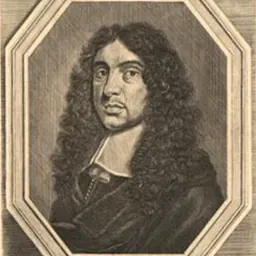
Reception and influence Rochester was the model for a number of rake heroes in plays of the period, such as Don John in Thomas Shadwell's The Libertine (1675) and Dorimant in George Etherege's The Man of Mode (1676). Meanwhile he was eulogised by his contemporaries such as Aphra Behn and Andrew Marvell, who described him as "the only man in England that had the true vein of satire". Daniel Defoe quoted him in Moll Flanders, and discussed him in other works. Voltaire, who spoke of Rochester as "the man of genius, the great poet", admired his satire for its "energy and fire" and translated some lines into French to "display the shining imagination his lordship only could boast".
By the 1750s, Rochester's reputation suffered as the liberality of the Restoration era subsided; Samuel Johnson characterised him as a worthless and dissolute rake. Horace Walpole described him as "a man whom the muses were fond to inspire but ashamed to avow". Despite this general disdain for Rochester, William Hazlitt commented that his "verses cut and sparkle like diamonds" while his "epigrams were the bitterest, the least laboured, and the truest, that ever were written". Referring to Rochester's perspective, Hazlitt wrote that "his contempt for everything that others respect almost amounts to sublimity". Despite this, Rochester's work was largely ignored throughout the Victorian era.
Rochester's reputation revived only in the 1920s. Ezra Pound, in his ABC of Reading, compared Rochester's poetry favourably to better-known figures such as Alexander Pope and John Milton. Graham Greene characterised Rochester as a "spoiled Puritan". Although F. R. Leavis argued that "Rochester is not a great poet of any kind", William Empson admired him. More recently, Germaine Greer has questioned the validity of the appraisal of Rochester as a drunken rake, and hailed the sensitivity of some of his lyrics.
Rochester was listed #6 in Time Outs "Top 30 chart of London's most erotic writers". Tom Morris, the associate director, of the National Theatre said, "Rochester reminds me of an unhinged poacher, moving noiselessly through the night and shooting every convention that moves. Bishop Burnett, who coached him to an implausible death-bed repentance, said that he was unable to express any feeling without oaths and obscenities. He seemed like a punk in a frock coat. But once the straw dolls have been slain, Rochester celebrates in a sexual landscape all of his own."
In popular culture
A play, The Libertine (1994), was written by Stephen Jeffreys, and staged by the Royal Court Theatre. The 2004 film The Libertine, based on Jeffreys' play, starred Johnny Depp as Rochester, Samantha Morton as Elizabeth Barry, John Malkovich as King Charles II and Rosamund Pike as Elizabeth Malet. Michael Nyman set to music an excerpt of Rochester's poem "Signor Dildo" for the film.
The play The Ministry of Pleasure by Craig Baxter also dramatises Wilmot's life and was produced at the Latchmere Theatre, London in 2004.
Rochester is the central character in Anna Lieff Saxby's 1996 erotic novella, No Paradise but Pleasure.
The story of Lord Rochester's life in Susan Cooper-Bridgewater's historical fiction Of Ink, Wit and Intrigue – Lord Rochester in Chains of Quicksilver, 2014.
Nick Cave's 2004 song "There She Goes, My Beautiful World", from the album Abattoir Blues / The Lyre of Orpheus, includes the lines "John Wilmot penned his poetry / Riddled with the pox".
Germaine Greer published a piece called "Doomed to Sincerity" about the life of the Earl.
Don’t just read it —
keep it.
Full-length biographies made to live with: read them, listen on the way to work, watch them tonight.
- E-book
- Audio
- Video
Instant download · yours to keep · every purchase keeps this site free
Important facts
Family & relationships
People in John Wilmot, 2nd Earl of Rochester's life
Named in this biography and alive at the same time


Related people
Same field, nearest in time
Contemporaries
People whose lives overlapped John Wilmot, 2nd Earl of Rochester's

Frequently asked questions
Who was John Wilmot, 2nd Earl of Rochester?
English poet, and peer of the realm (1647-1680)
When was John Wilmot, 2nd Earl of Rochester born?
John Wilmot, 2nd Earl of Rochester was born on 1 April 1647 in Ditchley.
When did John Wilmot, 2nd Earl of Rochester die?
John Wilmot, 2nd Earl of Rochester died on 26 July 1680 in Woodstock.
What was John Wilmot, 2nd Earl of Rochester's occupation?
John Wilmot, 2nd Earl of Rochester was a poet, writer and playwright.
What nationality was John Wilmot, 2nd Earl of Rochester?
John Wilmot, 2nd Earl of Rochester was English.
Sources & further reading
· Wikipedia: John Wilmot, 2nd Earl of Rochester
· DBpedia: John Wilmot, 2nd Earl of Rochester
Cite this page
APA: Biography.guide. (2026). John Wilmot, 2nd Earl of Rochester. https://biography.guide/john-wilmot-2nd-earl-of-rochester/
MLA: "John Wilmot, 2nd Earl of Rochester." Biography.guide, https://biography.guide/john-wilmot-2nd-earl-of-rochester/.
Chicago: "John Wilmot, 2nd Earl of Rochester." Biography.guide. https://biography.guide/john-wilmot-2nd-earl-of-rochester/.
Data last updated: 2026-10-01 · Spot an error? Report a correction.
Portrait: Wikimedia Commons · author & licence
Page generated 2026-10-05 03:09 UTC