
About John William Mackail
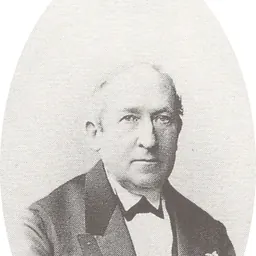
Lived 1859 – 1945 (aged 86). John William Mackail was a British literary historian, biographer, poet, translator, correspondent and classical philologist.
John William Mackail (26 August 1859 – 13 December 1945) was a Scottish academic of the University of Oxford and reformer of the British education system.
He is most often remembered as a scholar of Virgil and as the official biographer of the socialist artist William Morris, of whom he was a friend.
Mackail was Oxford Professor of Poetry from 1906 to 1911, and president of the British Academy from 1932 to 1936.
Life Mackail was born in Ascog on Bute, the second child and only son of the Rev. John Mackail, of the Free Church, and Louisa Irving, who was the youngest daughter of Aglionby Ross Carson FRSE, who was the rector of Edinburgh High School.
Academic career He was educated at Ayr Academy; at Edinburgh University, from 1874 to 1877; and at Balliol College, Oxford, as Warner Exhibitioner, from 1877. At Oxford, he took first classes in classical moderations (1879) and literae humaniores ('Greats') in 1881, and he also obtained the Hertford (1880), Ireland (1880), Newdigate (1881), Craven (1882) and Derby (1884) Prizes.
In 1884, Mackail accepted a post in the Education Department of the Privy Council (later the Board of Education), of which he became Assistant Secretary in 1903. In this position, made an important contribution to the system of secondary education established by the 1902 Education Act, and to the organisation of a system of voluntary inspection for the public schools. He retired from office in 1919.
The couple's elder daughter, Angela Margaret, and their son, Denis George, are better known as the novelists Angela Thirkell and Denis Mackail. The couple also had a younger daughter, Clare Mackail, who was the subject of a 2020 biography Barely Clare: the Little-Known Life of Clare Mackail by Tim McGee.
Works Bowyer Nichols, J. W. Mackail, and H. C. Beeching, by Frederick Hollyer, c. 1882. Love in Idleness: A Volume of Poems (1883) anonymous, with H. C. Beeching and J. B. B. Nichols The Aeneid of Virgil (1885) translator Virgil Eclogues and Georgics (1889) Select Epigrams From The Greek Anthology (1890) Love's Looking Glass (1892) with H. C. Beeching and J. B. B. Nichols Biblia Innocentium: Being the Story of God's Chosen People Before the Coming of Our Lord Jesus Christ Upon Earth, Written Anew for Children (Kelmscott Press, 1892) Latin Literature (1895); at least 40 editions The Georgics of Virgil (1899) The Life of William Morris, two volumes (1899); Vol. I Vol. II The Little Bible (1900) William Morris: An Address Delivered at Kelmscott House Hammersmith Socialist Society (1902) Addresses, four volumes (1902/5) The Parting of the Ways: An Address (1903) given in the William Morris Labour Church at Leek, 5 October 1902 Socialism and Politics: An Address and a Programme (1903) Homer: An Address Delivered on Behalf of the Independent Labour Party (1905) The Sayings of the Lord Jesus Christ (1905) William Morris and His Circle (1907) The Hundred Best Poems in the Latin Language (1908) The Springs of Helicon: A Study of the Progress of English Poetry from Chaucer to Milton (1909) Swinburne (1909) University of Oxford lecture 30 April 1909. Lectures on Greek Poetry (1910) Pervigilium Veneris (1911) editor and translator Lectures on Poetry (1914) Russia's Gift to the World (1915) The Study of Poetry (1915) inauguration of the Rice Institute Annual Shakespeare Lecture of the British Academy (1916) Penelope in the Odyssey (1916) Pope (1919) Leslie Stephen Lecture, University of Cambridge 10 May 1919 The Hundred Best Poems (lyrical) (1920) Virgil and His Meaning to the World of To-day (1922) Shakespeare (1923) Inaugural Address to the Australian English Association Bentley's Milton (1924) British Academy Warton Lecture The Pilgrim's Progress (1924) Royal Institution Lecture 14 March 1924 Life and Letters of George Wyndham (2 vols.) (1924) with Guy Wyndham Classical Studies (1925) James Leigh Strachan-Davidson, Master of Balliol. A Memoir (Oxford: Clarendon Press, 1925) Studies of English Poets (1926) Largeness in Literature (1930) The Approach to Shakespeare (1930) Coleridge's Literary Criticism (1931) Virgil (1931) Henriette Hertz Trust Lecture of the British Academy. The Odyssey (1932) Virgil's Work: The Aeneid, Eclogues, Georgics (1934) Studies in Humanism (1938) Poems by Bowyer Nichols (1943) An Introduction to Virgil's Aeneid (1946) Selections from the Georgics of Virgil (1948) Latin Literature (1962) Harry C. Schnur editor The Holy Bible, containing the Old and New Testaments (1897)
Don’t just read it —
keep it.
Full-length biographies made to live with: read them, listen on the way to work, watch them tonight.
- E-book
- Audio
- Video
Instant download · yours to keep · every purchase keeps this site free
Important facts
People in John William Mackail's life
Named in this biography and alive at the same time





Related people
Same field, nearest in time

Contemporaries
People whose lives overlapped John William Mackail's


Frequently asked questions
Who was John William Mackail?
Scottish academic and reformer (1859–1945)
When was John William Mackail born?
John William Mackail was born on 26 August 1859 in Ascog.
When did John William Mackail die?
John William Mackail died on 13 December 1945 in Kensington.
What was John William Mackail's occupation?
John William Mackail was a literary historian, biographer, poet, translator, correspondent and classical philologist.
What nationality was John William Mackail?
John William Mackail was British.
Sources & further reading
· Wikipedia: John William Mackail
· DBpedia: John William Mackail
Cite this page
APA: Biography.guide. (2026). John William Mackail. https://biography.guide/john-william-mackail/
MLA: "John William Mackail." Biography.guide, https://biography.guide/john-william-mackail/.
Chicago: "John William Mackail." Biography.guide. https://biography.guide/john-william-mackail/.
Data last updated: 2026-09-27 · Spot an error? Report a correction.
Page generated 2026-09-27 05:17 UTC