
About John William Hotson
Lived 1869 – 1957 (aged 88). John William Hotson was a botanist and mycologist.
John William Hotson (May 2, 1869 – August 22, 1957) was a Canadian-American botanist and a professor of botany at University of Washington. He was a founder of the herbarium at the University of Washington and a pioneer of the systematic study of bulbiliferous anamorphic fungi. He was the first to make a comprehensive study of plant rust in the state of Washington.
Education Hotson received undergraduate (1901) and master's degrees (1902) from McMaster University in Toronto, Ontario. In 1910, after a year of teaching botany at Pomona College, he quit his position with the intention to attend Harvard University for doctoral studies. At Pomona, he was described as "a fine scholar and an efficient teacher, and it was with regret that his resignation was accepted."
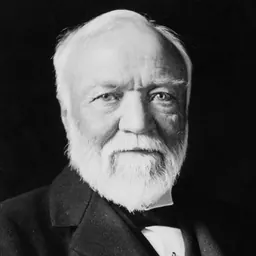
While at Cornell, Hotson became ill, "inflicted with a fever." The medical expenses as a result of the fever were paid for by Andrew Carnegie.
Teaching During his time as a graduate student, Hotson had a number of teaching positions, including, lecturer in botany, Ontario Agricultural College, Guelph, Ontario (1903–1904), and as a Principal in the Macdonald Consolidated Schools, Guelph, Ontario (1904). Hotson was also an Austen Teaching Fellow in botany, Harvard University (1907–1908) and assistant professor of botany, Pomona College (1908–1910). At his death in 1957, he was a Professor Emeritus of Botany at Washington.
During his tenure at the University of Washington, Hotson took on several roles. The Department of Botany became a separate entity within the university in 1900, and Hotson was one of the first three instructors when he joined in 1911; the other two being George Rigg and Theodore Christian Frye, the latter becoming Head of the Botany Department in 1903.
Hotson organized the "first fungus herbarium at Washington and many of his specimens are cited in treatments of Agaricus, Amanita, and other genera of agarics." Many of his samples created a basis for the Washington herbarium's collection, which is evidenced in both the herbarium collections at Washington as well as at the Harvard University Herbaria.
Hotson acted as supervisor of graduate students during his tenure, including University of Washington president, Dr. Henry Schmitz (1952–1958).
Research John William Hotson's research and publications were primarily on fungi, though, during World War I, Hotson researched the use of Sphagnum moss as a material for surgical dressings and a replacement for cotton dressings, Sphagnum as a surgical dressing, was published in Science in 1918.
Indigenous peoples in North America had been using Sphagnum moss for medicinal use as "salve for application on cuts." Long recognized for its absorbency, Sphagnum moss has been employed as a diaper material, as a feminine hygiene product, and for bandages. J.D. Davis and Banack (2012) recorded that among the Kiluhikturmiut Inuinnait of Nunavut, Canada, Sphagnum was used for menstrual pads, diapers, and bandages. On Nunivak Island, Alaska, the Nunivaarmiut (Yup'ik) made diapers by placing dried Sphagnum in a scraped and softened seal skin. The Wet'suwest'en and Gitxsan peoples of British Columbia also made use of Sphagnum for diapers… In fact,Sphagnum has long been used for making absorbent bandages. For centuries, country people in the British Isles have used it in the treatment of boils and discharging wounds. It was at least recommended, during the Napoleonic and Franco-Prussian wars, for use by army surgeons. Sphagnum was first used surgically in a large way during the Russo-Japanese war when the Japanese utilized it extensively as a first-aid dressing. What Hotson's research realized was that the value of sphagnum in surgery, which wasnot fully appreciated until World War I, and by the end of the war the total British output of sphagnum dressings is estimated to have been about one million pounds per month.
In the United States, 500,000 dressings were prepared after the American Red Cross approval of sphagnum in March, 1918, until the war's end in November. It is estimated that the use of sphagnum in place of cotton for dressings resulted in a saving, to the British, of not less than £200,000 per year. Perhaps equally important was the release of scarce cotton for use in explosives. His work led, indirectly, to the development of the Sphagnum Products Company in 1922.
Other important work included examinations of diseased apple and cereal crops. In the summers of 1914 and 1915, he was employed to examine an outbreak of fire blight in the orchards in the Yakima Valley. This work led to several publications in the journal Phytopathology between 1915 and 1920, including, Collar-rot of apple trees in the Yakima Valley (1920). He was also hired by the US Government to survey cereal diseases in eastern Washington in 1915 as well as white pine blister rust in western Washington in 1922.
Associations and honors Hotson served on several professional associations, including as a director on the board of the American Phytopathological Society, Western Division (1936).
In 1962, faculty, alumni, and friends of Hotson, Rigg, and Frye established the Frye-Hotson-Rigg Award to honour the former professors of Botany at the University of Washington. The award is given to undergraduate Biology students "conducting research using a plant, algae, or fungi system for work in botany, ecology, evolution, taxonomy, environmental science, or biodiversity."
The Crassicarpon hotsonii cellobiose dehydrogenase is named in his honour.
Death John William Hotson died on August 22, 1957 at the age of 88.
Don’t just read it —
keep it.
Full-length biographies made to live with: read them, listen on the way to work, watch them tonight.
- E-book
- Audio
- Video
Instant download · yours to keep · every purchase keeps this site free
Important facts
People in John William Hotson's life
Named in this biography and alive at the same time



Related people
Same field, nearest in time

Contemporaries
People whose lives overlapped John William Hotson's




Frequently asked questions
Who was John William Hotson?
Canadian-American botanist (1869/1870 - 1957)
When was John William Hotson born?
John William Hotson was born on 2 May 1869.
When did John William Hotson die?
John William Hotson died on 22 August 1957.
What was John William Hotson's occupation?
John William Hotson was a botanist and mycologist.
Sources & further reading
· Wikipedia: John William Hotson
· DBpedia: John William Hotson
Cite this page
APA: Biography.guide. (2026). John William Hotson. https://biography.guide/john-william-hotson/
MLA: "John William Hotson." Biography.guide, https://biography.guide/john-william-hotson/.
Chicago: "John William Hotson." Biography.guide. https://biography.guide/john-william-hotson/.
Data last updated: 2026-09-20 · Spot an error? Report a correction.
Page generated 2026-09-27 05:26 UTC