
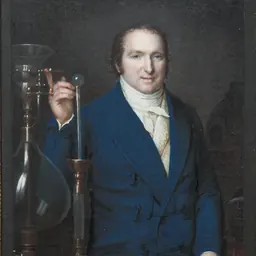
John Wilbank
19th century American bell caster
About John Wilbank
Lived 1788 – 1843 (aged 54–55).
John Wilbank (1788–1843) was a 19th-century American bell caster from Philadelphia, Pennsylvania. He was appointed by the city of Philadelphia in 1828 to cast the bell to replace the old damaged bell for Independence Hall, now known as the Liberty Bell.
Settlement in Philadelphia John Wilbank was an emigrant from Germany, among many other Germans whom settled in the state of Pennsylvania in the first half of the 19th century. He was a member of the Old St. George's Church of Philadelphia starting in 1801. He was recorded first in 1813 as a bell caster in the city directory.
Bells Cast Among Wilbank's first castings was a clock-mounted bell from 1810 for a design by clockmaker John Fessler of Frederick, Maryland.
Later works included the bell cast for the clock tower in West Chester, Pennsylvania, that of the Chester County Courthouse in 1836.
Contract with the City Wilbank was contracted by the city of Philadelphia to cast a new bell for the State House, known today as Independence Hall, for its newly erected bell tower in 1828. The new bell was placed in the tower on September 11, 1828. It was cast in recognition of Lafayette's visit to the city in 1824. Wilbank ultimately refused to remove the old bell to his foundry which was located in Germantown, Pennsylvania at that time due to financial constraints and his recognition of the historical value of the bell. He is quoted as saying "I cannot destroy the bell" "your children and my children will some day value it, so I let it stand". Caroline Wilbank and her sisters disputed ownership over the Liberty Bell in 1915 amidst its travels for large events such as the Panama-Pacific International Exposition of 1915, where it had traveled across the country on tour. This was done out of fear of the bell being damaged and the descendants' feelings of their duty to protect it. One of the sisters is quoted as saying "We have no desire," "as many seem to think, to remove the Liberty Bell from its old resting place in Independence Hall. We are too patriotic for that. But we wish to restrain it from being taken out of the city, as it might meet with some accident on its journey".
Abolition Sentiments As the Liberty Bell had later been known as a symbol for the abolition of slavery, John Wilbank became an active advocate for this cause. In 1836 he ran an advertisement in the Philadelphia Inquirer that stated "I will deduct 10 dollars from the price of every bell that weighs four hundred pounds and upwards, that is to be used for an alarm Bell in case of an insurrection of the negroes and I will charge 30 dollars advance on every bell of the above weights, knowing it is to be used for the purpose of calling an Abolition Society together. From the above the public may know my sentiments...
Don’t just read it —
keep it.
Full-length biographies made to live with: read them, listen on the way to work, watch them tonight.
- E-book
- Audio
- Video
Instant download · yours to keep · every purchase keeps this site free
Important facts
Contemporaries
People whose lives overlapped John Wilbank's




Frequently asked questions
Who was John Wilbank?
19th century American bell caster
When was John Wilbank born?
John Wilbank was born in 1788.
When did John Wilbank die?
John Wilbank died on 2 February 1843.
Sources & further reading
Cite this page
APA: Biography.guide. (2026). John Wilbank. https://biography.guide/john-wilbank/
MLA: "John Wilbank." Biography.guide, https://biography.guide/john-wilbank/.
Chicago: "John Wilbank." Biography.guide. https://biography.guide/john-wilbank/.
Data last updated: 2026-09-22 · Spot an error? Report a correction.
Page generated 2026-09-27 04:58 UTC