
About John Ward
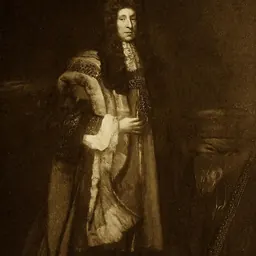
Lived 1650 – 1726 (aged 75–76). John Ward was an English and British banker and politician.
Sir John Ward (c. 1650–1726), of Hookfield, Clay Hill, Epsom, Surrey and St Laurence Pountney, London, was a British merchant, banker and politician who sat in the House of Commons between 1701 and 1726. He was an original Governor of the Bank of England and served as Lord Mayor of London in 1718.
Ward was the second son of John Ward, commissioner of customs, of Tanshelf, near Pontefract, Yorkshire and his wife Elizabeth Vincent, daughter of Thomas Vincent of Barnbrough, Yorkshire. His uncle was Sir Patience Ward, Lord Mayor of London in 1680. He married Mary Bucknell, the daughter of Sir William Bucknall of Oxhey Place, Hertfordshire on 17 April 1684. In 1700 he acquired Hookfield Park on Clay Hill Epsom, with the help of his father in law.
Ward was one of the original directors of the Bank of England from 1694 to 1699, served as Deputy Governor from 1699 to 1701 and as Governor from 1701 to 1703. He then resumed his directorship from 1703 to his death. He was also a director of the East India Company from 1703 to 1707 and from 1709 to 1711.
Ward was returned unopposed as Member of Parliament for Bletchingley at the first general election of 1701, with the support of his friend Sir Robert Clayton. He was returned unopposed again at the second general election of 1701 and in the general elections of 1702 and 1705. At the 1708 British general election he was elected in a contest as MP for City of London. He was unsuccessful in the general elections of 1710 and 1713. He was knighted on 25 September 1714. He was selected as Sheriff of London for the year 1715 to 1716 and was elected Lord Mayor of London for the year 1718 to 1719. He did not stand at the 1722 British general election but was returned as MP for Dunwich at a by-election on 7 December 1722.
Politically he was regarded as a Whig, but usually very independent of the government, and at one time as MP for the City of London was supported by the Tories and largely voted for their candidates. Towards the end of his life he had reconciled with the government and worked for their interests in the City.
Ward died in March 1726, leaving a son, John, and ten daughters.
Don’t just read it —
keep it.
Full-length biographies made to live with: read them, listen on the way to work, watch them tonight.
- E-book
- Audio
- Video
Instant download · yours to keep · every purchase keeps this site free
Important facts
People in John Ward's life
Named in this biography and alive at the same time


Related people
Same field, nearest in time



Contemporaries
People whose lives overlapped John Ward's




Frequently asked questions
Who was John Ward?
English banker and Member of Parliament (died 1726)
When was John Ward born?
John Ward was born in 1650.
When did John Ward die?
John Ward died on 12 March 1726.
What was John Ward's occupation?
John Ward was a banker and politician.
What nationality was John Ward?
John Ward was English and British.
Sources & further reading
Cite this page
APA: Biography.guide. (2026). John Ward. https://biography.guide/john-ward-banker/
MLA: "John Ward." Biography.guide, https://biography.guide/john-ward-banker/.
Chicago: "John Ward." Biography.guide. https://biography.guide/john-ward-banker/.
Data last updated: 2026-09-20 · Spot an error? Report a correction.
Page generated 2026-09-27 04:57 UTC