
About John Wall
Born 1950. John Wall is a British composer and experimental musician.
John Wall (born 1950) is an English autodidact electronic composer, whose contribution to the field is widely noted by critics of new music. His work has moved from early plunderphonic compositions – where he brought together unlikely combinations of musical genres to create fantastical new works – to large-scale works composed of thousands of tiny fragments that create the impression of virtual orchestras. Critics have remarked on "his extraordinary feeling for musical narrative" which is achieved through a working method that has been described as "phenomenally painstaking". According to one critic, Wall's "releases sound like the most finely crafted audio sculptures, somewhere between the contemporary composition of Lachenmann and the experiments of early laptop musicians of the mid 90s." Fear of Gravity uses long, often identifiable samples from other people's works as well as looping and repetition – all features which would quickly disappear from his work.
Alterstill The purchase of a computer in 1994 (an Atari running Cubase) led to the release of Alterstill in 1995.
Fractuur With the release of Fractuur two years later, Wall starts to incorporate his own recordings of musicians – both improvisers and classical musicians who use extended technique – into the fabric of the work alongside samples from CDs. He also starts to process the material electronically and include the sounds of malfunctioning audio equipment, or "glitches". According to one reviewer:
"Out of such exacting, precise working methods he produces music of an often breathtaking spontaneity. There are passages throughout Fractuur which give the impression of being somehow improvised, if it were possible for several large chamber ensembles, a couple of jazz groups, and the odd electronics manipulator to jam with some kind of clarity or direction! It's this sense of spontaneity which adds to Wall's standing as one of the most original composers working in the last decade of the twentieth century, and Fractuur his most essential work to date."
Fractuur is on the syllabus for Christoph Cox's "Contemporary Music and Musical Discourse" course at Hampshire College along with recordings by King Tubby and Miles Davis.
Constructions I-IV and Constructions V-II After Fractuur, the CDs and compositions have both become progressively shorter. Other commentators have however referred to "the edginess in his music, its restlessness, its often ambiguous nature, its rarely resolved tension."
cphon cphon features a single piece that ran to just over 20 minutes in length. Writing in The Wire, Julian Cowley described the work as follows: "Shrill needle points of sound, whisps and shadows, punctuating clicks, muted thuds and clangs edge to and from that pivotal centre where the keyboard briefly and equivocally asserts itself. It's austere rather than chaste, conveying a sense of cryptic narrative rather than pure abstracted shape. No invitation to relax is offered at any point; tension is Wall's forte. From the high pitch signal that initiates the piece's progression to the odd hobbling rhythm that draws it to a conclusion, the listening ear is kept at a pitch of alertness."
Work 2006–2011 Wall returned in 2011 with a document of his collaboration with spoken word artist Alex Rodgers. Richard Pinnell interviewed the pairing for The Wire magazine and wrote in a separate review: "While Wall’s anger can be heard in the music, Rodgers’ spoken word parts are equally acerbic. He sounds constantly on edge, his voice slurs in places, growls in others and has a gruff bite to it that is only amplified by the cheap dictaphones used to record many of his parts. His words move between a bitterly spat-out stream of angry obscenity-ridden disgust and a carefully worked out and scripted sense of surrealism all wrapped up in a Beckettian verbal sensibility."
Live realisations John Wall has presented his work as tape playbacks at various events including at BBC Radio 3's Mixing It and London Musicians Collective (LMC)'s "New Aura" concert series at South Bank Centre in 1997 and Sonic Arts Network's "Cut & Splice" at the Institute of Contemporary Arts in London in 2006. Both of these were broadcast by BBC Radio 3.
In 1997 Wall was challenged by the LMC to make a live realisation of his work which combined both tape playback and live performers. "Untitled #4" was commissioned by LMC and Goethe Institut and performed at the ICA in London in 1997. The featured musicians were Jörg Widmann (clarinet), Peter Sheppard Skærved (violin) and John Edwards (double bass) and an excerpt from this performance was issued by LMC. A number of other live realisations of his works followed including at Instant Chavires in Paris in 2002.
A number of attempts have been made to transcribe John Wall's works for live performers. Most recently, in 2009 Maarten Altena's MAE ensemble commissioned a transcription of John Wall's "Fractuur" which was performed (alongside works from fellow electronic composers, John Oswald and Francisco López in a programme entitled "Organised Sound" at the Paradiso in Amsterdam.
Improvised music A couple of years after Wall the release of Cphon Wall started performing live improvisations using a laptop both solo and in combinations with performers including John Edwards (double bass), Mark Sanders (percussion), Lee Gamble (computer) and Mark Durgan (live electronics). Wall's improvisations draw on previously prepared, self-generated sound files which he extracts and manipulates during the performance. The Wire 25 at Finsbury Town Hall in London, Venn Festival in Bristol, Radiator Festival in Nottingham, the Fon Festival in Barrow in Furness, Presences Electronique at INA-GRM in Paris, the Arnolfini in Bristol and Soto Voce in London.
Other work John Wall is credited as editing John Edwards and Mark Sanders Nisus Duets (Emanem Records, 2002) CD and as producing the final edit for harpist Rhodri Davies' Over Shadows (Confront, 2006). He recorded the poetry series on the Stem label featuring Leslie Scalapino, Maggie O'Sullivan, Allen Fisher and Peter Manson. He also served as recording engineer for John Edwards solo album Volume (PSI, 2008).
Discography Fear of Gravity (1993), Utterpsalm Alterstill (1995), Utterpsalm Fractuur (1997), Utterpsalm Constructions I–IV (1999), Utterpsalm Constructions V–VII (2001), Utterpsalm Hylic (2003), Utterpsalm cphon (2005), Utterpsalm Work 2006–2011 (2011) with Alex Rodgers, Entr'acte 139 (2012) with Mark Durgan, Entr'acte Work 2011–2014 (2015) with Alex Rodgers, Entr'acte Rafia Longer (2015) with Alex Rodgers, Entr'acte (vinyl single) Muta Variations (May 2016), Utterpsalm SC (June 2016), Utterpsalm 2005-14 (June 2016), Utterpsalm Constructions I–IV (2025), Bandcamp
Don’t just read it —
keep it.
Full-length biographies made to live with: read them, listen on the way to work, watch them tonight.
- E-book
- Audio
- Video
Instant download · yours to keep · every purchase keeps this site free
Important facts
People in John Wall's life
Named in this biography and alive at the same time




Related people
Same field, nearest in time

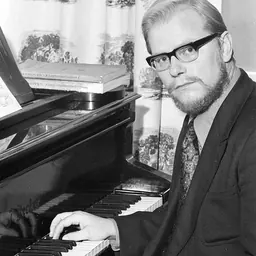
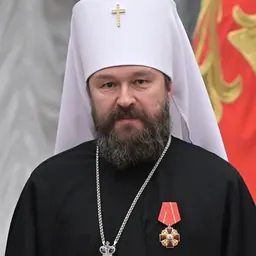

Contemporaries
People whose lives overlapped John Wall's

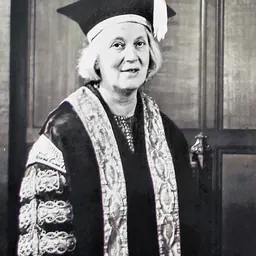



Frequently asked questions
Who is John Wall?
British experimental musician and composer
When was John Wall born?
John Wall was born in 1950.
What is John Wall's occupation?
John Wall is a composer and experimental musician.
What nationality is John Wall?
John Wall is British.
Sources & further reading
· DBpedia: John Wall (electronic composer)
Cite this page
APA: Biography.guide. (2026). John Wall. https://biography.guide/john-wall-composer/
MLA: "John Wall." Biography.guide, https://biography.guide/john-wall-composer/.
Chicago: "John Wall." Biography.guide. https://biography.guide/john-wall-composer/.
Data last updated: 2026-09-20 · Spot an error? Report a correction.
Page generated 2026-09-27 05:33 UTC