
Jörg Widmann
German composer, conductor and clarinetist
About Jörg Widmann
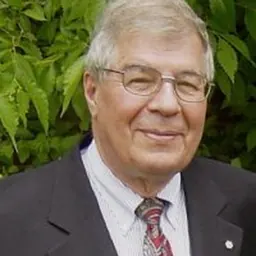
Born 1973. Jörg Widmann is a German composer, clarinetist, university teacher and conductor.
Jörg Widmann (; born 19 June 1973) is a German composer, conductor and clarinetist. In 2023, Widmann was the third most performed living contemporary composer in the world. Formerly a clarinet and composition professor at the University of Music Freiburg, he holds a composition professorship at the Barenboim–Said Akademie Berlin. His most important compositions are the concert overture Con brio, the opera Babylon, an oratorio Arche, Viola Concerto, Friedenskantate and the trumpet concerto Towards Paradise. Widmann has written musical tributes to Classical and Romantic composers. He was awarded the Bavarian Maximilian Order for Science and Art in 2018 and the Bach Prize of the Free and Hanseatic City of Hamburg in 2023. He was Gewandhaus composer of the Gewandhaus Orchester Leipzig and composer in residence for the Berlin Philharmonic.
Early life and education Widmann was born on 19 June 1973 in Munich, the son of a physicist and a teacher. His sister is the German classical violinist Carolin Widmann. He first took clarinet lessons in 1980. Four years later he became a composition student of Kay Westermann. Widmann attended the secondary school in Munich. He later studied composition with Hans Werner Henze, Wilfried Hiller in Munich and Heiner Goebbels, Wolfgang Rihm in Karlsruhe.
He studied as a clarinetist at the Hochschule für Musik und Theater München with Gerhard Starke (1986–1997, Meisterklassendiplom 1997) and at the Juilliard School in New York City with Charles Neidich (1994–1995, Advanced Certificate 1995). He furthered his studies at the Hochschule für Musik Karlsruhe (1997–1999).
Career Academic teacher From 2001 to 2015, Widmann taught clarinet as a professor at the University of Music Freiburg. From 2009 to 2015, Widmann was a part-time Professor of Composition, succeeding Mathias Spahlinger, at the Institute for New Music at the University of Music Freiburg. Since 2017, Widmann holds the Edward Said Chair in Composition at the Barenboim–Said Akademie, Berlin.
Clarinetist As a soloist, Widmann has performed with major orchestras in Germany and abroad, including the Vienna Philharmonic Orchestra and Munich Philharmonic Orchestra, under conductors like Valery Gergiev, Christoph von Dohnányi, Sylvain Cambreling and Kent Nagano.
He has premiered several clarinet concerti dedicated to him: in 1999 through "musica viva", he played Music for Clarinet and Orchestra by Wolfgang Rihm; in 2006 with the WDR Symphony Orchestra, Cantus by Aribert Reimann; and in 2015 "über" by Mark Andre at the Donaueschingen Festival. He premiered Olga Neuwirth's Zones of Blue, a rhapsody for clarinet and orchestra, in 2026 in Munich with Simon Rattle and Bavarian Radio Symphony Orchestra.
Widmann's core repertoire as clarinetist includes Mozart's Clarinet Concerto and Clarinet Quintet, Weber's Clarinet Concerto No. 1 and Clarinet Quintet, Brahms's Clarinet Quintet, and Pierre Boulez's Dialogue de l'ombre double, which he performed on Boulez's 85th birthday in Paris. His chamber music partners include Daniel Barenboim, Tabea Zimmermann, András Schiff, Kim Kashkashian, Hélène Grimaud, Denis Kozhukhin and Mitsuko Uchida.
Widmann mostly plays a Herbert Wurlitzer clarinet from his student time.
Composer and conductor Freiburg and Munich (2001–2016) Widmann's early string quartets are of particular note among his chamber music: the First Quartet was written in 1997, followed by the Chorale Quartet and the Hunting Quartet, the latter premiered in 2003 by the Arditti Quartet. 2005 saw the first performances of the Fourth Quartet and Experiment on a Fugue (Fifth Quartet, with soprano), with Juliane Banse and the Artemis Quartet. These five one-movement quartets form a cycle.
Widmann's compositions draw on different musical genres. For example, he has written a trilogy for orchestra examining the projection of vocal forms of instrumental ensembles. The trilogy consists of Lied (premiered in 2003 and recorded on CD by the Bamberg Symphony with Jonathan Nott), Chor (premiered in 2004 by the Deutsches Symphonie-Orchester Berlin with Kent Nagano) and Messe (premiered in June 2005 by the Munich Philharmonic under Christian Thielemann).
Widmann was Composer in Residence at the Salzburg Festival and at the chamber music festival Spannungen, Heimbach in 2004. Octet was premiered on 4 June 2004 at the power plant Kraftwerk Heimbach. In 2007, Pierre Boulez and the Vienna Philharmonic premiered his orchestral work Armonica. In 2008, the Siemens Arts Program sent Widmann to Dubai. The same year, he conducted a rehearsal of the premiere of his concert overture Con brio. Widmann composed Am Anfang, where Anselm Kiefer was involved with a prologue and the stage design. The premiere took place in July 2009 as part of the 20th anniversary of the Opéra Bastille, in which Widmann acted as clarinetist and made his debut as conductor. where on 13 August 2009, Heinz Holliger performed Widmann's oboe concerto, commissioned by the festival. On 5 September Widmann premiered Holliger's Rechant for solo clarinet. Widmann's Free Pieces for Ensemble: Number X is used in Sophie Fiennes's documentary Over Your Cities Grass Will Grow (2010), about the postwar German artist Anselm Kiefer. His sister Carolin Widmann premiered his études IV-VI for violin (20042010) at the Wittener Tage für neue Kammermusik on 23 April 2010. From 2009 to 2011, he was the Daniel R. Lewis Young Composer Fellow at the Cleveland Orchestra. He performed his Fantasie for Solo Clarinet (1993) to celebrate Walter Fink's 80th birthday at the Rheingau Musik Festival on 16 August 2010 and in 2014 was the festival's composer and artist in residence. In 2012, he collaborated with philosopher Peter Sloterdijk, who was the librettist for his second opera Babylon. Widmann was the Tonhalle Orchester Zürich's Creative Chair in the 2015–16 season.
The theatrical Viola Concerto (2015) marked a new period in Widmann's œuvre. Soloist at the premiere was Antoine Tamestit.
Berlin and Munich (Since 2017) On 9 September 2015, the Boston Symphony Orchestra and the Leipzig Gewandhaus Orchestra proclaimed they were commissioning a work from Widmann as part of a planned collaboration by the two organizations beginning in the fall of 2017. The Leipzig Gewandhaus Orchestra announced Widmann's appointment as its first-ever Gewandhauskomponist (Gewandhaus composer) for the 2017–18 season.
From 2017 to 2021, Widmann was Principal Conductor and Artistic Partner of the Irish Chamber Orchestra. A concert with Widmann, Daniel Barenboim, and Anna Prohaska opened the Pierre Boulez Saal in Berlin on 4 March 2017.
On 27 January 2018, Widmann and the Hagen Quartet performed his Clarinet Quintet, as part of a European tour, at Amsterdam's Muziekgebouw aan het IJ. Partita, five reminiscences for large orchestra, commissioned by the Leipzig Gewandhaus Orchestra and the Boston Symphony Orchestra, was premiered in Leipzig on 8 March 2018 with Andris Nelsons conducting.
After the world premiere in 2012 at the Bavarian State Opera, in 2019 a new Berlin version of his opera Babylon was performed at the Berlin State Opera on Unter den Linden under the musical direction of Christopher Ward.
Anne-Sophie Mutter is the dedicatee of String Quartet No. 6 (Study on Beethoven, 2019). Barenboim and Emanuel Pahud curated the festival in the empty Pierre Boulez Saal. Another commission from Leipzig and Boston is the lyrical trumpet concerto Towards Paradise. It was premiered on 23 September 2021 at Gewandhaus with Håkan Hardenberger playing trumpet and Andris Nelsons conducting the Leipzig Gewandhaus Orchestra. On 8 June 2023, Friedenskantate for soli, choir, organ and orchestra was premiered by Andreas Reize conducting Leipzig Gewandhaus Orchestra and Thomanerchor in Leipzig, Thomaskirche, on the occasion of the 300th anniversary of Johann Sebastian Bach taking office as Thomaskantor.
Since 2022, he has been Associated Conductor of the Munich Chamber Orchestra for three years. He is guest conductor of the Mozarteum Orchester Salzburg. From the 2023–24 season, Widmann has been principal guest conductor of the NDR Radiophilharmonie for three years. In the 2023–24 season, Widmann was Berlin Philharmonic's composer in residence and made his debut conducting the orchestra. Widmann composed a concerto for the orchestra's principal horn Stefan Dohr.
Widmann's commitment for peace was manifested in the 2025 Ukraine performance of his Cantata in tempore belli.
2026 saw the premiere of Widmann's Jupiter-Etude played by violinist Tianwa Yang at Mozart Festival Würzburg. The piece is a homage to Mozart's Jupiter Symphony. In the 2026–27 season he will be "Capell-Compositeur" und "Capell-Virtuos" of the Staatskapelle Dresden.
Other activities Widmann is president of the International Max Reger Society. Widmann was the judge for the Toru Takemitsu Composition Award 2026.
Personal life Widmann lives and works in Berlin and Munich.
Reception According to Bachtrack, Widmann was in 2023 the third most performed living contemporary composer in the world, behind John Williams and Arvo Pärt; in 2024, he ranked sixth.
Style Widmann cannot be pinned down to a specific personal style or composition school. In his experimental and technically demanding early work, Widmann integrates serialism and noise into traditional forms/structures. In many of his compositions, Widmann is in a musical "dialogue" with Classical and Romantic composers such as Mozart, Beethoven, Schumann, Mendelssohn, Schubert and Brahms. He wrote musical tributes to these composers. A common instruction is that the soloist moves around the stage, for example in Viola Concerto, Towards Paradise and Friedenskantate. He uses extended techniques in many compositions, such as Con brio. He frequently uses literary sources for his compositions, like Matthias Claudius, Klabund, Heinrich Heine, Peter Sloterdijk, Clemens Brentano and Friedrich Schiller in his oratorio ARCHE. In his 2023 Bach-homage Kantate (called: "", peace cantata), he used texts by Matthias Claudius, Jean Paul, Bertolt Brecht, Dietrich Bonhoeffer, Paul Gerhardt and from the Bible.
Awards
1985, 1987 Jugend musiziert 1997 Bayerischer Staatspreis für junge Künstler 1999 Belmont Prize for Contemporary Music from the Forberg-Schneider Foundation 2001 Louis Spohr Medal of the City of Seesen 2002 Hindemith Prize of the Schleswig-Holstein Musik Festival 2003–2004: Awarded by Opernwelt magazine for 'most important premiere of the season' for Das Gesicht im Spiegel. 2004 Arnold Schönberg Prize 2007 Prize of the Christoph and Stephan Kaske Foundation 2009 Stoeger Prize of the New York Chamber Music Society 2010 Marsilius Medal of the Heidelberg University 2013 Heidelberger Frühling Music Award 2013 German Music Authors' Prize (Composition Symphonic) 2018 Robert Schumann Prize for Poetry and Music 2018 Bavarian Maximilian Order for Science and Art 2019 Opus Klassik, "Composer of the year" for ARCHE 2021 Musikpreis der Landeshauptstadt München 2021 Würth Prize of Jeunesses Musicales Germany 2023 Bach Prize of the Free and Hanseatic City of Hamburg 2026 International Mendelssohn Prize Leipzig
Honorary degrees 2023 Honorary doctorate University of Limerick
Memberships 2003 Fellow of the Berlin Institute for Advanced Study 2005 Member of the Bayerische Akademie der Schönen Künste 2007 Member of the Freie Akademie der Künste Hamburg 2007 Member of the Deutsche Akademie der Darstellenden Künste 2016 Member of the Akademie der Wissenschaften und der Literatur Mainz 2024 Member of the Royal Swedish Academy of Music
Works Music
Das Gesicht im Spiegel (2003) Babylon (2012) Arche (2016) Friedenskantate (2023) Con brio (2008) Partita (2018) Viola Concerto (2015) Violin Concerto No. 2 (2018) Towards Paradise (Labyrinth VI) (2021, trumpet concerto) Horn Concerto (2023–24) Clarinet Quintet (2017) Fantasie for Solo Clarinet (1993)
, Widmann has composed a series of seven Labyrinth pieces. , (German Camera Prize) 2023
Don’t just read it —
keep it.
Full-length biographies made to live with: read them, listen on the way to work, watch them tonight.
- E-book
- Audio
- Video
Instant download · yours to keep · every purchase keeps this site free
Important facts
People in Jörg Widmann's life
Named in this biography and alive at the same time





Related people
Same field, nearest in time


Contemporaries
People whose lives overlapped Jörg Widmann's
Frequently asked questions
Who is Jörg Widmann?
German composer, conductor and clarinetist
When was Jörg Widmann born?
Jörg Widmann was born on 19 June 1973 in Munich.
What is Jörg Widmann's occupation?
Jörg Widmann is a composer, clarinetist, university teacher and conductor.
What nationality is Jörg Widmann?
Jörg Widmann is German.
Sources & further reading
Cite this page
APA: Biography.guide. (2026). Jörg Widmann. https://biography.guide/jorg-widmann/
MLA: "Jörg Widmann." Biography.guide, https://biography.guide/jorg-widmann/.
Chicago: "Jörg Widmann." Biography.guide. https://biography.guide/jorg-widmann/.
Data last updated: 2026-09-25 · Spot an error? Report a correction.
Page generated 2026-09-27 05:12 UTC