
About John W. N. Watkins
Lived 1924 – 1999 (aged 74). John W. N. Watkins was a British philosopher and university teacher.
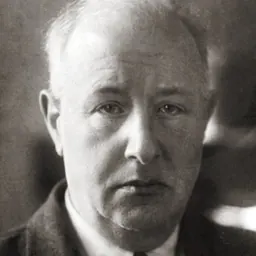
John William Nevill Watkins (31 July 1924 – 26 July 1999) was an English philosopher, a professor at the London School of Economics from 1966 until his retirement in 1989 and a prominent proponent of critical rationalism.
Life In 1952, Watkins married Micky Roe, with whom he had one son and three daughters.
Military service In 1941, aged 17, Watkins passed out in the First Division from the Royal Naval College at Dartmouth and went straight into the wartime Navy. He served in destroyers, escorting Russian convoys and the battleship carrying Churchill back from Marrakesh.
In 1944 he was decorated with the DSC for torpedoing a German destroyer off the French coast, part of an action which defeated the only remaining surface force that might have interfered with the Normandy landings.
Academic career Reading Friedrich Hayek's The Road to Serfdom (1944) on his destroyer aroused his interest in attending the LSE where Hayek taught. A First in Political Science and a prize-winning essay won him a Henry Ford Fellowship to Yale, where he graduated MA in 1950. Then he returned to the LSE as assistant lecturer in political science.
Watkins had attended Karl Popper's lectures at the LSE in logic and scientific method "and had fallen under his spell".
He is buried in the eastern section of Highgate Cemetery not far from the main entrance on the northern path. The John Walkins Plaza was opened in June 2003 at the LSE in front of the library. It was "designed to replicate the open space of a square in an Italian city".
Philosophical work That metaphysical propositions can influence scientific theorizing is indeed, arguably, Watkins' most lasting contribution to philosophy. He introduced a distinction between confirmable and influential metaphysics . According to Fred D'Agostino:
In 1965 Watkins published Hobbes's System of Ideas, in which he argued that Thomas Hobbes's political theory follows from his philosophical ideas.
At an international symposium on Criticism and the Growth of Knowledge held in London in 1965, Watkins replied to a paper in which Thomas S. Kuhn had compared his own theory of scientific revolutions with Popper's falsificationism. He saw a clash between:
"[Kuhn's view of the scientific community] as an essentially closed society, intermittently shaken by collective nervous breakdowns followed by restored mental unison, and Popper's view that the scientific community ought to be, and to a considerable degree actually is, an open society in which no theory, however dominant and successful, no 'paradigm', to use Kuhn's term, is ever sacred."
His most important work was Science and Scepticism, published in 1984. In it he tried "to succeed where Descartes failed", and show how science could survive in the face of scepticism. In his book Human Freedom after Darwin, posthumously published in 1999, he returned to a problem that had long occupied him.
Besides those about the influence of metaphysics on science, Watkins wrote classic and much-anthologised papers about methodological individualism, and about historical explanation.
Selected bibliography Books Hobbes's System of Ideas: A Study in the Political Significance of Philosophical Theories. London 1965 (Hutchinson); LSE reprint 1989. Science and Scepticism. Preface & Contents. Princeton 1984 (Princeton University Press). Human Freedom after Darwin: A Critical Rationalist View. London 1999 (Open Court),
Essays
"Ideal Types and Historical Explanation". In Alan Ryan (ed.): The Philosophy of Social Explanation, London 1973 (Oxford University Press), , pp. 82–104. "Karl Raimund Popper, 1902-1994," Proceedings of the British Academy, 1996, 94, pp. 645-85. "The Unity of Popper's Thought". In Paul A. Schilpp (ed.): The Philosophy of Karl Popper, vol. I. La Salle, Illinois 1974 (Open Court), , pp. 371–412.
Archives Catalogue of the Watkins papers held at LSE Archives
Don’t just read it —
keep it.
Full-length biographies made to live with: read them, listen on the way to work, watch them tonight.
- E-book
- Audio
- Video
Instant download · yours to keep · every purchase keeps this site free
Important facts
People in John W. N. Watkins's life
Named in this biography and alive at the same time





Related people
Same field, nearest in time



Contemporaries
People whose lives overlapped John W. N. Watkins's



Frequently asked questions
Who was John W. N. Watkins?
English Philosopher of Science
When was John W. N. Watkins born?
John W. N. Watkins was born on 31 July 1924 in England.
When did John W. N. Watkins die?
John W. N. Watkins died on 26 July 1999 in Salcombe.
What was John W. N. Watkins's occupation?
John W. N. Watkins was a philosopher and university teacher.
What nationality was John W. N. Watkins?
John W. N. Watkins was British.
Sources & further reading
· Wikipedia: John W. N. Watkins
Cite this page
APA: Biography.guide. (2026). John W. N. Watkins. https://biography.guide/john-w-n-watkins/
MLA: "John W. N. Watkins." Biography.guide, https://biography.guide/john-w-n-watkins/.
Chicago: "John W. N. Watkins." Biography.guide. https://biography.guide/john-w-n-watkins/.
Data last updated: 2026-09-25 · Spot an error? Report a correction.
Page generated 2026-09-27 05:11 UTC