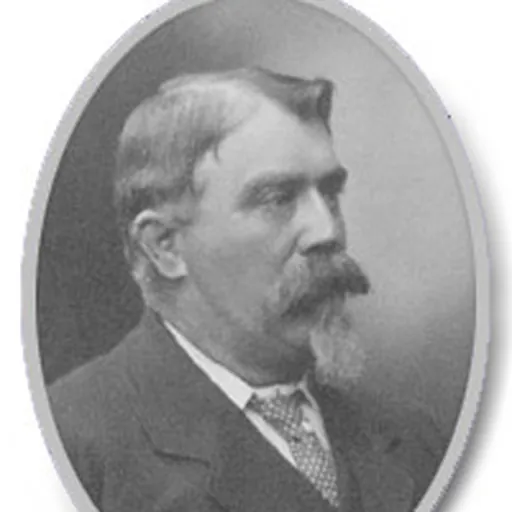
John Verran
Miner and politician, Premier of South Australia
About John Verran
Lived 1856 – 1932 (aged 75). John Verran was a British and Australian politician, trade unionist and miner.
John Verran (9 July 1856 – 7 June 1932) was an Australian politician and trade unionist. He served as premier of South Australia from 1910 to 1912, the second member of the Australian Labor Party (ALP) to hold the position.
Verran was born in Cornwall, England and arrived in Australia as a young child. He began working in the copper mines at Moonta as a young boy and eventually became president of the local miners' union. He was elected to the South Australian House of Assembly in 1901 as a member of the United Labor Party, the predecessor of the current ALP. Verran was chosen as the party's leader in 1909, following the death of Thomas Price, and won a majority at the 1910 state election. His agenda was hampered by the obstructionist Legislative Council and the government was defeated in 1912. He resigned as leader in 1913 and left the party following the split of 1916, losing his seat in 1918. After several unsuccessful candidacies for non-Labor parties he was chosen to fill a casual vacancy in the Senate from 1927 to 1928, sitting as a Nationalist.
Early life Verran was born at Gwennap, Cornwall in England, on 9 July 1856. The family lived at Kapunda, South Australia, until he was eight, and then moved to Moonta where copper had been discovered in 1861.
Verran learned to read with encouragement from the ministers of the Primitive Methodist church at Moonta.
Verran married Catherine Trembath in Moonta on 21 February 1880. They had eight children together before she died in 1914. having been defeated for the seat at the 1896 and 1899 elections. On the death of Premier Thomas Price in 1909, Verran became Labor leader. Labor demanded the Premier position for Verran, however LDU leader Archibald Peake refused which saw Peake form a one-year government. The following year, Verran led Labor to South Australia's first majority government in the House of Assembly at the 1910 election, in 1910 which revealed the ignorance and racism of white attitudes towards Australia's indigenous people at the time, and was a member of the Royal Commission on Aborigines (1912–1916). As a backbencher during World War I, Verran was supported by the All-British League in leading a campaign against people of German descent. He sought to close all Lutheran schools, disenfranchise (remove the right to vote from) people of German origin or birth and demand that Lutheran children "be taught pure English, and taught by those who are British, and taught what it is to be British".
Verran was succeeded as leader of the Labor Party by Crawford Vaughan in 1913, and Verran broke with the party in 1917 over the conscription issue. In 1918, he stood as a National Party candidate and was defeated. He stood as an independent in 1921 and a Liberal in 1924, also without success.
Federal parliament
Verran stood unsuccessfully as a Nationalist candidate for the Senate at the 1922 federal election and for the House of Representatives seat of Hindmarsh at the 1925 election.
On 30 August 1927, aged 71, Verran was elected by state parliament to fill a casual vacancy caused by the death of ALP senator Charles McHugh. After taking his seat he spoke frequently on industrial relations and intergovernmental matters. He supported the Bruce–Page government's proposed amendments to the Commonwealth Conciliation and Arbitration Act 1904 and proposed introduction of secret ballots to decide strikes. Despite his background, Verran's rhetoric became increasingly anti-union, describing militant unionists as "responsible for much of our present troubles" and unions in general as "infernal political fighting machines". He also reluctantly supported the 1927 financial agreement between the federal government and the states, although stating "I never have been a federalist [...] indeed, I fought against federation, because, in my opinion, federation means the damnation of any country".
Verran was defeated at the 1928 election after just over a year in the Senate.
Later life He died at his daughter's home in Unley and was given a state funeral. He was buried at Moonta.
Don’t just read it —
keep it.
Full-length biographies made to live with: read them, listen on the way to work, watch them tonight.
- E-book
- Audio
- Video
Instant download · yours to keep · every purchase keeps this site free
Important facts
People in John Verran's life
Named in this biography and alive at the same time


Related people
Same field, nearest in time






Contemporaries
People whose lives overlapped John Verran's




Frequently asked questions
Who was John Verran?
miner and politician, Premier of South Australia (1856–1932)
When was John Verran born?
John Verran was born on 9 July 1856 in Cornwall, Gwennap.
When did John Verran die?
John Verran died on 7 June 1932 in Unley.
What was John Verran's occupation?
John Verran was a politician, trade unionist and miner.
What nationality was John Verran?
John Verran was British and Australian.
Sources & further reading
Cite this page
APA: Biography.guide. (2026). John Verran. https://biography.guide/john-verran/
MLA: "John Verran." Biography.guide, https://biography.guide/john-verran/.
Chicago: "John Verran." Biography.guide. https://biography.guide/john-verran/.
Data last updated: 2026-09-22 · Spot an error? Report a correction.
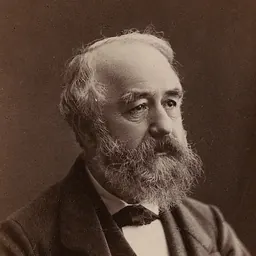
Portrait: Wikimedia Commons · author & licence
Page generated 2026-09-27 05:02 UTC