
About John Vanbiesbrouck
Born 1963. John Vanbiesbrouck is an American ice hockey player.
John Vanbiesbrouck (born September 4, 1963), nicknamed "the Beezer" and "JVB", is an American professional ice hockey executive and former player. As a goaltender, he was inducted into the United States Hockey Hall of Fame in 2007. Vanbiesbrouck played in the National Hockey League (NHL) from 1981 to 2002 for the New York Rangers, Florida Panthers, Philadelphia Flyers, New York Islanders, and New Jersey Devils. He began his career playing major junior hockey for the Sault Ste. Marie Greyhounds of the Ontario Hockey League (OHL). Following a successful season with the Greyhounds, he was drafted by the New York Rangers in the fourth round, 72nd overall, in the 1981 NHL Draft. After his junior career ended, he played for the Rangers minor league affiliate, the Tulsa Oilers of the Central Hockey League. Despite the team's near collapses due to financial concerns, Vanbiesbrouck led the Oilers to a league championship and shared the league's MVP honors.
Vanbiesbrouck began playing full-time with the Rangers in the 1984–85 season. He won the Vezina Trophy as the league's top goaltender and was named a First Team NHL All-Star the following season. After playing in parts of 11 seasons with the Rangers, he was selected in the 1993 NHL Expansion Draft by the Florida Panthers. In Florida, Vanbiesbrouck was a three-time All-Star and led the Panthers to their first Stanley Cup Final appearance, in 1996. While in Florida, he recorded his 300th career victory, becoming the 15th goaltender and only the second American goalie in NHL history to do so. During his career, Vanbiesbrouck compiled a record of 374 wins, 346 losses, 119 ties and 40 shutouts, making him, at the time, the winningest American-born goaltender, and also at the time, tying Frank Brimsek for most career shutouts by an American-born goaltender. Both records have since been broken by Ryan Miller and Jonathan Quick.
Internationally, Vanbiesbrouck has represented the United States on several occasions. He played in the 1982 World Junior Ice Hockey Championships as well as four IIHF World Championships. He was named to the second All-Star team at the 1985 World Ice Hockey Championships. He also played in two Canada Cup tournaments, registering the lowest goals against average (GAA) in 1987 and was a back-up goaltender during the Americans' second-place finish in 1991. He represented Team USA for the final time in 1998, serving as the back-up on the Olympic ice hockey team.
Following his playing career, he took over as the head coach and general manager of the Sault Ste. Marie Greyhounds. However, after using a racial slur referencing team captain Trevor Daley, he resigned. Vanbiesbrouck worked as a broadcaster and in hockey-related businesses. In 2013, Vanbiesbrouck was named the general manager of the Muskegon Lumberjacks in the Tier I junior United States Hockey League (USHL). In 2018, he was hired by USA Hockey as the assistant executive director of hockey operations and would be involved with selecting players for the US national teams. In late 2021 Vanbiesbrouck was named general manager of the U.S. Olympics Men's hockey team.
Early life Vanbiesbrouck was born in Detroit, Michigan, as the youngest of three boys born to a Belgian immigrant bricklayer, Robert Vanbiesbrouck, and an Italian immigrant, Sara. He grew up with two older brothers; the oldest, Frank, who was also a goaltender in youth hockey, inspired Vanbiesbrouck to play goaltender. After being unclaimed in the draft, Vanbiesbrouck was offered a try-out with the Sault Ste. Marie Greyhounds, members of the Ontario Major Junior Hockey League (OMJHL), which later became the Ontario Hockey League (OHL). At the try-out, he made the team over several other players, and became the starting goaltender for the Greyhounds. Vanbiesbrouck played in 56 games and compiled a 31–16–1 record during his first season in Sault Ste. Marie.
On December 5, 1981, just months after being drafted, Vanbiesbrouck made his professional debut with the Rangers as an emergency call-up.
Following his career with the Greyhounds, Vanbiesbrouck moved on to the minor leagues, joining the Central Hockey League's (CHL) Tulsa Oilers. During the 1983–84 season, his first with the Oilers, the ownership group was unable to sustain the team. They went bankrupt, were taken over by the league, and forced to play their remaining games on the road. After losing their home rink the team was housed in Denver, Colorado where they shared a practice facility with the University of Denver and fellow CHL team the Colorado Flames. His success continued over to the post-season, where he led the Rangers to an upset over the Philadelphia Flyers in the opening round. The Rangers lost in the Conference Finals to the eventual Stanley Cup champion Montreal Canadiens. In the off-season, Vanbiesbrouck was named a First Team NHL All-Star, won the Vezina Trophy as the league's top goaltender, He was unable to repeat his success in the next season, with 18 wins and 20 losses in 50 games.
Prior to the 1987–88 season, Vanbiesbrouck was hit by a puck under his mask in practice, which caused a non-displaced fracture of his lower jaw and a broken tooth. Fortunately for him, the injury did not require his jaw to be wired shut, and he was able to return to practice the next day. He showed no ill effects from the injury, playing in 56 games, winning 27. On June 13, 1988 Vanbiesbrouck suffered nerve damage to his left wrist after a glass coffee table he was sitting on collapsed and broken glass lacerated his ulnar nerve and three tendons. He was sitting on the table assembling video equipment in anticipation of the birth of his first child. The glass broke beneath him, and as he braced for the fall, his wrist was cut by the glass. Vanbiesbrouck required five hours of microsurgery to remove glass from his wrist and repair the nerve and tendon damage. He was initially expected to miss four-to-six months, but he recovered in time to attend the Rangers pre-season training camp just three months later. Again he played in 56 games, and increased his win total to 28.
Vanbiesbrouck began the 1989–90 season as the Rangers' starting goaltender, but after the Rangers struggled in early January, he began to share the duties with the recently called-up Mike Richter. During the playoffs, head coach Roger Neilson employed a rotation system between the two goaltenders. The Rangers won their first round match-up against the New York Islanders, but lost to the Washington Capitals in the second round. For his part, Vanbiesbrouck posted a 2–3 record with a 3.02 GAA and a .902 save percentage.
The following season, the two goaltenders formed the best duo in the NHL. After not receiving much interest from other clubs, Vanbiesbrouck re-signed with the Rangers, signing a two-year deal with an option for the third averaging $1 million per season.
Florida Panthers Vancouver made the trade not with the intention of keeping Vanbiesbrouck, but rather in an attempt to keep other players on their roster from being drafted. Rules of the 1993 NHL Expansion Draft allowed teams to protect one goaltender, nine forwards and five defensemen. Additional rules stated that teams could only lose one goaltender in the draft and prevented teams from losing both a defenseman and a goaltender. Thus, with their first selection, the Panthers picked Vanbiesbrouck to be the number one goaltender for their team. Upon his arrival in Florida, Vanbiesbrouck went on a "mall tour" to help elevate the visibility of the franchise and made an informative video explaining ice hockey terms for Blockbuster, then owners of the franchise. In January 1994, he made his return to Madison Square Garden. In his first game back to his former home venue, Vanbiesbrouck made 51 saves, ultimately losing the game 3–2. During the season, he was also named to the All-Star game as the Panthers' sole representative. In the game, Vanbiesbrouck played the third period, made six saves and was credited with the win. At the completion of his first season in Florida, he played in 57 games posting a 21–25–11 record, registering a 2.53 GAA, and his career best save percentage of .924 Vanbiesbrouck was named a Second Team NHL All-Star His 21 wins tied the Minnesota North Stars' Cesare Maniago's record for the most by an expansion goaltender. The record was later passed by Ron Tugnutt during the Columbus Blue Jackets' inaugural season. The Panthers finished the season with 83 points, one point behind the New York Islanders, for the eighth and final playoff spot in the Eastern Conference.
In the 1995–96 season, Vanbiesbrouck was named to the All-Star Game. In the game, he played the second period and gave up three goals on seven shots. The Panthers were in playoff position for more than half of the season, but faltered late in the season and were close to falling out of the playoff race. Late in the season, Vanbiesbrouck shutout the New Jersey Devils putting Florida into the playoffs. At the end of the regular season, he played in 57 games posting a 21–25–11 with two shutouts. His games played ranked him tenth in the league while his GAA of 2.68 was ninth. In the first round, Florida defeated the Boston Bruins in five games. Vanbiesbrouck posted a shutout in the first game of the series, the third post-season shutout of his career and the first in Panthers playoff history. During the series, Vanbiesbrouck held the Flyers scoreless for 116:46 straight minutes as Florida upset Philadelphia, winning four games to two. The Penguins took a 3–2 series lead, but the Panthers won Game 6, 4–3, to force Game 7. The game was a 0–0 tie entering the third overtime period. Early in the period, a long shot from Colorado's Uwe Krupp eluded Vanbiesbrouck, giving the Avalanche a 1–0 win and the Stanley Cup. Vanbiesbrouck made 55 saves in the loss and even though his team was swept in the finals, he still finished third in voting for the Conn Smythe Trophy as playoff MVP.
During the 1996–97 season, Vanbiesbrouck was elected by the fans to the All-Star Game as the starting goaltender. Vanbiesbrouck' 200,457 votes led the Eastern Conference. By season's end, Vanbiesbrouck finished in the top ten in the NHL for save percentage (6), GAA (5) and tied for 11 in wins (27). The Panthers finished fourth in the Eastern Conference and faced the Rangers in the first round of the Stanley Cup playoffs. Vanbiesbrouck made 34 saves in Game 1, shutting-out the Rangers 3–0. It was the only game the Panthers won as the Rangers defeated them 4–1 in the series. The following season, Vanbiesbrouck reached a personal milestone. On December 27, 1997, the Panthers defeated the New York Islanders 6–2 at Nassau Coliseum. The win marked the 300th of his career, making him the 15th goaltender, and second American, in NHL history to reach the mark. Despite his personal milestone, Vanbiesbrouck suffered through his worst statistical season with the Panthers.
Post-Panthers career During the off-season, Vanbiesbrouck signed a two-year, $7.25 million contract, with an option for a third year, with the Philadelphia Flyers. His first season with Philadelphia was successful, as he posted a career best 2.18 GAA, notching six shutouts, playing in a career high 62 games and registering a 27–18–15 record. Despite posting good individual numbers (.938 save pct and 1.46 GAA), Vanbiesbrouck let in goals that many Flyers fans perceived to be "soft" that cost the Flyers games. However, what ostensibly cost the Flyers the games was their inability to score timely goals for their goaltender—they scored just 11 goals in 6 games while Vanbiesbrouck allowed just nine goals in six games. Philadelphia was eliminated in the first round by the Toronto Maple Leafs in six games. He continued to be "shaky" at the beginning of the 1999–2000 season. As a result, rookie Brian Boucher began playing more. Vanbiesbrouck played 50 games during the season, registering a 25–15–9 record, but in the playoffs, the Flyers opted for Boucher.
During the 2000 NHL entry draft, Philadelphia traded Vanbiesbrouck to the New York Islanders in exchange for a fourth-round draft pick. The Islanders made the trade with the intention of having Vanbiesbrouck mentor first overall draft pick Rick DiPietro. Vanbiesbrouck played in four games for the Devils, winning them all, and recorded his 40th career shutout. Vanbiesbrouck did not play during the playoffs, but the Devils advanced to the Stanley Cup Final, where they played the Colorado Avalanche and lost in seven games. Vanbiesbrouck retired immediately after Game 7 on June 10, 2001. He stated that "it's time" and he wanted to leave the game healthy. He was retired for only eight months before he agreed to terms with the Devils to come out of retirement. He posted a 2–3–0 record as the Devils back up, finishing his career with 374 wins. He again did not play in the playoffs as the Devils were eliminated in the first round by the eventual Eastern Conference champion Carolina Hurricanes. Vanbiesbrouck retired for the second and final time on May 24, 2002.
Following his playing career, Vanbiesbrouck earned several accolades. The Sault Ste. Marie Greyhounds retired his number (1). NHL named him the best player to wear jersey number 34, and on October 12, 2007, Vanbiesbrouck was inducted into the United States Hockey Hall of Fame. He is 16th in NHL history in wins. However, he is also sixth all-time in losses.
International play
Vanbiesbrouck made his international debut in 1982 representing the United States at the World Junior Championship. In five games he posted a 1–3–0 record with a 5.70 GAA, as the Americans finished in sixth place. The next year he again participated in the World Junior Championship. He appeared in five games and lowered his GAA to 3.64, helping the American team improve to fifth place.
In 1985 he played for Team USA at the IIHF World Championships. Vanbiesbrouck posted a 6–3–0 record, defeating three of three top ranked teams in the world (Canada, Czech Republic and Sweden). Two years later, he played in his second World Championship. He was unable to duplicate his prior success posting a 2–5–0 record, as Team USA finished in seventh place one position away from being relegated to Division I. During 1987 Vanbiesbrouck also participated in the Canada Cup, registering a 2–2–0 record with a 2.25 GAA. He registered the lowest GAA in the tournament, but the United States finished in fifth place. He played in two more World Championships in 1989 and 1991 going 1–2–1 and 3–4–2 respectively, as the US improved to sixth place in 1989 and finished just short of winning a medal in 1991 placing fourth. Vanbiesbrouck was named to the Canada Cup team in 1991, but spent the tournament as Mike Richter's back-up. He played only one game in the tournament, defeating Finland 4–3. The United States finished the Canada Cup in second place losing the best of three championship to Canada 2–0. He was named to the 1996 World Cup of Hockey team but missed the Americans' victory due to a small cartilage tear in his right shoulder that required off-season surgery to repair.
Prior to the 1998 Winter Olympics, an announcement was made that NHL would shut down for two and a half weeks to allow its players to participate in the international tournament for the first time. Vanbiesbrouck was named to the United States team, but spent the majority of the tournament on the bench, playing in one game for only one minute. As a team, the Americans finished in a "disappointing" sixth place.
Playing style Vanbiesbrouck was a hybrid goaltender who combined the butterfly style and the more traditional stand-up style. He was strong at playing his angles and challenged shooters well. Small for a goaltender, standing only 5' 8", he relied on his quickness to regain his feet after making saves or to make additional saves in goalmouth scrambles. Vanbiesbrouck was aggressive when it came to playing the puck,
Retirement
Racism against Trevor Daley
When he retired from the NHL, Vanbiesbrouck took over as the head coach and director of hockey operations for the Sault Ste. Marie Greyhounds. In February 2003, the team had a record of 18–24–4–3. One month later, on March 7, the Greyhounds lost 6–1 to the Guelph Storm. After the game, Vanbiesbrouck used a racial slur in expressing his anger with Trevor Daley, a black player and Greyhounds' team captain, to two of Daley's white teammates. Daley was told of the remarks by his teammates and was advised to leave the team by his agent Bobby Orr. Daley returned home to Toronto and informed the commissioner of the OHL about the remarks.
The day after Daley left the team, Vanbiesbrouck resigned his positions as head coach and general manager and sold his ownership stake in the team. In his apology, Vanbiesbrouck stated, "I used the 'N' word instead of calling him Trevor, I used it just not thinking. It's a mistake and consequences have to be paid by me, I've embarrassed everybody and my family by this one comment. It's not what they represent and it's not what the Sault Greyhounds organization represents." He added, "I told Trev this is an old wound with me, I grew up with it. I'm as sorry as anybody that it's stuck with me." Daley returned to the team three days after leaving, but Vanbiesbrouck never returned to a coaching position.
Broadcasting and management career After leaving the Greyhounds, Vanbiesbrouck spent some time as a broadcaster, working as an analyst for Versus network as well as hockey broadcasts on HDNet. In 2010, Vanbiesbrouck, along with Steve Goldstein, formed the broadcast team for Westwood One's radio coverage of the Winter Olympic hockey games. In 2013, Vanbiesbrouck was named the general manager and director of hockey operations for the United States Hockey League's (USHL) Muskegon Lumberjacks.
Personal life Vanbiesbrouck grew up as the youngest of three brothers. His oldest brother, Frank, was a goaltender who played three seasons of junior-A hockey from 1974 until 1977. His other brother, Julian, played left wing for the University of Michigan and briefly played in the International Hockey League as a member of the Toledo Goaldiggers. When Vanbiesbrouck was with the Rangers, his brother Frank showed signs of severe depression and suicidal tendencies. He and his wife, Rosalinde, have four sons. However, when he left Florida via free agency, the foundation was dissolved and the mission of the program went into an information service based in South Florida. Vanbiesbrouck is also the celebrity sponsor of a golf event in support of The Alan T. Brown Foundation to Cure Paralysis. He returned to his home state of Michigan following his playing days.
Awards and honors F. W. "Dinty" Moore Trophy (OHL – best rookie goals against average) winner in 1981. Selected to the OHL second All-Star team in 1983. Vanbiesbrouck appears on the NHL 97 cover.
Records New York Rangers all-time franchise record for most assists in a single season by a goaltender (5) (shared). New York Rangers all-time franchise record for most career assists by a goaltender (25). Third most NHL career wins by an American-born goaltender (374).
Career statistics Regular season and playoffs Bold indicate league leader Regular season Playoffs Season Team League GP W L T MIN GA SO GAA SV% GP W L MIN GA SO GAA SV% 1980–81 Sault Ste. Marie Greyhounds OHL 56 31 16 1 2941 203 0 4.14 — 11 3 3 457 24 1 3.15 — 1981–82 New York Rangers NHL 1 1 0 0 60 1 0 1.00 .967 — — — — — — — — 1981–82 Sault Ste. Marie Greyhounds OHL 31 12 12 2 1686 102 0 3.62 — 7 1 4 276 20 0 4.35 — 1982–83 Sault Ste. Marie Greyhounds OHL 62 39 21 1 3471 209 0 3.61 — 16 7 6 944 56 1 3.56 — 1983–84 New York Rangers NHL 3 2 1 0 179 10 0 3.33 .882 1 0 0 1 0 0 0.00 1.000 1983–84 Tulsa Oilers CHL 37 20 13 2 2153 124 3 3.46 — 4 4 0 240 10 0 2.50 — 1984–85 New York Rangers NHL 42 12 24 3 2371 166 1 4.20 .877 1 0 0 20 0 0 0.00 1.000 1985–86 New York Rangers NHL 61 31 21 5 3322 184 3 3.32 .887 16 8 8 897 49 1 3.38 .897 1986–87 New York Rangers NHL 50 18 20 5 2652 161 0 3.64 .882 4 1 3 195 11 1 3.38 .900 1987–88 New York Rangers NHL 56 27 22 7 3315 187 2 3.38 .890 — — — — — — — — 1988–89 New York Rangers NHL 56 28 21 4 3207 197 0 3.69 .881 2 0 1 107 6 0 3.37 .889 1989–90 New York Rangers NHL 47 19 19 7 2734 154 1 3.38 .887 6 2 3 298 15 0 3.02 .902 1990–91 New York Rangers NHL 40 15 18 6 2257 126 3 3.35 .891 1 0 0 52 1 0 1.16 .955 1991–92 New York Rangers NHL 45 27 13 3 2526 120 2 2.85 .910 7 2 5 368 23 0 3.75 .872 1992–93 New York Rangers NHL 48 20 18 7 2757 152 4 3.31 .900 — — — — — — — — 1993–94 Florida Panthers NHL 57 21 25 11 3440 145 1 2.53 .924 — — — — — — — — 1994–95 Florida Panthers NHL 37 14 15 4 2087 86 4 2.47 .914 — — — — — — — — 1995–96 Florida Panthers NHL 57 26 20 7 3178 142 2 2.68 .904 22 12 10 1332 50 1 2.25 .932 1996–97 Florida Panthers NHL 57 27 19 10 3347 128 2 2.29 .919 5 1 4 328 13 1 2.38 .929 1997–98 Florida Panthers NHL 60 18 29 11 3451 165 4 2.87 .899 — — — — — — — — 1998–99 Philadelphia Flyers NHL 62 27 18 15 3712 135 6 2.18 .902 6 2 4 369 9 1 1.46 .938 1999–00 Philadelphia Flyers NHL 50 25 15 9 2950 108 3 2.20 .906 — — — — — — — — 2000–01 New York Islanders NHL 44 10 25 5 2390 120 1 3.01 .898 — — — — — — — — 2000–01 New Jersey Devils NHL 4 4 0 0 240 6 1 1.50 .935 — — — — — — — — 2001–02 New Jersey Devils NHL 5 2 3 0 300 10 0 2.00 .915 — — — — — — — — NHL totals 882 374 346 119 50,475 2,503 40 2.98 .899 71 28 38 3,965 177 5 2.68 .915
International Year Team Event GP W L T MIN GA SO GAA SV% 1982 United States WJC 5 1 3 0 200 19 0 5.70 — 1983 United States WJC 5 — — — 280 17 0 3.64 — 1985 United States WC 9 6 3 0 492 46 0 5.64 — 1987 United States WC 7 2 5 0 419 28 0 4.01 — 1987 United States CC 4 2 2 0 240 9 0 2.00 .922 1989 United States WC 5 1 2 1 265 20 0 4.53 — 1991 United States WC 10 3 4 2 526 41 0 4.67 — 1991 United States CC 1 1 0 0 60 3 0 3.00 .813 1998 United States OLY 1 0 0 0 1 0 0 0.00 1.000 Junior totals 10 — — — 480 36 0 4.50 — Senior totals 37 15 16 3 2003 147 0 4.40 —
Don’t just read it —
keep it.
Full-length biographies made to live with: read them, listen on the way to work, watch them tonight.
- E-book
- Audio
- Video
Instant download · yours to keep · every purchase keeps this site free
Important facts
People in John Vanbiesbrouck's life
Named in this biography and alive at the same time
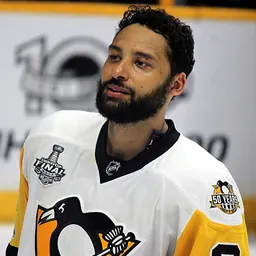




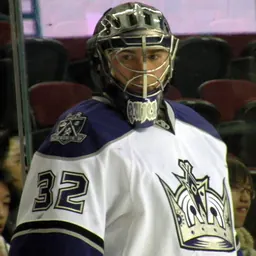
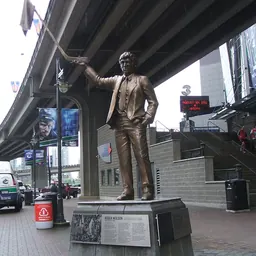
Related people
Same field, nearest in time





Contemporaries
People whose lives overlapped John Vanbiesbrouck's




Frequently asked questions
Who is John Vanbiesbrouck?
American ice hockey goaltender
When was John Vanbiesbrouck born?
John Vanbiesbrouck was born on 4 September 1963 in Detroit.
What is John Vanbiesbrouck's occupation?
John Vanbiesbrouck is an ice hockey player.
What nationality is John Vanbiesbrouck?
John Vanbiesbrouck is American.
Sources & further reading
· Wikipedia: John Vanbiesbrouck
Cite this page
APA: Biography.guide. (2026). John Vanbiesbrouck. https://biography.guide/john-vanbiesbrouck/
MLA: "John Vanbiesbrouck." Biography.guide, https://biography.guide/john-vanbiesbrouck/.
Chicago: "John Vanbiesbrouck." Biography.guide. https://biography.guide/john-vanbiesbrouck/.
Data last updated: 2026-09-26 · Spot an error? Report a correction.
Page generated 2026-09-27 05:14 UTC