
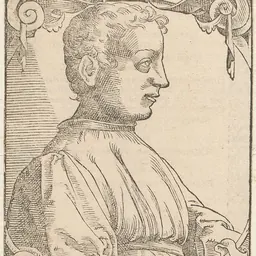
John V of Nassau-Siegen
Count of Nassau-Siegen and Diez, Stadtholder of Guelders and Zutphen
About John V of Nassau-Siegen
Lived 1455 – 1516 (aged 60). John V of Nassau-Siegen was a count of Diez.
Count John V of Nassau-Siegen (9 November 1455 – 30 July 1516), , official titles: Graf zu Nassau, Vianden und Diez, Herr zu Breda, was since 1475 Count of Nassau-Siegen (a part of the County of Nassau) and of half Diez. He descended from the Ottonian Line of the House of Nassau.
John was Stadtholder of Guelders and Zutphen in the period 1504–1505. He took little part in imperial politics, but concentrated mainly on the administration of his own counties. During his reign, the dispute over the succession in the County of Katzenelnbogen with the Landgraviate of Hesse started , which did not end until 41 years after his death.
John had an obvious special interest in promoting the economy of his county. He protected and promoted mining. During his reign, the number of iron mines in the Siegerland and in the Dillenburg district increased. The county's economic prospects were therefore positive. John also promoted the revival of trade by issuing numerous guild certificates. He also built a church in Hadamar,
John is somewhat overshadowed by his older brother Engelbert II. In the relevant reference works about the dynastic history of the House of Orange-Nassau, especially in Dutch book editions, he is sometimes completely missing. In the very well founded biographical dictionary Oranje-Nassau by the Dutch historian , for instance, one searches in vain for a mention of this Count of Nassau-Siegen, whereas his brother is praised there as a 'complete Dutch nobleman'.
Biography John was born in Breda on 9 November 1455 as the second and youngest son of Count John IV of Nassau-Siegen and Lady Mary of Looz-Heinsberg.
Count of Nassau-Siegen and Diez
John succeeded his father in 1475 in accordance with the succession treaty of 1472.
For the administration of justice, the county had a Schultheiß in most of the districts. The oldest preserved ordinance for the Schultheiß of the Dillenburg district is from 10 April 1465, which contains only a part of his tasks and authority. In 1498 there followed the joint justice ordinance for the districts of Siegen and Dillenburg, which contained the complete law of the time. This ordinance had to be read out loud to all citizens every year. In the ordinances of 1465 and 1498 the provisions on matrimonial law are prominently present. The Landgericht zum Oberhof zu Siegen was designated as the court of appeal. Until then the Reichshofgericht in Rottweil had been competent for appeals. In a decree of 8 June 1494, Roman King Maximilian I, released John from the obligation to go to Rottweil and to be subordinate to the Westphalian Landgerichter and vehmic courts. Because of the increasing "Rauben, Morden, Brennen und andere Gewalttätigkeiten" ("robbery, murder, arson and other acts of violence") and in order to be able to execute justice more quickly and effectively, John established a vehmic court on Ginsburg Castle. For the Blutgerichtsbarkeit (high jurisdiction) the Hochgericht was competent. The Ebersbach district had its own Hochgericht auf dem Stein. During the executions there, the count occasionally wielded the sword himself in order to behead the criminals. But mostly he left that to the executioners. Also the other punishments and fines, which the count himself imposed in special cases, to give an example, were not insignificant for the monetary value of the time. John also installed an Oberhofgericht in Hadamar. A not inconsiderable source of income for the Counts of Nassau has always been the iron toll. A charter of 1 April 1470 concerning the tariffs in Siegen, Netphen and Wilnsdorf lists the individual taxes for pig iron, steel, cast iron pans, metal sheets, scythes, cauldrons, etc. in detail. The expenses included the travels of the count and his family, celebrations at court, the remuneration of officials, court clothes, altar candles and communion wine, but especially the workmen and materials for construction work at the various castles. In 1481 John finished the expansion of , which his father had started in 1472.
Early on after the death of his father, John was confronted with the accusations of Count Gerhard of Sayn, who accused him of interfering with and violating Sayn's sovereign rights in the parishes of Burbach and Neunkirchen. In the context of the settlement of their dispute in 1478, Gerhard and John agreed to make an arrangement regarding the purchase of ironstone and coal and the metallurgical industry in both lands. This is an example of John's obvious special interest in promoting the economy of his county. Historians speculate whether his interest in the economy was also linked to Nassau's advance into the County of Wittgenstein. Here, first of all, has to be thought of a section of the historic in today's southern Westphalia, which reached into the Rothaar Mountains. For John this part of a cross-border route for iron apparently was a strategically and geographically important connection between the Siegerland and the neighbouring area along the Dill, in order to involve Wittgenstein in the economic process and to create new market opportunities for Nassau. In any case, this section of the Eisenstraße served as part of an important north–south connection or as part of a supra-regional traffic network within the and the to connect the Siegerland with Electoral Cologne's Sauerland and the Nassau areas beyond the Kalteiche. The border disputes between the counties of Nassau and Wittgenstein in 1484 and 1515 imply that John apparently wanted to gain possession of a part of the Rothaar Mountains, presumably in order to control the trade traffic along this part of the Eisenstraße. which partly belonged to the County of Sayn, were abolished.
A close relationship existed between John and his eldest sister Anne, who mainly resided in Celle through her marriage to Duke Otto II of Brunswick-Lüneburg in 1467. Based on the lively correspondence between her and John, it is even possible to reconstruct a trade exchange between Brunswick-Lüneburg and Nassau. In any case, the duchess regularly sent her relatives in Siegen and Dillenburg fresh or smoked salmon, eels and other North Sea delicacies such as salted sturgeon and plaice, while John sent his sister cast iron pans from Siegen in return.
Roman King Maximilian I, later Emperor. Portrait by Albrecht Dürer, 1519. Kunsthistorisches Museum, Vienna. In 1485, John renewed certain claims to the Duchy of Cleves and the County of Mark, for which he – in alliance with the Roman King Maximilian I, who was inclined to do so for other reasons – declared war on Duke John II of Cleves. However, it did not come to open hostilities, the disputes were settled, not without some benefits for John in hard cash.
In his struggle with the , John stood his ground, but this brought him the enmity of the powerful Landgraves of Hesse. By a treaty of 26 May 1486, he took off and the Gericht Ebersbach from the von Bicken Family and left them only , subject to recognition of the territorial lord's rights. Thereby, the last local noble family in the county became subject to the Counts of Nassau. In 1511, the von Bicken Family still had to pledge not to admit any prince, count, free lord, knight, servant or anyone else to Hainchen Castle to the detriment of Nassau, and to keep the castle open only to the Counts of Nassau at all times. John rushed to his brother's aid with cavalry, but had to liberate Engelbert with a ransom of 84,000 francs, for which the city of Siegen volunteered to pay a part. to reimburse him for the damage to the forest that the inhabitants of had left behind on Nassau territory. Should this wood crime continue, "und die von Brachthusen in ierem gewaltigen vurnemen wurden beharren, wurde ich geursacht, der gewalt zu sturen" ("and the people of Brachthausen will persist in their violent actions, I will be induced to resist with force"), John stated. In 1504, he issued ordinances for the craft of steel and blacksmiths as well as for the wool weavers' guild in the city of Siegen.
John was Stadtholder of Guelders and Zutphen in the period 1504–1505. Similar building plans had already been made by his father, John IV, who in 1473 received permission from Archbishop Adolf II of Mainz to use the income from St. John's Chapel in the Magdalene Monastery outside the city walls for the construction of a new Franciscan monastery. However, the project would only be carried out by his son John V, who, as a member of the Third Order of Saint Francis, was himself imbued with the ideals of this brotherhood. Pope Innocent VIII approved the construction of the monastery on 15 March 1486, and already on 12 February 1486, John concluded a trade agreement with the nobles Peter and Dietmar von Seelbach, in order to acquire a property in the Kölner Straße in Siegen, where the monastery and St. John's Church were to be built. He paid 6000 guilders for the construction of the monastery and even supported the monks by providing them with goods, firewood and books. An account from 1487 shows that on 13 July he was in Siegen, together with his equally God-fearing eldest sister Anne, to supervise the progress of the building activities. On 25 March 1489, eleven monks moved into the still unfinished Franciscan monastery in Siegen. The reason for the slow development was that, especially from 1489 onwards, John spent most of his time in the County of Vianden that his brother Engelbert had pledged to him. In order to get to know these new areas and to include them in his administration, John had to stay there for longer periods in the following years. Due to the circumstances in the Netherlands and the large sums of money that John again spent for his brother in these battles, the construction of the monastery in Siegen was undoubtedly stopped and it remained unfinished. The building activities were only resumed in 1493. In the course of the following years, the number of Franciscan monks in Siegen increased to about twenty, until the Franciscan monastery was dissolved during the Reformation in 1534 and the monks were expelled from Siegen.
Dillenburg did not have its own parish church; the city and castle were part of the parish church in Feldbach. However, there was a chapel in the valley. At John's request, Archbishop John II of Trier, granted the inhabitants of the castle and the valley permission in a charter of 30 May 1477 to hold part of the services, such as masses and sermons, in this chapel. For the big celebrations, a visit to the parish church in Feldbach remained mandatory. The sacrament of baptism and burials could only take place there. Again at John's request, the archbishop moved the parish church with the right of baptism and the other sacraments from Feldbach to Dillenburg in a charter of 10 September 1490, where the count and the inhabitants were able to expand the chapel into a fully functioning church at their own expense.
Start of the Katzenelnbogische Erbfolgestreit Anne of Nassau-Siegen, John's eldest sister. Anonymous portrait.
John's first cousin Ottilie of Nassau-Siegen was married to Philip the Younger of Katzenelnbogen, who died already in 1453. His brother Eberhard died three years later. Since Philip the Elder was related to both the Landgraves of Hesse and the Counts of Nassau, he was able to mediate between the two during the conflict over the von Bicken Family. In the year of the marriage, an attempt was made to poison Anne. The perpetrator, a clergyman called Johann von Börnich, confessed on the rack that he had given the countess poisoned wine at supper and that he had been induced to do so by a high Hessian official. Because John instituted criminal proceedings against von Börnich, Hesse's reputation was dealt a heavy blow as an alleged instigator of murder. Emperor Maximilian I forbade William II the Middle to violate the County of Katzenelnbogen or to take violent steps against the House of Nassau. The fortifications at the Kölner Tor and the Obergraben in Siegen, which have since been restored and are a characteristic feature of the cityscape, were built on his initiative. However, the city treasury of Siegen was already under great pressure due to the count's building measures. The budgets of the three cities were heavily burdened by the first war preparations at the outbreak of the conflict with Hesse. Raw materials for war material were purchased, cannons and rifles were cast and then placed in visible positions on the wall towers and city gates. In the years 1500/01 to 1511/12, the city of Siegen spent an average of 1063.8 guilders on arms. In the period 1502 to 1512 more than 90 percent of the city's building expenditure, and thus more than 45 percent of the annual funds, went on military building projects. In the following decade (1510–1519), the city of Siegen spent only 353 guilders per year on military construction, which was still more than 33 percent of the average total annual expenditure of about 1060 guilders. On John's explicit orders, the city of Siegen started to buy lime and sand in 1501 for the construction of fortifications near the St. Martin's Church and to integrate them into the already existing fortifications. Although Siegen's city walls were first mentioned in a charter in 1311, the location of that parish church was still described as "extra muros" (i.e. outside the already existing city walls). Under John, enormous financial resources had to be raised in order to upgrade the bastions of the city of Siegen and to reinforce the city walls.
Last years, death, funeral and succession
John seems to have made use of the Elector of Trier's personal physician Dr. Johann Rief, who spent weeks at his bedside in Siegen in January 1505 and was called in again in 1509, as the count was suffering from gout or another leg ailment. The treatment probably did not help much, however, because in April 1510 he had a priest come to him, presumably to bless his leg.
In John's last years, the first reports came about the large peasant revolts which, by the way, never overwhelmed the county, apparently because the local peasants had no complaints about their territorial lords.
John died in either Dillenburg or Siegen on 30 July 1516 and was buried in the crypt of St. John's Church in the Franciscan monastery in Siegen, which he had founded. In 1836, he was reburied in in Siegen. John was succeeded by his son William I. These tapestries were lost in the 18th century. The design drawings for the tapestries were made by Bernard van Orley. Seven of those drawings have been preserved, only the design drawing for the fifth tapestry, depicting Count John I of Nassau-Siegen and Countess , is missing. With the coats of arms, indications have been written in French about inaccuracies, especially about the mirror-image representation of the male arms. It is known that Henry III paid special attention to this aspect and corresponded with his brother William I about it. The design for the last tapestry in the series differs from the other designs in that it depicts three women instead of one. As the inscription does not mention the identity of the two women in the background, this has given rise to much speculation.
L.J. van der Klooster, curator of the topography department of the Netherlands Institute for Art History, argued that the design drawing for the last tapestry contains a clear mistake. The text in the cartouche indicates that depicted are John V and Elisabeth of Hesse-Marburg, the parents of the commissioner of the tapestries, Henry III. However, the horseman depicted in the drawing wears the collar of the Order of the Golden Fleece around his neck.
Mencía de Mendoza. Portrait by Jan Gossaert, 1500–1550. Musée Condé, Chantilly, Oise. Count Henry III of Nassau-Breda. Portrait by Jan Gossaert, 1530–1532. Museu Nacional d'Art de Catalunya, Barcelona. Van der Klooster argued that in a work of art, one should always start from the most original form of the object. In this drawing he stated, it is clear that the inscription in the cartouche, as well as the filling in of the shields, were added early, but somewhat later in the sixteenth century, because the colour of the paint indicates this. The drawing therefore originally had an empty cartouche and empty shields. The collar of the Order of the Golden Fleece around the shield does, however, belong to the first instance of the drawing. Van der Klooster also argued that there is an unmistakable portrait similarity between the horseman and his wife and some portraits of Henry III and Mencía de Mendoza, namely those by Jan Gossaert. Further Van der Klooster stated that the collar of the Order of the Golden Fleece which the horseman wears and which also hangs around his coat of arms marks him as a member of the order. According to the statutes, a Knight of the Golden Fleece was obliged to wear the insignia. Abuses were punished severely. John V has never been a Knight of the Golden Fleece, but Henry III had been since 1505. Van Orley, who worked for the court, must have been well aware of this rule. He could not afford to make a mistake. Van der Klooster stated this being the most essential point in his analysis.
Van der Klooster further stated that the portrait of Mencía in the drawing has acquired a permanent place in Spanish costume history. One could say that it followed the fashion of the international courtiers around Emperor Charles V. His sister Archduchess Eleanor is depicted in entirely similar attire in her portraits by Joos van Cleve. The German Elisabeth of Hesse-Marburg – of whom no portraits are known – must have been dressed according to a completely different fashion in her day.
Of the nine women in the tapestries, eight are on horseback. Only the woman, whom Van der Klooster regards as Mencía de Mendoza, rides a mule. According to Van der Klooster, in those days, especially in Spain, the mule was considered the most suitable riding animal for women. When in September 1517 Emperor Charles V made his first journey to Spain in the company of a large retinue, among them Dutch chroniclers and artists, the party came into contact with the mule for the transport of the ladies. As far as Van der Klooster could ascertain, a woman riding a mule appeared for the first time in Dutch art on a print by Jacob Cornelisz van Oostsanen in the series Counts of Holland. However, this print is explicitly dated 1 April 1518. The artists who had accompanied the Emperor to Spain could have returned by now. The fact that, unlike the other countesses, the Spanish Mencía de Mendoza is the only one riding on a mule is therefore a factor in the identification according to Van der Klooster.
According to Van der Klooster, the series of tapestries relates to the genealogy of the House of Nassau, not to its possessions. The tapestry of Engelbert I and Joanne of Polanen does not allude to her rich heritage, including Breda, which was so important to Henry III. Van der Klooster admitted that against his view the fact speaks that the inscription in the cartouche explicitly states only as depicted: John V and his wife Elisabeth. Also, the original series of eight tapestries never included one depicting Henry III and his wives. In Van der Klooster's opinion, the error lies in the application of the inscription, for which he was unable to give an explanation. Therefore, the fate of this design drawing is that it will continue to carry an internal contradiction, according to Van der Klooster.
C.W. Fock, Professor of the History of Applied Arts at the Institute of Art History of Leiden University, argued that there must be very conclusive reasons for opposing the inscription and the coat of arms shown on the drawing, precisely because it is so clear that much attention was paid to this aspect. The inscription is written in the same 16th century hand as on the other drawings, probably contemporary with the designs of the whole series. Moreover, all historical sources indicate that the last, eighth tapestry depicted John V and his wife and not the commissioner Henry III. Fock further argued that the face of the man indeed resembles portraits of Henry III. However, no portraits of John V are known and it is certainly possible that Henry had inherited the features of his father. Apart from the hairstyle, the face of the second woman in the drawing hardly differs from that of the woman in the foreground.
Fock also pointed out that the view that the mule should be interpreted as a reference to Mencía's Spanish origin cannot be sustained. Already on the woodcut of 1518 by Jacob Cornelisz van Oostsanen with the counts and countesses of Holland, several women ride mules instead of horses. Nor can the braided band pattern on the cloth be interpreted as a clear reference to Spain. This motif, originally Arabic and Moorish, appeared almost simultaneously at the beginning of the 16th century in Italy, at the French court and in Germany, where artists such as Albrecht Dürer and Hans Holbein frequently used it. Van Orley, who was greatly impressed by Dürer, whom he also met during his journey through the Netherlands in 1521, may therefore have used this then very fashionable motif as a progressive artist for entirely different reasons. Fock did point out that the fact that John V, unlike his son, had no right to wear the collar of the Golden Fleece and to carry it with his coat of arms is a valid argument.
Fock continued to argue for the identification of the couple according to the inscription and the coats of arms as John V and Elisabeth, as it is known that the series of eight tapestries did not contain a tapestry depicting Henry III, accompanied by one or all three of his wives. The eighth tapestry must have depicted John V and Elisabeth. The inscriptions on the tapestries, known not only from the drawings but also from various written sources, indicate mainly the intention to glorify the deceased ancestors. Apart from emphasising their good and heroic deeds, the succession within the family, which repeatedly did not go through the eldest son, is also explained several times. In this context, the texts also mention other family members who are not depicted, such as the eldest son Adolf I in the fifth tapestry, the second son Henry II in the sixth tapestry, and the eldest son Engelbert II in the seventh tapestry. In the last tapestry, the two sons of John V – Henry III and William I – are mentioned in the same way, which is reason enough to assume that it was not the intention to depict them on a tapestry, let alone glorify them. In addition, the inscriptions strongly emphasise on the possessions brought in by the woman. In Fock's opinion, this also holds the key to the identification of the two unknown women, which is related to the inheritance of the County of Katzenelnbogen, which was so important for Nassau at the time. The inscription on the drawing lists John's wife as Elisabeth, daughter of the Landgrave of Hesse. It is striking and indicative of the importance of her claim to the County of Katzenelnbogen that this very wording was changed during the execution on the eighth tapestry and she was referred to as the daughter of the Countess of Katzenelnbogen.
More importantly, in Fock's opinion, the ages of the two women in the background, where there is clearly a generation gap between the woman on the left and the two others, are also correct; this is in contrast to the ages of Henry III's three wives. His first wife, , was born before 1486, the second wife, Claudia of Chalon, in 1498, and the third wife, Mencía de Mendoza, in 1508, which according to Fock is in no way consistent with the respective ages of the three women in the design drawing; the first two women both died at a young age. Moreover, Fock argued, one may seriously doubt whether, if it had been the three wives of Henry III, the two first wives would not have been treated in a more equal way instead of being treated in such a secondary manner. Through Claudia of Chalon, the Principality of Orange had just passed to Henry's son in 1530, such an honour for the family that it is almost inconceivable in Fock's view, that it would not have expressed in some form in the tapestry, if only in a prominent position also for Claudia of Chalon. This identification also explains – something that in Fock's opinion would otherwise be inexplicable with all the attention paid to the coats of arms – that the two shields of the women in the background were left blank. Anne of Nassau had the same coat of arms as her brother John V and Matilda of Hesse the same as her sister Elisabeth. The indicated coats of arms of John and Elisabeth were therefore enough of a clue. Moreover, the two blank shields are partly painted over with white (it shows through a bit now), which could even indicate that the coats of arms would be left out in second instance.
Marriage and issue John married in Marburg on 11 February 1482 ), daughter of Landgrave Henry III the Rich of Hesse-Marburg and Countess Anne of Katzenelnbogen.
From the marriage of John and Elisabeth the following children were born: Count Henry III (Siegen, 12 January 1483 – Breda Castle, 14 September 1538), succeeded his uncle Engelbert II in 1504. Married: on 3 August 1503 to Countess (1485 – 17 September 1511); in La-Fère-sur-Oise on 24 April 1515 to Claudia of Chalon (1498 – Diest, 31 May 1521); in Burgos on 30 June 1524 to Mencía de Mendoza y Fonseca (Jadraque (?), 1 December 1508 – 4 January 1554), 2nd Marchioness of Cenete since 3 June 1523. John (, 3 November 1484 – 15 August 1504?). Ernest (Dillenburg, 9 April 1486 – 12 October 1486). Count William I the Rich (Dillenburg, 10 April 1487 – Dillenburg Castle, 6 October 1559), succeeded his father in 1516. Married: in Koblenz on 29 May 1506 to Countess Walburga of Egmont ( – 7 March 1529); in Siegen Castle on 20 September 1531 to Countess Juliane of Stolberg-Wernigerode (Stolberg, 15 February 1506 – Dillenburg, 18 June 1580). Elisabeth (1488 – Dillenburg, 3 June 1559), married in Siegen in February 1506 to Count (1485 – 18 May 1533). Mary (Vianden, February 1491 – Siegen, 1547 ), married in Siegen in February 1506 to Count Jobst I of Holstein-Schauenburg-Pinneberg (1483 – 5 June 1531 ).
The double wedding of Elisabeth and Mary was held at Siegen Castle. A banquet was also held in the city hall in Siegen at which both brides and grooms were present. The feast with the city magistrates was paid for by the brides' father and the city council donated 16 oxen and 19 pigs for the feast.
Ancestors
Don’t just read it —
keep it.
Full-length biographies made to live with: read them, listen on the way to work, watch them tonight.
- E-book
- Audio
- Video
Instant download · yours to keep · every purchase keeps this site free
Important facts
People in John V of Nassau-Siegen's life
Named in this biography and alive at the same time




Related people
Same field, nearest in time


Contemporaries
People whose lives overlapped John V of Nassau-Siegen's


Frequently asked questions
Who was John V of Nassau-Siegen?
Count of Nassau-Siegen and Diez, Stadtholder of Guelders and Zutphen (1455–1516)
When was John V of Nassau-Siegen born?
John V of Nassau-Siegen was born on 9 November 1455 in Breda.
When did John V of Nassau-Siegen die?
John V of Nassau-Siegen died on 30 July 1516 in Dillenburg, Siegen.
What was John V of Nassau-Siegen's occupation?
John V of Nassau-Siegen was a count of Diez.
Sources & further reading
· Wikipedia: John V of Nassau-Siegen
· DBpedia: John V of Nassau-Siegen
Cite this page
APA: Biography.guide. (2026). John V of Nassau-Siegen. https://biography.guide/john-v-of-nassau-siegen/
MLA: "John V of Nassau-Siegen." Biography.guide, https://biography.guide/john-v-of-nassau-siegen/.
Chicago: "John V of Nassau-Siegen." Biography.guide. https://biography.guide/john-v-of-nassau-siegen/.
Data last updated: 2026-09-20 · Spot an error? Report a correction.
Page generated 2026-09-27 05:07 UTC