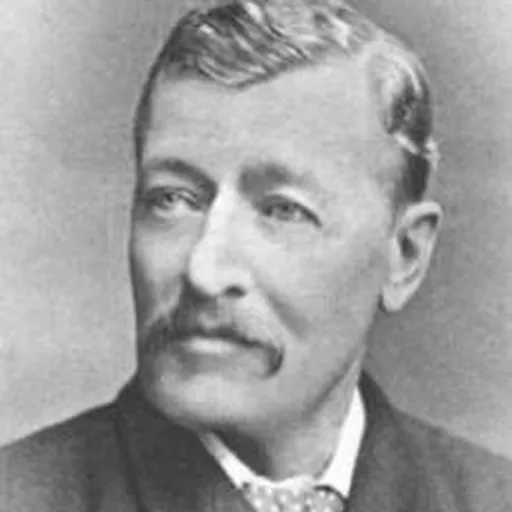
John Underwood Bateman-Champain
Military engineer
About John Underwood Bateman-Champain
Lived 1835 – 1887 (aged 51).
Colonel Sir John Underwood Bateman-Champain, (22 July 1835 – 1 February 1887), born Champain, was a British Army officer and engineer in India, who was instrumental in laying the first electric telegraph line from Britain to India via the Persian Gulf. He assumed the additional name of Bateman on succeeding to the estate of Halton Park, Lancashire, in 1870.
Early life and education Champain was born in Gloucester Place, London, on 22 July 1835, the son of Colonel Agnew Champain (d.1876) of the 9th Regiment of Foot. He was educated at Cheltenham College, and for a short time in fortification and military drawing at the Edinburgh Military Academy under Lieutenant Henry Yule. He obtained a commission as second lieutenant in the Bengal Engineers on 11 June 1853. His later commissions were dated: Lieutenant, 13 July 1857; Captain, 1 September 1863; Major, 5 July 1872; Lieutenant-Colonel, 31 December 1878; and Colonel, 31 December 1882. He was wounded by grapeshot on 13 September, but, while still on the sick list, volunteered for duty on 20 September: although still very lame, he was present at the capture of the palace of Delhi. At that time there was no electric telegraph from Britain to India, and the lack of one had been urgently felt during the Rebellion. The attempt to construct one under a government guarantee had failed, and it was determined to make a line by the Persian Gulf route directly under government. Champain proceeded with Stewart to Bushehr, and thence in June to Teheran, where negotiations were carried on with the Persian government. In 1865 the line was practically completed, and on Stewart's death in that year Champain was appointed to assist Sir Frederic Goldsmid, the chief director of the Indo-European Government Telegraph department. He spent the greater part of 1866 in Turkey, putting the Baghdad part of the line into an efficient state, and in 1867 went to St. Petersburg to negotiate for a special wire through Russia to join the Persian system.
In 1870 he succeeded Sir Frederic Goldsmid as chief director of the Indo-European Government Telegraph Department.
From 1870 to 1872 Persia suffered from a severe famine, and Champain took an active interest in the Mansion House relief fund, of which he was for some time secretary. He arranged for the distribution of aid in Persia by the telegraph staff, and had the satisfaction of finding the task very well done. His sound judgment and unfailing tact, together with a power of expressing his views clearly and concisely, enabled him to render important service at the periodical international telegraph conferences as the representative of the Indian government. Special questions frequently arose the settlement of which took him to many of the European capitals, and in the ordinary course of his duties he made repeated visits to India, Turkey, Persia, and the Persian Gulf.
Other activities Champain was a member of the council of the Royal Geographical Society, and of the Society of Telegraph Engineers, of which he was President in 1879.
He was also an accomplished draughtsman. In the Albert Hall Exhibition of 1873 a gold medal was awarded to a Persian landscape which he had painted for his friend Sir Robert Murdoch Smith. Many of the illustrations to Sir Frederic Goldsmid's Telegraph and Travel are from original sketches in water-colour by Bateman-Champain. The Shah of Persia sent a telegram to his family expressing his great regret for the loss of Bateman-Champain, "qui a laissé tant de souvenirs ineffaçables en Perse" ("who has left so many indelible memories in Persia"), a very unusual departure from the rigid etiquette of the court of Teheran. Harriet Sophie survived her husband's death and died on 14 August 1905.
Don’t just read it —
keep it.
Full-length biographies made to live with: read them, listen on the way to work, watch them tonight.
- E-book
- Audio
- Video
Instant download · yours to keep · every purchase keeps this site free
Important facts
People in John Underwood Bateman-Champain's life
Named in this biography and alive at the same time

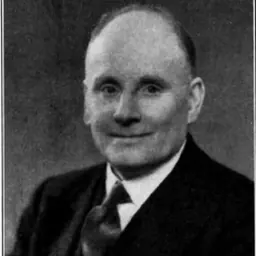

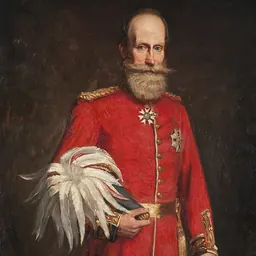
Contemporaries
People whose lives overlapped John Underwood Bateman-Champain's



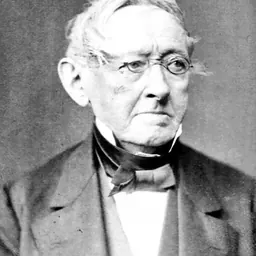

Frequently asked questions
Who was John Underwood Bateman-Champain?
Military engineer
When was John Underwood Bateman-Champain born?
John Underwood Bateman-Champain was born on 22 July 1835 in London.
When did John Underwood Bateman-Champain die?
John Underwood Bateman-Champain died on 1 February 1887 in Sanremo.
Sources & further reading
· Wikipedia: John Underwood Bateman-Champain
· DBpedia: John Underwood Bateman-Champain
Cite this page
APA: Biography.guide. (2026). John Underwood Bateman-Champain. https://biography.guide/john-underwood-bateman-champain/
MLA: "John Underwood Bateman-Champain." Biography.guide, https://biography.guide/john-underwood-bateman-champain/.
Chicago: "John Underwood Bateman-Champain." Biography.guide. https://biography.guide/john-underwood-bateman-champain/.
Data last updated: 2026-09-23 · Spot an error? Report a correction.
Portrait: Wikimedia Commons · author & licence
Page generated 2026-09-27 05:05 UTC