
About John Todd
Born 1939. John Todd is a Canadian biologist, ecologist, university teacher and scientist.
John Todd (born 1939) is a Canadian biologist working in the general field of ecological design. He addresses problems of food production and wastewater processing by using ecosystems technologies that incorporate plants, animals and bacteria. to create "living machines" or "eco-machines". and Ocean Arks International (1981), and the founder and president of the design and engineering firm John Todd Ecological Design Inc. (1989). A research professor emeritus and distinguished lecturer at the University of Vermont, Todd has published books on ecological design, as well as over 200 scientific papers, popular articles and essays. The area near his home included marshes and streams which were being badly damaged by pollution. The writings of Louis Bromfield offered Todd a "marvelous tale of hope" about the possibility of land restoration.
Career
John Todd joined the Woods Hole Oceanographic Institution in Woods Hole, Massachusetts, as an assistant scientist in 1970. to "engage in scientific research in the public interest on ecologically and behaviourally planned agriculture systems and rural land based communities." Although the New Alchemy Institute dissolved in 1991, The idea that the wastes created in one part of a system provide valuable resources for another part of the system is fundamental to the design of such sustainable ecosystems.
Todd began to focus on other concerns relating to water, in particular the development of alternative approaches to conventional waste treatment. He applied ideas from aquaculture and organic agriculture to wastewater. His approach was to identify ecological pathways through which nutrients from waste could be recycled. Waste from one organism could become a food source for subsequent organisms, instead of being discarded as an unusable and toxic by-product. Susan B. Peterson, previously an employee of OAI, became EEA's first president. Co-founder John Todd preferred not to serve on its board, but was involved as an "ecological designer". EEA registered the trademark "Solar Aquatic" specifically for waste treatment tanks with transparent water columns.
Living Technologies Inc. Todd also co-founded Living Technologies Inc. (LTI), an ecological design, engineering, and construction company, in Burlington, Vermont. It was incorporated as a company on October 26, 1994, in the state of Florida.
In 1997, Living Technologies Inc. sought a second round of funding, which it obtained from Tom Worrell. In 1998, there was considerable reorganization of the company and its board. Worrell assumed ownership of the company in 1999 and acquired the rights to the original patents for Todd's "Living Machine". As of December 2000, in an out-of-court settlement, Worrell obtained the sole right to use "Living Machine" as a proprietary term. Worrell's company went through a number of name changes and relocations. Worrell Water Technologies, LLC of Charlottesville, Virginia currently holds the registered trademark for the name Living Machine. Worrell Water Technologies has redesigned Todd's original systems and patented a number of new technologies since 2002. Through this company, Todd has developed his own later-generation wastewater treatment systems, under the name "Eco-machines". As of 2014, John Todd Ecological Design registered the trademark for the term "Eco-machines". Todd's son, Jonathan Todd, is the president of John Todd Ecological Design.
University of Vermont Todd taught at the University of Vermont as a guest lecturer beginning in 1997. He became a research professor in 1999. He is now a research professor emeritus and distinguished lecturer. Todd's approach is one of biomimicry, in which a complex natural ecosystem such as a marsh is studied, recreated and adapted. Learning from the natural system, the ecological designer combines micro-organisms, fish, and plants into a functionally complex system
Todd emphasized the importance of establishing an ecosystem with a large number of diverse species and then allowing it to "settle" to a stable state, a process that could take weeks, months, or even years. He recommended seeding the ecosystem with local species, ones that had already demonstrated an ability to withstand conditions in the target environment.
"The most interesting thing I have learned is the ability of living systems—given enough biological diversity—to self-organize, self-design, self-repair, self-replicate, and solve multiple problems for people. These include growing foods, generating fuels, cleaning up pollutants, treating sewage and other wastes, and repairing damaged environments." John Todd, 2017 "advanced ecologically engineered systems" (AEES)
Todd and colleagues developed what they called "living machines". These systems are ecologically engineered technologies developed to restore, conserve, or remediate polluted water, by replicating and accelerating the natural purification processes of streams, ponds and marshes. In practical application, a living machine is a self-contained treatment system designed to treat a specific waste stream using the principles of ecological engineering. It does this by creating diverse communities of bacteria and other microorganisms, algae, plants, trees, snails, fish and other living creatures in a series of tanks.
Sewage Greenhouse waste treatment plants such as the ones John Todd has developed can yield clean water from sewage. Bacteria consume the organic sewage and turn ammonia into nitrates. The nitrates are used as food for algae and fertilizer for duckweed. Zooplankton and snails consume the algae. Fish eat the zooplankton. Floating plants soak up the leftovers. Bulrushes, cattails, and water hyacinths render the toxins harmless. Trees absorb heavy metals. The byproducts are decorative plants and minnows, both of which are sold. The minnows are sold as bait fish. Aquatic plants, raised in the system's open-air lagoons for sewer treatment, are used in California, Florida, and Mississippi.
A series of solar ponds, each with its own ecosystem, processes wastewater and uses recaptured materials to farm fish and to grow vegetables and fruits. These include papaya trees, eggplants, tomatoes, and herbs. Computers were introduced to monitor and study the processes of remediation, energy use, and food production. Heating and electricity needs were met using renewable energy sources. The system was enclosed within a greenhouse, designed by architects Sean Wellesley-Miller and Day Chahroudi, so that it could operate year-round.
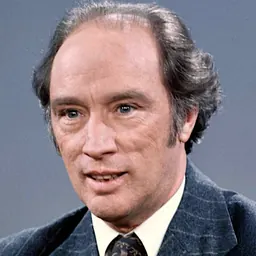
When the New Alchemy Institute dissolved in 1991, the Cape Cod Ark became the property of a private co-housing community. In 1999, it was taken over by Hilde Maingay and Earle Barnhart, two of the co-founders of the New Alchemy Institute. Working with architect Ate Atema, they upgraded the structure and added an energy-efficient house to the original greenhouse. Under their care, the 1800 square feet Ark became a self-sustaining home, supporting humans, plants, fishes and animals year-round. The Cape Cod Ark was still their home as of 2021. Having provided both an experimental testbed for New Alchemy's ideas, and a sustainable home for two of its founding members for over 15 years, the Cape Cod Ark has been referred to as "New Alchemy’s crowning achievement". It was officially opened by Prime Minister Pierre Trudeau on September 21, 1976.
The Ark was an attempt to re-examine the relationship between people and nature. "It was an integrated ecological design that was part food-producing greenhouse, part aquaculture fish farm, and part autonomous family home. The whole was wrapped in a simple, yet sophisticated, systems-based structure. Exposed mechanical and plumbing runs, a rock-filled heat sink, and early solar collector panels proudly lined the building, while the dining room overlooked the greenhouse interior through a generous clerestory. It acted as an experimental living laboratory." John Leroux, 2017 the Ark has been called one of "Prince Edward Island’ s two most iconic works of modern architecture".
Harwich, Massachusetts In 1988, the town of Harwich, Massachusetts hosted a four-month pilot of one of Todd's lagoon systems, involving 21 solar aquatic ponds and a constructed marsh. The pilot's success encouraged further involvement with Ecological Engineering Associates.
By 1990 a full-scale project was being planned for Harwich's Flax Pond, a 15-acre site. The pond suffered from significant contamination due to leachates from a nearby landfill and septage lagoons. Oxygen levels in the water were low and coliform bacteria counts were high. Sediment deposits included high levels of ammonia, up to 300 times the usual levels of phosphorus, and 80 times the usual concentration of iron.
South Burlington, Vermont The Vermont Advanced Ecologically Engineered System (AEES) was one of four AEES demonstration projects created with funding from the United States Environmental Protection Agency. The site in Chittenden County, near South Burlington, Vermont, was owned by the Massachusetts Institute for Excellence in Marine and Polymer Sciences, who received the grant. The project involved Living Technologies, Inc. as a subcontractor, and Ocean Arks International, with John Todd as principal investigator.
Project design began in 1994. The main construction was complete by December 1995, when the introduction of biological species began. A steady state of operation was established by May 1996 and continued to the end of 1999.
The Vermont AEES included wetlands for the extended aeration and treatment of activated sludge, with an active microbial community as well as plants, invertebrates, and fish. One of the goals of the project was to examine the approach's usefulness in a cold climate. A greenhouse protected the plants. The installation contained two parallel trains of treatment tanks, for experimental comparisons of treatments. During the course of the project, the operators met all but one of the original design goals, and were able to improve on the original design as a result of experimenting with the tank configurations. The area was used as both an experimental and an educational center, and was appreciated for its "uniquely beautiful aesthetic experience".
"The Living Machine® treats wastewater using a system of engineered ecologies that include microbes, plants, snails and insects, and is designed to treat up to 2,000 gallons of the building's wastewater daily in a beautiful, garden-like atmosphere. Upon completion of a water- pressurization system, the treated wastewater will be recycled back through the building for non-potable re-use."
Omega Center for Sustainable Living
The Omega Center for Sustainable Living (OCSL) in Rhinebeck, New York, was opened on June 24, 2009. The building was designed by BNIM Architects, working with John Todd Ecological Design as the ecological architects.
In 2010, the Omega Center for Sustainable Living was one of two buildings world-wide to be the first fully certified "living buildings", demonstrably achieving net zero energy usage and net zero wastewater production over a period of a year.
George D. Aiken Center, University of Vermont
As part of the green redesign of the Aiken Center at the University of Vermont, John Todd Ecological Design, Inc. supported the creation of the Aiken Center Eco Machine between 2006 and 2012. Much of the design work for the water treatment plant was done by Matt Beamas, one of Todd's graduate students, who presented his master's thesis on the work in 2010. In addition to treating all of the wastewater from the Aiken Center, the system provides opportunities for ongoing ecological design research at the school. The wastewater system includes three separate trains, for experimental study of the system's use.
Recognition Todd's work has inspired people working on the development of closed ecosystems for living in space, as well as on Earth.
John Todd was the inaugural winner of the international Buckminster Fuller Challenge in 2008, for his proposal for a Comprehensive Design for a Carbon Neutral World: The Challenge of Appalachia. Todd put forward a program for the reclamation of more than one million acres of damaged land, through soil remediation, forestry, and the development of renewable energy.
Other awards that Todd has received include the Chrysler Award for Innovation in Design in 1994, and on April 22, 1996, an Environmental Merit Award (from the United States Environmental Protection Agency).
In 1998, the Todds received the Bioneers Lifetime Achievement Award. They are Fellows of the Findhorn Foundation. Todd is a fellow of the Gund Institute for Ecological Economics.
Books Authored or co-authored by John Todd:
Don’t just read it —
keep it.
Full-length biographies made to live with: read them, listen on the way to work, watch them tonight.
- E-book
- Audio
- Video
Instant download · yours to keep · every purchase keeps this site free
Important facts
People in John Todd's life
Named in this biography and alive at the same time



Related people
Same field, nearest in time

Contemporaries
People whose lives overlapped John Todd's




Frequently asked questions
Who is John Todd?
ecologist
When was John Todd born?
John Todd was born in 1939 in Hamilton.
What is John Todd's occupation?
John Todd is a biologist, ecologist, university teacher and scientist.
What nationality is John Todd?
John Todd is Canadian.
Sources & further reading
· DBpedia: John Todd (Canadian biologist)
Cite this page
APA: Biography.guide. (2026). John Todd. https://biography.guide/john-todd-biologist/
MLA: "John Todd." Biography.guide, https://biography.guide/john-todd-biologist/.
Chicago: "John Todd." Biography.guide. https://biography.guide/john-todd-biologist/.
Data last updated: 2026-09-20 · Spot an error? Report a correction.
Page generated 2026-09-27 05:27 UTC