
About John Thomas Perceval
Lived 1803 – 1876 (aged 73). John Thomas Perceval was a British military personnel and writer.
John Thomas Perceval (14 February 1803 – 28 February 1876) was a British army officer who was confined in lunatic asylums for three years and spent the rest of his life campaigning for reform of the lunacy laws and for better treatment of asylum inmates. He was one of the founders of the Alleged Lunatics' Friend Society and acted as their honorary secretary for about twenty years. Perceval's two books about his experience in asylums were republished by anthropologist Gregory Bateson in 1962, and in recent years he has been hailed as a pioneer of the mental health advocacy movement.
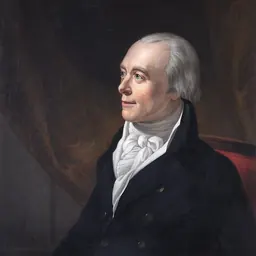
Early life Perceval was born into the ruling elite of the United Kingdom in 1803. His father Spencer Perceval, a son of the 2nd Earl of Egmont, was a lawyer and politician who became prime minister in 1809. Perceval was the tenth of thirteen children (of whom twelve survived infancy). When Perceval was nine his father was shot dead in the lobby of the House of Commons. The assassin, John Bellingham, was a merchant with a grievance against the government and was widely believed to be insane (although at his trial he pleaded injustice rather than insanity and was executed). Press reports described how one of the Perceval boys had been in Parliament and had seen his father's body moments after the shooting, and a psychoanalyst has suggested that this child was Perceval and that witnessing the scene may have been the cause of his subsequent regressive experience. Perceval himself recognised the loss of his father - along with mercury poisoning and over-study of religion - as a contributory factor in his breakdown. The couple were to have four daughters: Jane Beatrice, 1835–1893. Alice Frederica, 1836–1941. Selina Maria, 1838–1925, married her cousin Sir Horatio George Walpole, assistant under-secretary of state for India. Fanny Louisa Charlotta, 1845–1862. Perceval and his wife then went to Paris, where their two eldest daughters were born. In Paris Perceval started working on a book about his experiences. It was published in 1838 under the title "A narrative of the treatment experienced by a Gentleman during a state of mental derangement designed to explain the causes and nature of insanity, and to expose the injudicious conduct pursued towards many unfortunate sufferers under that calamity." The book begins:"In the year 1830, I was unfortunately deprived of the use of my reason. This calamity befel me about Christmas. I was then in Dublin. The Almighty allowed my mind to become a ruin under sickness - delusions of a religious nature and treatment contrary to nature. My soul survived that ruin."It goes on to give a brief account of Perceval's early life, and then covers his treatment in Edward Long Fox's asylum at Brislington, ending with Fox's parting words "Goodbye Mr ---, I wish I could give you hopes of recovery". He joined a small group of ex-inmates, their relatives and supporters to form the Alleged Lunatic's Friend Society in 1845. The following year he became their honorary secretary and remained in this position until the Society ceased to function about twenty years later. The aims of the Society, as set out in their first annual report, were to protect people from wrongful confinement or cruel and improper treatment, and bring about reform of the law. The Society campaigned via Parliament, the courts, local magistrates and public meetings and lectures. They took up the cases of over 70 patients and exposed abuses in a number of asylums, including Bethlem Hospital, and asylums in Northampton and Gloucester.
Perceval combined "public agitation" with "private philanthropy to individual patients". Perceval befriended another Bethlem inmate, surgeon Arthur Legent Pearce, and published a volume of his poetry. As well as publishing books and pamphlets on asylums, Perceval published a pamphlet criticising the new Poor Law and was elected to the Kensington Board of Guardians, a position which gave him access to asylums. He also delivered lectures; 1 May 1854 at the Kings Arms Tavern in Kensington High Street he addressed 24 respectable-looking people and an undercover policeman on the need for reform of the lunacy laws. Nothing more is heard of the Society. The cause for lunacy law reform was taken up by Louisa Lowe's Lunacy Law Reform Association, which had similar aims to the Alleged Lunatic's Friend Society. A letter to William Ewart Gladstone in 1868 about Ireland appears to be Perceval's last publication.
Legacy Perceval was rediscovered when anthropologist Gregory Bateson published an edited version of the two volumes of the Narrative in 1962, under the title Perceval's narrative: a patient's account of his psychosis 1830-32. whilst his activism has been inspirational for the peer advocacy movement.
Don’t just read it —
keep it.
Full-length biographies made to live with: read them, listen on the way to work, watch them tonight.
- E-book
- Audio
- Video
Instant download · yours to keep · every purchase keeps this site free
Important facts
People in John Thomas Perceval's life
Named in this biography and alive at the same time



Related people
Same field, nearest in time


Contemporaries
People whose lives overlapped John Thomas Perceval's






Frequently asked questions
Who was John Thomas Perceval?
British army officer (1803–1876)
When was John Thomas Perceval born?
John Thomas Perceval was born on 14 February 1803.
When did John Thomas Perceval die?
John Thomas Perceval died on 28 February 1876.
What was John Thomas Perceval's occupation?
John Thomas Perceval was a military personnel and writer.
What nationality was John Thomas Perceval?
John Thomas Perceval was British.
Sources & further reading
· Wikipedia: John Thomas Perceval
· DBpedia: John Thomas Perceval
Cite this page
APA: Biography.guide. (2026). John Thomas Perceval. https://biography.guide/john-thomas-perceval/
MLA: "John Thomas Perceval." Biography.guide, https://biography.guide/john-thomas-perceval/.
Chicago: "John Thomas Perceval." Biography.guide. https://biography.guide/john-thomas-perceval/.
Data last updated: 2026-09-20 · Spot an error? Report a correction.
Page generated 2026-09-27 05:06 UTC