
About John Thomas Peacock
Lived 1827 – 1905 (aged 77–78). John Thomas Peacock was a New Zealand politician and merchant.
John Thomas Peacock MLC JP (1827 – 20 October 1905) was a New Zealand businessman, philanthropist and politician. He came to Canterbury in 1844, several years before organised settlement started.
Early life Peacock was born in 1827 in the Hawkesbury district, New South Wales, Australia. He is the eldest son of John Jenkins Peacock (d. 1866) and his wife Maria Peacock (1804/05–1884). He attended Sydney College. The family arrived in Lyttelton in 1844. Settlement organised by the Canterbury Association started in December 1850, so the Peacocks were in the colony at an early stage.
His father was a hard worker. It is said about him that "he could be seen at Lyttelton ... at 6 am on a frosty morning, knee deep in the water loading a boat with sacks of potatoes for shipment by his brig which lay at anchor some distance away."
In August 1854, Peacock married Kate Hickman Peacock (née Mansfield, born ca 1835). They did not have any children, but adopted Janey, the ex-nuptial daughter of a family servant. On 14 June 1877, Janey married Alexander McRae. The Peacocks were generous to their adopted daughter and her children. Janey's husband was unfaithful and violent and their marriage was dissolved exactly ten years later.
Life in New Zealand
Peacock was a merchant and later owned several ships. He had Peacock's Wharf built, the first substantial place for landing a boat in Lyttelton. He traded as J.T. Peacock and Co., had a large trade and was successful enough that he could retire from trading in 1863, aged 37. He sold his business to Charles Wesley Turner (1834–1906) and Beverley Buchanan.
In the same year, he built his residence 'Hawkesbury' in Merivale .
Peacock was involved with many companies, often on the board of directors. By buying the plant for the Kaiapoi Woollen Manufacturing Company, he enabled the success of this industry for the region. He was chairman of the local board of directors of the London-based Alliance Assurance Company, and a director of the Union Insurance Company, which he co-founded. He held directorships of the Christchurch Meat Company, the Permanent Investment and Loan Association of Canterbury, and the New Zealand Shipping Company. He was a director of The Press. He was one of the largest owners of the Christchurch Tramway Company. He was president of the Canterbury Club, a gentlemen's club, which still operates on the Cambridge Terrace / Worcester Boulevard corner in the Christchurch Central City. The inaugural meeting of the borough council was held on 3 January 1882. On 22 November 1882, his term expired and he was the only candidate for the position. Hence, he was declared elected for a second term as mayor. J. L. Wilson was the only candidate for mayor on 20 November 1883 and was declared elected.
Another local political role included membership of the Lyttelton Harbour Board for over 20 years, including chairmanship. and took the oath and his seat on 11 June 1869. He was confirmed in the 1871 election for Lyttelton, again elected unopposed.
In early April 1873, Peacock was promoted to the New Zealand Legislative Council (the upper house). He resigned from Parliament on 5 April 1873. The resulting by-election on 19 May 1873 was won by Henry Richard Webb.
Peacock was a member of the Legislative Council until his death, although in 1877 he had been reappointed after Disqualification by inadvertence.
Henry Richard Webb (1829–1901), who succeeded Peacock in the Lyttelton electorate, was two years his junior and had also attended Sydney College. He married one of Peacock's sisters in 1857 in Sydney and emigrated to New Zealand in 1868. He represented the Lyttelton electorate from 1873 to 1875. One of his daughters, Malvina Mary, would later marry Robert McDougall (1860–1942), who was the benefactor of the Robert McDougall Art Gallery that opened in 1932. The McDougall residence Fitzroy was later gifted to Nurse Maud and is still in use as a hospital, located between Mansfield and McDougall Avenues.
Francis James Garrick (1833–1890) was also from Sydney and attended Sydney College. He married Peacock's oldest sister, Elizabeth. He came to New Zealand in 1864, and succeeded Brown in the St Albans electorate from 1884-87. he moved into the neighbourhood of Peacock and Garrick.
On 30 December 1895, Peacock married again – his adopted daughter Janey. Whilst this was lawful, it was outside of the social norms.
Peacock died on 20 October 1905 at his residence Hawkesbury. He was survived by his second wife and two stepsons. He was interred at Linwood Cemetery on 21 October. Peacock's second wife Janey died in 1918, aged 65. The mausoleum is boarded up to protect it from weather and vandalism. In 2012, the plywood was painted by artist and Linwood Cemetery Trustee Anne Holloway with paint donated by Dulux for community projects. The mural was officially unveiled on 26 May 2012.
Commemoration Rockfall in Peacock's Gallop reserve caused by the February 2011 Christchurch earthquake. Peacock Fountain
Peacock bequeathed a substantial sum of money to the Christchurch Beautifying Association "for the purpose of beautifying the reserves and gardens in the City of Christchurch and improving the Avon River." The colourful Peacock Fountain was erected in the Botanic Gardens. The fountain spent many decades in storage, but has been on display again since 1996.
Peacock's Wharf Captain Joseph Thomas built the first jetty at Lyttelton, in time for the arrival of the First Four Ships in December 1850. Peacock built the second wharf, in 1857, which was named in his honour. His obituary in the Christchurch Press says that it was the first landing-place in Lyttelton of any importance. The wharf was sold, together with Peacock's other business, to Turner and Buchanan, who in turn sold it to the Lyttelton Harbour Board in 1877. Peacock's Wharf, albeit in much modified and enlarged form, still exists, but is these days simply called "No 7 Wharf".
Streets and Reserves Peacock Street in the Christchurch Central City is named after John Thomas Peacock.
Mansfield Avenue is named after Peacock's first wife Kate (née Mansfield).
Peacocks Gallop is a reserve in Sumner on reclaimed land between the former tram line (now Main Road) and some high cliffs. Peacock's father John Jenkins, when he rode by horse from Lyttelton to Sumner via Evans Pass, is said to have always been afraid of falling rocks, so he galloped along the base of the cliff.
Don’t just read it —
keep it.
Full-length biographies made to live with: read them, listen on the way to work, watch them tonight.
- E-book
- Audio
- Video
Instant download · yours to keep · every purchase keeps this site free
Important facts
People in John Thomas Peacock's life
Named in this biography and alive at the same time


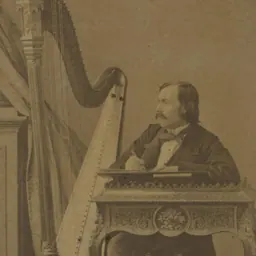

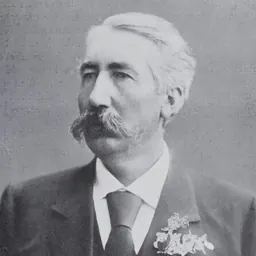
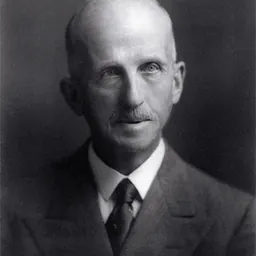
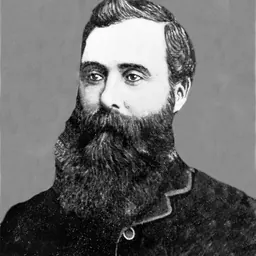
Related people
Same field, nearest in time




Contemporaries
People whose lives overlapped John Thomas Peacock's






Frequently asked questions
Who was John Thomas Peacock?
New Zealand politician
When was John Thomas Peacock born?
John Thomas Peacock was born in 1827 in City of Hawkesbury.
When did John Thomas Peacock die?
John Thomas Peacock died on 20 October 1905 in Papanui.
What was John Thomas Peacock's occupation?
John Thomas Peacock was a politician and merchant.
What nationality was John Thomas Peacock?
John Thomas Peacock was New Zealand.
Sources & further reading
· Wikipedia: John Thomas Peacock
· DBpedia: John Thomas Peacock
Cite this page
APA: Biography.guide. (2026). John Thomas Peacock. https://biography.guide/john-thomas-peacock/
MLA: "John Thomas Peacock." Biography.guide, https://biography.guide/john-thomas-peacock/.
Chicago: "John Thomas Peacock." Biography.guide. https://biography.guide/john-thomas-peacock/.
Data last updated: 2026-09-20 · Spot an error? Report a correction.
Page generated 2026-09-27 05:33 UTC