
About John Thomas North
Lived 1842 – 1896 (aged 54). John Thomas North was a British businessperson, known for Chilean Civil War of 1891.
John Thomas North (30 January 1842 – 5 May 1896) was an English investor and businessman. North was born in Leeds, Yorkshire, the son of a coal merchant and a churchwarden. At the age of fifteen he was apprenticed to millwrights and engineers before working for several years as a mechanic. He moved to Chile where his first occupation was as a boiler riveter in Huasco. He later moved to the then Peruvian town of Iquique where he worked as a waterworks operator, importer and ship owner. The War of the Pacific (1879–1883) provided North with an opportunity to purchase large numbers of bonds in the Peruvian nitrate industry. When Chile annexed Iquique and the surrounding province of Tarapacá the Chilean government transferred ownership of the nitrate fields to the bondholders. North was thus able to take a monopoly share of the lucrative Chilean nitrate industry for a very small initial investment, becoming known as "The Nitrate King".
North built upon his nitrates business by expanding into further monopolies in waterworks and freight railways, but also owned several iron and coal fields. North maintained his monopolies by employing lawyers to block competing entrepreneurs both in court and the Chilean National Congress. This was allowed by Chilean president Domingo Santa María, but Santa María's successor, José Manuel Balmaceda, became concerned that Tarapacá was starting to resemble a "state within a state" and resolved to break North's monopoly. Balmaceda had to force competition reforms through against opposition in congress, amongst a series of disputes which would eventually escalate into the 1891 Chilean Civil War between the president and the congress.
North also had investments in the Anglo-Belgian India Rubber Company which operated a concession in the Congo Free State. This company was involved in the extraction and export of rubber from the state, another highly profitable business, but later became involved in abuses of human rights against those under its power. However North's finances were eventually depleted and when he died his business empire had collapsed.
Early life North was born in Leeds, Yorkshire, on 30 January 1842, the son of a coal merchant and a churchwarden. He moved to Chile in South America at the age of 23 where his first occupation was as a boiler riveter in Huasco.
War of the Pacific
Territorial disputes between Chile, Peru and Bolivia triggered the War of the Pacific in 1879 with Chile invading and occupying Peruvian and Bolivian land. In the course of the war, North suffered damage to his waterworks, and one of his ships was sunk. After the war, the Chilean government annexed Tarapacá and allowed the bond holders to take possession of the title deeds to the nitrate fields, perhaps influenced by appeals from North's friends. The reason that the Chilean government allowed this is that it would have cost them GBP£4 million to buy the bonds from the mainly British nitrate speculators. By allowing the speculators to start mining the Chilean government could take a share of profits via export duties without having to provide the initial capital costs to begin production of nitrates.
North left Chile and returned to the United Kingdom in order to raise credit to provide for machinery, transport and employment costs. It was there, in February 1883—still eight months before Peru officially ceded the nitrate fields to Chile—that he established the Liverpool Nitrate Company.
Nitrates were an important source of income for the Chilean government and an increase in export duty from CLP 4 pesos per ton in 1878 to CLP 22 in 1882 resulted in revenue from nitrates increasing from CLP 6 to 25 million. This allowed the government to make cuts in both income and land tax. The reliance of Chile upon its nitrate income caused conflict between the government and the nitrate production cartel. The cartel wanted to maximise the price of nitrates by cutting production whilst the government wanted to maximise their duty income by maximising exports. The nature of the trade meant that the Chilean economy was also totally dependent on imports and exports to and from Britain. The periodic downturns in nitrate revenue caused by the cartel cutting production eventually forced the Chilean government to print more money, causing inflation to increase and the peso to devalue. He regularly allowed the regiment of 250 men to camp in the gardens of his estate for three days at a time. During this time he would hold festivals for the men and the local villagers and at one of these events he challenged the Lieutenant-Colonel to a footrace and won. North agreed and provided GBP£40,000 of the BEF250,000 initial investment to set up the Anglo-Belgian India Rubber Company (ABIR) at Antwerp on 6 August 1892. ABIR had exclusive rights to all forest products from the Maringa-Lopori basin for 30 years and had police powers within the limits of the concession to enforce the collection of rubber as a tax. The company later became infamous for human rights abuses of the inhabitants of its concession and fell into financial troubles.
Despite his varied investments across the world North's finances eventually dwindled, his decline was accelerated by the Chilean Civil War. His death occurred within half an hour of eating some oysters. The shells were sent for analysis but it was suspected that heart problems were the cause of death. He donated Kirkstall Abbey to the city of Leeds, a plaque in the Gift Shop of the Abbey is inscribed "The Abbey and part of the adjoining lands were acquired from the representatives of the Earl of Cardigan by Colonel J.T North a native of Leeds and presented by him to the Corporation of Leeds in the year 1889 to be held in trust for his fellow citizens as a place of public resort and recreation for ever works of preservation were completed by the Corporation in the year 1895". North also made donations to Leeds Infirmary and the Yorkshire College of Science, which later became the University of Leeds.
Don’t just read it —
keep it.
Full-length biographies made to live with: read them, listen on the way to work, watch them tonight.
- E-book
- Audio
- Video
Instant download · yours to keep · every purchase keeps this site free
Important facts
People in John Thomas North's life
Named in this biography and alive at the same time

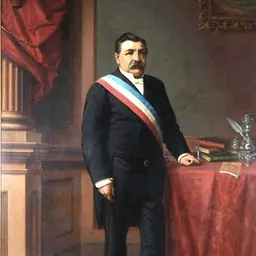
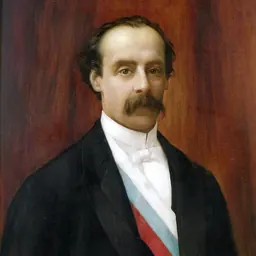

Related people
Same field, nearest in time



Contemporaries
People whose lives overlapped John Thomas North's
Frequently asked questions
Who was John Thomas North?
English businessman and investor
When was John Thomas North born?
John Thomas North was born on 30 January 1842 in Leeds.
When did John Thomas North die?
John Thomas North died on 8 May 1896 in London.
What was John Thomas North's occupation?
John Thomas North was a businessperson.
What was John Thomas North known for?
John Thomas North was known for Chilean Civil War of 1891.
What nationality was John Thomas North?
John Thomas North was British.
Sources & further reading
· Wikipedia: John Thomas North
Cite this page
APA: Biography.guide. (2026). John Thomas North. https://biography.guide/john-thomas-north/
MLA: "John Thomas North." Biography.guide, https://biography.guide/john-thomas-north/.
Chicago: "John Thomas North." Biography.guide. https://biography.guide/john-thomas-north/.
Data last updated: 2026-09-25 · Spot an error? Report a correction.
Page generated 2026-09-27 05:11 UTC