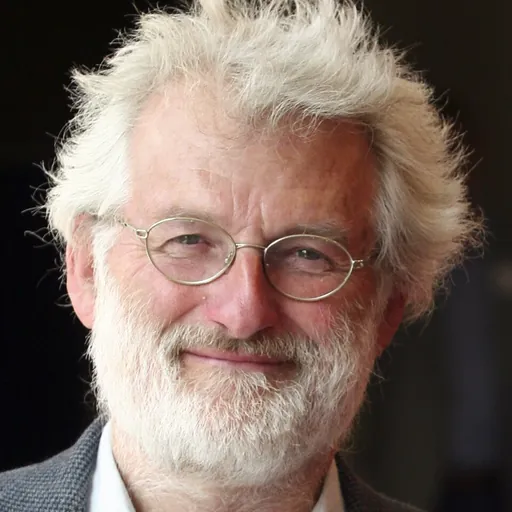
John Sulston
British biologist and Nobel laureate
About John Sulston
Lived 1942 – 2018 (aged 75). John Sulston was a British geneticist, physician, molecular biologist, chemist and biologist, known for Apoptosis, Genome sequencing and Human Genome Project.
Early life and education Sulston was born in Fulmer, Buckinghamshire, England to Arthur Edward Aubrey Sulston and Josephine Muriel Frearson, née Blocksidge. His father was an Anglican priest and administrator of the Society for the Propagation of the Gospel. His mother quit her job as an English teacher at Watford Grammar School, to care for him and his sister Madeleine. and home-tutored them until he was five. At age five he entered the local preparatory school, York House School, where he soon developed an aversion to games. He developed an early interest in science, having fun with dissecting animals and sectioning plants to observe their structure and function. Sulston won a scholarship to Merchant Taylors' School, Northwood and was awarded his PhD in 1966 for research in nucleotide chemistry.
Career Between 1966 and 1969 he worked as a postdoctoral researcher at the Salk Institute for Biological Studies in La Jolla, California. He continued work on its DNA and subsequently the whole genome sequencing. In 1998, the whole genome sequence was published in collaboration with the Genome Institute at Washington University in St. Louis, so that C. elegans became the first animal to have its complete genome sequenced.
Sulston played a central role in both the C. elegans sequencing projects. He had argued successfully for the sequencing of C. elegans to show that large-scale genome sequencing projects were feasible. As sequencing of the worm genome proceeded, the Human Genome Project began. At this point he was made director of the newly established Sanger Centre (named after Fred Sanger ), located in Cambridgeshire, England.
In 2000, after the 'working draft' of the human genome sequence was completed, Sulston retired from directing the Sanger Centre. With Georgina Ferry, he narrated his research career leading to the human genome sequence in The Common Thread: A Story of Science, Politics, Ethics, and the Human Genome (2002).
Awards and honours Sulston was elected a Fellow of the Royal Society (FRS) in 1986. His certificate of election reads: He was elected an EMBO Member in 1989 and awarded the George W. Beadle Award in 2000. In 2001 Sulston gave the Royal Institution Christmas Lectures on The Secrets of Life. In 2002, he won the Dan David Prize and the Robert Burns Humanitarian Award. Later, he shared the Nobel Prize in Physiology or Medicine with Sydney Brenner and Robert Horvitz, both of whom he had collaborated with at the MRC Laboratory of Molecular Biology (LMB), for their discoveries concerning 'genetic regulation of organ development and programmed cell death'. One of Sulston's most important contributions during his research years at the LMB was to elucidate the precise order in which cells in C. elegans divide. In fact, he and his team succeeded in tracing the nematode's entire embryonic cell lineage.
In 2004, Sulston received the Golden Plate Award of the American Academy of Achievement. In 2006, he was awarded the George Dawson Prize in Genetics by Trinity College Dublin. In 2013, Sulston was awarded the Royal Society of New Zealand's Rutherford Memorial Lecture, which he gave on the subject of population pressure.
He was appointed a Member of the Order of the Companions of Honour (CH) in the 2017 Birthday Honours for services to science and society.
On 23 October 2017 he was awarded the Cambridge Chemistry Alumni Medal.
Sulston was a leading campaigner against the patenting of human genetic information.
Personal life The Sulston Laboratories of the Wellcome Trust Sanger Institute are named in Sulston's honour. John Sulston met Daphne Bate, a research assistant in Cambridge. The couple lived in Stapleford, Cambridgeshire where they were active members of the local community: John regularly volunteered in the local library and in working parties at Magog Down; he was a Trustee of Cambridge Past, Present and Future.
Although brought up in a Christian family, Sulston lost his faith during his student life at Cambridge, and remained an atheist. In 2003 he was one of 22 Nobel Laureates who signed the Humanist Manifesto.
Sulston was in favour of free public access of scientific information. He wanted genome information freely available, and he described as "totally immoral and disgusting" the idea of profiteering from such research. He also wanted to change patent law, and argued that restrictions on drugs such as the anti-viral drug Tamiflu by Roche are a hindrance to patients whose lives are dependent on them. Sulston forfeited £15,000 of the £20,000 pledged in June 2012, as Assange had entered the embassy of Ecuador to escape the jurisdiction of the English courts.
Sulston died on 6 March 2018 of stomach cancer, aged 75 years.
Don’t just read it —
keep it.
Full-length biographies made to live with: read them, listen on the way to work, watch them tonight.
- E-book
- Audio
- Video
Instant download · yours to keep · every purchase keeps this site free
Important facts
People in John Sulston's life
Named in this biography and alive at the same time







Related people
Same field, nearest in time

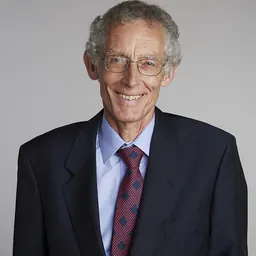
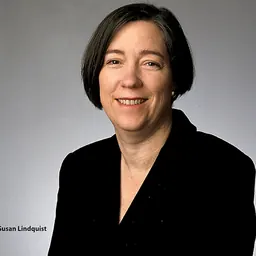

Contemporaries
People whose lives overlapped John Sulston's
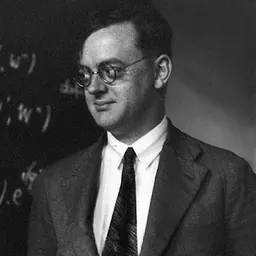

Frequently asked questions
Who was John Sulston?
British biologist and Nobel laureate (1942–2018)
When was John Sulston born?
John Sulston was born on 27 March 1942 in Fulmer, Cambridge.
When did John Sulston die?
John Sulston died on 6 March 2018 in Fulmer.
What was John Sulston's occupation?
John Sulston was a geneticist, physician, molecular biologist, chemist and biologist.
What was John Sulston known for?
John Sulston was known for Apoptosis, Genome sequencing, Human Genome Project and Sulston score.
What nationality was John Sulston?
John Sulston was British.
Sources & further reading
Cite this page
APA: Biography.guide. (2026). John Sulston. https://biography.guide/john-sulston/
MLA: "John Sulston." Biography.guide, https://biography.guide/john-sulston/.
Chicago: "John Sulston." Biography.guide. https://biography.guide/john-sulston/.
Data last updated: 2026-09-22 · Spot an error? Report a correction.
Portrait: Wikimedia Commons · author & licence
Page generated 2026-09-27 05:03 UTC