
John Steinbruck
American Lutheran clergy
About John Steinbruck
Lived 1930 – 2015 (aged 84). John Steinbruck was an American.
John Frederick Steinbruck (October 5, 1930 – March 1, 2015 ) was an ordained Lutheran minister who served for 28 years (1970–1997) as senior pastor at Luther Place Memorial Church in Washington, D.C. Luther Place is a historic, red-stone church located at Thomas Circle, 1226 Vermont Avenue, N.W., in the heart of Washington's red-light district. The church sits less than a mile from the White House.
Steinbruck received many honors and much media recognition, and he was occasionally the instigator of controversy and acts of civil disobedience. To admirers, he was a "prophetic visionary" out to remake the world; to detractors, he was an "unbending, self-righteous true believer with a Messiah complex." While growing up in Northeast Philadelphia, he attended Lawndale Elementary School, Wilson Junior High School, and Frankford High School, from which he graduated in 1948. An exceedingly thin child, at a young age he could not participate in competitive sports, though he would develop into a large, husky man with a football player's build. Steinbruck excelled at reading and developed into a good student, which would eventually lead him to college and post-graduate education. Following a two-year stint in the United States Navy, in 1949 and 1950, Steinbruck was accepted into the University of Pennsylvania, where he studied at the Wharton School of Finance. He graduated from Penn in 1954 with a Bachelor of Science degree in industrial engineering.
Early theological influences
By the summer of 1953, as a 22-year-old Penn student at the Wharton School of Finance, Steinbruck realized he did not fit into this "seminary for capitalists", as he would later call it.
In Schweitzer, Steinbruck found an embodiment of moral virtue, a role model for a life of devoted service. Although Schweitzer enjoyed life as a philosopher, musician, and biblical scholar, he was plagued by "the thought that I must not accept this happiness as a matter of course, but must give something in return for it." That so many people in the world were "denied that happiness by their material circumstances or their health"
Steinbruck's spiritual search led him as well to Martin Wiznat, a Lutheran pastor in Philadelphia with a powerful speaking voice and a magnetism that engaged people,
Seminary education
Wiznat saw something special in Steinbruck and remarked that God may have larger plans for him. Inspired but somewhat reluctant, Steinbruck, an industrial engineer by day, began to dabble in seminary courses by night. His continued discomfort in the world of American commerce led Steinbruck eventually to enroll full-time in the Lutheran Theological Seminary at Philadelphia. There, Steinbruck was taught by energetic young professors who had studied under the top theologians of Europe - men such as John Reumann, William Lazareth, Robert Bornemann, and Theodore Tappert, intellectual leaders in the Lutheran Church in America. In exercising hospitality, one person shields another from harm. As he later explained this concept, "As we are hospitable to each other, we will thrive as a country."
Steinbruck thereafter sought city churches, which he believed were great arenas from which to practice his brand of theology, and which offered many opportunities for creative ministry. in Easton, Pennsylvania, a depressed industrial town with a melting pot of cultures and ethnicity. It was the early 1960s and the civil rights movement was in its infant stages. As some of his congregants were working-class blacks, Steinbruck became sensitized to issues that most suburban pastors avoided - racially discriminatory practices in every aspect of the community - that required action more than prayer. Steinbruck was the first white minister to receive the Pastor of the Year Award from the NAACP, and St. John's was the first church to take a life membership in the NAACP.
In 1968, Steinbruck befriended two Easton clergymen, Rabbi Norton Shargel of B'nai Abraham Synagogue, and a liberal Roman Catholic priest, Monsignor Francis Connolly of St. Bernard's Church's Catholic Church. In an attempt to confront the racial and other injustices in American society at that time, the three men formed an interfaith coalition, which they dubbed "ProJeCt of Easton", an acronym for Protestant, Jewish, Catholic. ProJeCt of Easton quickly caught on with the congregants of each religion, and they began working together to find solutions to the problems threatening a community that was tired of divisiveness among people of faith and favored a more positive approach to solving problems. The business community and local media embraced it and, not long thereafter, ProJeCt of Easton had established a youth center, an infant wellness program, a free dental clinic, and summer programs for disadvantaged kids that took them to community parks and beaches. More than four decades later, ProJeCt continues to provide community services in Pennsylvania's Lehigh Valley.
Alliance with Jewish community
Through his friendship with Rabbi Shargel, Steinbruck became closely associated with the Jewish community, an association that would profoundly affect his ministry for the rest of his life. Rabbi Shargel taught Steinbruck that "as one works, struggles, with those who are strangers, we learn what pains them." The Six-Day War a recent memory, Steinbruck experienced first hand the positive exuberance of the Jewish homeland, its Zionist ideals of community, security, and cooperation. He also experienced its sorrow and pain. He visited Yad Vashem and the memorial to the Warsaw Ghetto. He learned of thousands of years of Jewish struggle and survival, and the history of anti-Semitism that has so often tainted the Christian Church. He visited the Western Wall, walked the streets of historic Jerusalem, touched the waters of Jordan and Galilee, and experienced the celebration of life - and constant fear of attack - that embraces Israel's daily routine. On one occasion in 1985, Steinbruck was arrested with 21 rabbis protesting the plight of Soviet Jews in front of the Soviet embassy. On January 31, 1986, the four protesters were sentenced in District of Columbia Superior Court to 15-day suspended jail terms. Steinbruck said afterwards that he hoped his actions could be a "model for Jewish-Christian relations" and that "what happens to one of us happens to us all." He was deeply influenced by the writings of Krister Stendahl, a former dean of the Harvard Divinity School, who authored a seminal work on the Apostle Paul, which argued that the Covenant of Sinai remained at once valid and viable, and that Christianity was historically and theologically wrong in attempting to fulfill an evangelistic "mission" to the Jewish people. Steinbruck found this work liberating, believing that the history of proselytizing among the Jews was responsible for much of their brutalization and suffering, including the Inquisition and centuries of persecution, culminating in the pogroms of Eastern Europe and the Holocaust.
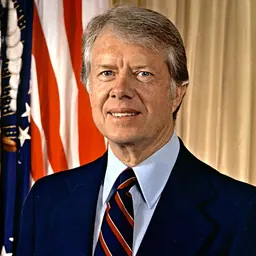
In May 1977, Steinbruck was asked to respond to a statement made by President Jimmy Carter during a Sunday School lesson he taught at the First Baptist Church on 16th Street in Washington, D.C. Carter was asked a question concerning the responsibility for the crucifixion of Christ, to which Carter responded that the Jews were responsible for the death of Jesus. It was arranged for Steinbruck to write a letter addressed to President Carter's personal lawyer, in which Steinbruck explained the Southern Baptist Convention's historical stand on the subject and its official repudiation of Deicide. In response, Carter apologized for his misstatement and, in a letter hand-delivered to Steinbruck, acknowledged that Jews "were for many centuries falsely charged with the collective responsibility for the death of Jesus and were persecuted terribly for that unjust accusation, which has been exploited as a basis and rationalization for anti-Semitism."
On September 21, 1978, Steinbruck received the Isaiah Award for the Pursuit of Justice from the Washington, D.C., chapter of the American Jewish Committee in recognition of his pursuit of inter-religious dialogue and understanding. Only after the intervention of the U.S. Embassy and inquiries from American media sources, were Steinbruck and the others finally released.
Later theological influences
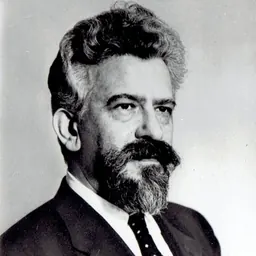
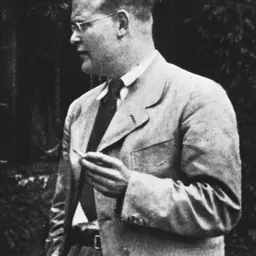
Steinbruck discovered the meaning of kiddush haShem, to sanctify God's name and to pursue justice at all costs, from the teachings of Seymour Siegel, a professor at the Jewish Theological Seminary of America. This concept, together with the writings of other great theologians - Dietrich Bonhoeffer and Rabbi Abraham Joshua Heschel among them - helped Steinbruck develop a central message, which eventually would define much of his life's work. As he told the Washington Post in a 1985 interview:
We are on this planet to exemplify that light, that bread, that living water, those metaphors that Jesus used, to live out the truth in a non-violent way, simply to do justice, live justly, try, in the space over which you're responsible . . . to create an oasis . . . to which the stranger can come and find refuge.
When Steinbruck arrived at Luther Place, he found a congregation beset with many of the problems confronting most big-city churches. The civil uprisings that followed the assassination of Martin Luther King Jr., had left scars on Washington's neighborhoods and businesses. Prostitutes and pimps, drug dealers and dope fiends loitered and lingered on the street corners. Steinbruck confronted a dying church with no sense of purpose.
What eventually emerged was the N Street Village, a diverse consortium of services that help the homeless regain their self-confidence, develop life skills, and prepare, step-by-step, to return to mainstream society. Steinbruck refers to it as a place of refuge, where the "stranger" is welcomed and the journey to recovery results in strength, well-being, and shalom. Today, helped by a combination of congressional and foundation grants, and thousands of individual contributors, the N Street Village is a four-story, $17.9 million complex made up of shelters and clinics that offer food, clothing, housing, medical care, and social and psychiatric services to homeless women and their children.
With committed lay leadership and the relentless behind-the-scenes work of Erna Steinbruck, Luther Place not only helped put in place the N Street Village, but also played supporting roles in such ministries as Bread for the City, the Zacchaeus Free Medical Clinic, and the D.C. Hotline, agencies that assist the homeless and advocate for those in need. "If you want to find Jesus," Steinbruck insists, "go to where the outcasts are - the sick, the homeless, the poor." and the Mennonite Voluntary Service, which was founded in 1944. So he helped found the Lutheran Volunteer Corps (LVC), which became a ministry of Luther Place and operated in space provided by the church and the ministries of the N Street Village. Modeled as a very small version of the Peace Corp, volunteers work in social justice agencies—homeless shelters, medical clinics, refugee services, justice advocacy groups—for a one-year period, while living in intentional community with other volunteers in group houses. In explaining his vision for LVC, Steinbruck recalled the work of Albert Schweizer, who turned his back on a brilliant career to volunteer as a physician in the heart of Africa, learning first-hand the importance of "reverence for life." "My early memories are of the military, of dehumanization. . . . I really wish that I could have started out with the LVC rather than boot camp."
Sanctuary Movement and other controversies
In the early 1980s, Luther Place became the first Washington area church to declare itself a sanctuary for Central American refugees. Steinbruck joined with ten other churches in Washington, D.C., to form the D.C. Sanctuary Committee, which contended that the Reagan Administration was in violation of the 1980 Refugee Act in its attempts to deport Central American refugees who sought shelter in U.S. churches. "For us the issue is not whether they [refugees from Guatemala and El Salvador] are legal or illegal, but that they be welcome . . . be safe and be protected," Steinbruck told The Washington Post in 1985. Steinbruck publicly vowed, "We're simply going to keep our doors open to those who need help." But Steinbruck claimed that "he whole idea of faith is that we have refuge, that we give refuge to each other. That's the good news, that we are all under God's tent."
The first Lutheran Bishop of El Salvador, Medardo Gomez, formed a strong partnership and alliance with Steinbruck and Luther Place. He visited Luther Place in the late 1980s and early 1990s, visits reciprocated by Steinbruck on missions to El Salvador. From the pulpit of Luther Place, Bishop Gomez called on Lutherans to work for a U.S. foreign policy based on justice, not domination; to urge the U.S. government to not send weapons to El Salvador and train its military forces, but instead to help the country's impoverished citizens by sending medical supplies, food, clothing and housing assistance. During one visit, Gomez gave Luther Place a replica of a six-foot cross that survived three bombings of Gomez's church in El Salvador. he attracted many new members to Luther Place who discovered "a no non-sense task force of God working here at Thomas Circle - this intersection of the good, the bad, the ugly and the beautiful - they became drawn to the craziness of God." Steinbruck was arrested for numerous acts of civil disobedience, resulting in church censures and an expanding assortment of critics.
As a lasting legacy to John and Erna Steinbruck, in 2001, Luther Place created the Steinbruck Center for Urban Studies, an interfaith ministry of justice, hospitality, and learning designed to educate people on the N Street Village model and the history of Luther Place. The Steinbruck Center provides research and training opportunities for students and adults of all ages to learn how to effectively address the root causes of homelessness and urban poverty.
Don’t just read it —
keep it.
Full-length biographies made to live with: read them, listen on the way to work, watch them tonight.
- E-book
- Audio
- Video
Instant download · yours to keep · every purchase keeps this site free
Important facts
People in John Steinbruck's life
Named in this biography and alive at the same time




Contemporaries
People whose lives overlapped John Steinbruck's

Frequently asked questions
Who was John Steinbruck?
American Lutheran clergy
When was John Steinbruck born?
John Steinbruck was born on 5 October 1930 in Philadelphia.
When did John Steinbruck die?
John Steinbruck died on 1 March 2015.
What nationality was John Steinbruck?
John Steinbruck was American.
Sources & further reading
Cite this page
APA: Biography.guide. (2026). John Steinbruck. https://biography.guide/john-steinbruck/
MLA: "John Steinbruck." Biography.guide, https://biography.guide/john-steinbruck/.
Chicago: "John Steinbruck." Biography.guide. https://biography.guide/john-steinbruck/.
Data last updated: 2026-09-22 · Spot an error? Report a correction.
Page generated 2026-09-27 05:25 UTC