
About John Smith Murdoch
Lived 1862 – 1945 (aged 82). John Smith Murdoch was an Australian architect and civil servant, known for Old Parliament House, Canberra.
John Smith Murdoch (29 September 186221 May 1945) was a Scottish architect who practised in Australia from the 1880s until 1930. Employed by the newly formed Commonwealth Public Works Department in 1904, he rose to become chief architect, from 1919 to 1929, and was responsible for designing many government buildings, most notably the Provisional Parliament House in Canberra,
Personal life
John Smith Murdoch was born in Cassieford Farm, Forres, Scotland.
He had a "dry and quiet" personality and was frugal in both his professional and private life. Murdoch never married,
Murdoch was a member of the Masonic order and it is claimed that he incorporated many masonic motifs into his designs.
He died in Brighton, Melbourne.
Professional life
Murdoch was educated at the Parish school at Rafford and at Forres Academy and received his architectural training in Scotland. While working for the Public Works Department, Murdoch is said to have designed the Sandgate Post Office (1887) before being retrenched on 30 June 1887 due to a downturn in public works.
Murdoch then joined the firm John Hall and Son where he was employed until 1893. While working for John Hall and Son, it is claimed that Murdoch designed the South Brisbane Municipal Chambers (1890–1892), Gladstone Place and several South Brisbane hotels, including Broadway Hotel (1889–90) and Burke's Hotel (1890).
In 1904 Murdoch transferred to the Commonwealth Department of Home Affairs in Melbourne, as a Senior Clerk. Here he was promoted to Architect in 1914 and Chief Architect in 1919–29. Victoria Bridge Abutments (bridge demolished, abutments existent): Victoria Bridge, South Brisbane 4101 (with A.B. Brady)
St. Luke's Mission Hall (The Pancake Manor): 10 Charlotte Street, Brisbane 4000
Victoria Notable works include: former Royal Australian Field Artillery (RAFA) Barracks, part of the Commonwealth Ordnance Factory, Maribyrnong (1911–13) HMAS Cerberus Naval Base, Crib Point, Westernport Bay (1913–20) RAAF Williams, Point Cook (1913–18) former Naval Drill Hall, 40 Bay Street, Port Melbourne (1912) Commonwealth Offices, 4 Treasury Place, East Melbourne (1912) former Mail Exchange, cnr Spencer Street and Bourke Street, Melbourne(1913) former Federal Woollen Mills, North Geelong (1915). former High Court, Little Bourke Street (1926). former Australian Wireless Transmitting and Receiving Stations, Fiskville (1926) Telephone Exchange, 436 Little Bourke Street (designed 1929, built 1935)
Western Australia Notable Western Australian works include: General Post Office, Perth (1914–23), created along with Forrest Place, which it addresses, was designed in association with William Hardwick who at the time was the Western Australia Government Architect. the Commonwealth Bank, which is adjacent to the Post Office and repeats its architectural elements, is thought to have been designed by Murdoch in 1929, the year he retired, though the plans carry the signature of Thomas Hill, the Director General of Works. It was completed in 1933.
Canberra Murdoch persuaded Walter Burley Griffin to come to Australia from the US, and went to Sydney to greet him on his arrival in 1913. Later, however, he had a difficult relationship with Griffin.
Murdoch designed the Provisional Parliament House in Canberra, which opened in 1927.
Murdoch also designed many of Canberra's first public buildings, such as: Kingston Power Station (1913–1915). This was decommissioned in the early 1960s, and reopened on 25 May 2007 as Canberra Glassworks, a glass artist studio. the Hotel Canberra (Hostel No. 1) (1924) – now the Hyatt Hotel the Hotel Kurrajong (Hostel No. 2) (1926) Secretariat Buildings No. 1 and 2 (1927) – now East and West Blocks Gorman House (Hostel No. 3) (1924–25) Ainslie Public School (1936) several residential hotels necessary for public servants and politicians.
New South Wales 12 bungalows for staff of the Royal Australian Navy College (1915), , Jervis Bay, New South Wales. The bungalows are now heritage-listed, and were refurbished in 2006–07.
Gallery of work
Don’t just read it —
keep it.
Full-length biographies made to live with: read them, listen on the way to work, watch them tonight.
- E-book
- Audio
- Video
Instant download · yours to keep · every purchase keeps this site free
Important facts
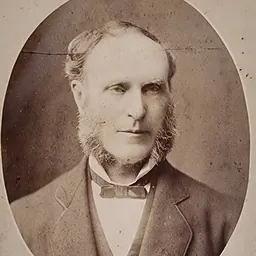
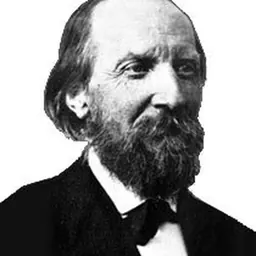
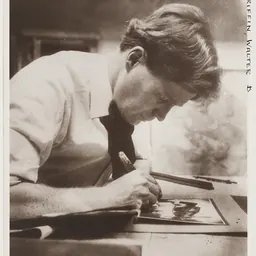
People in John Smith Murdoch's life
Named in this biography and alive at the same time




Related people
Same field, nearest in time

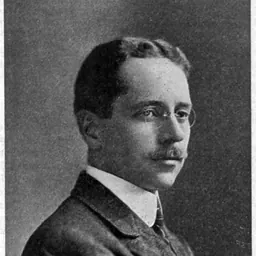


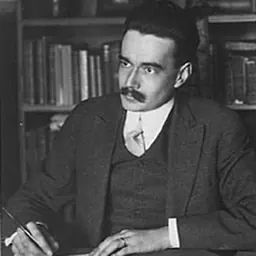
Contemporaries
People whose lives overlapped John Smith Murdoch's

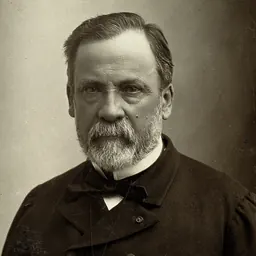



Frequently asked questions
Who was John Smith Murdoch?
Australian architect (1862-1945)
When was John Smith Murdoch born?
John Smith Murdoch was born on 29 September 1862 in Forres, Scotland.
When did John Smith Murdoch die?
John Smith Murdoch died on 21 May 1945 in Brighton.
What was John Smith Murdoch's occupation?
John Smith Murdoch was an architect and civil servant.
What was John Smith Murdoch known for?
John Smith Murdoch was known for Old Parliament House, Canberra.
What nationality was John Smith Murdoch?
John Smith Murdoch was Australian.
Sources & further reading
· Wikipedia: John Smith Murdoch
Cite this page
APA: Biography.guide. (2026). John Smith Murdoch. https://biography.guide/john-smith-murdoch/
MLA: "John Smith Murdoch." Biography.guide, https://biography.guide/john-smith-murdoch/.
Chicago: "John Smith Murdoch." Biography.guide. https://biography.guide/john-smith-murdoch/.
Data last updated: 2026-09-22 · Spot an error? Report a correction.
Page generated 2026-09-27 05:17 UTC