
About John Smith
Lived 1797 – 1866 (aged 69). John Smith was a banker.
John Smith (29 August 1797 – 23 September 1866) was a Scottish banker and philanthropist. He was born in Aberdeen, Scotland, and spent most of his adult life running Beckett's Bank in Leeds, England. In retirement, he lived in Harrogate.
Smith supported many charities, funding churches, schools and other causes in Abetdeen and Leeds. He paid for one of the bells in Kirk of St Nicholas in Aberdeen, and funded most of the building of St Matthias' Church, Burley, as well as Burley's vicarage and school, and other local needs. He was an active member of Leeds Chamber of Commerce and a Justice of the Peace. However he is remembered today for his foundation of "Belvedere", the Harrogate mansion which was built for him by Richard Ellis and designed by Perkin and Backhouse, and also for his large stone monument which stands in Grove Road Cemetery.
Background The youngest of four sons, Smith was born on 29 August 1797, in Aberdeen, Scotland, and baptised on 28 December 1798 at St Nicholas Church, Aberdeen. His parents were Alexander Smith, and Margaret Smith née Howie, both from Banffshire.
On 21 December 1822 at St Leonard's, Shoreditch, Smith married Ann Catherine Jane Metcalfe of Middlesex. The eldest of their children mentioned in the Census is banker John Metcalfe Smith, born in Aberdeen. The youngest were Catherine "Clara" Ann Smith, and Fanny Beckett Smith.
In Burley, Leeds, Smith's residence was Burley House, and in Harrogate, Belvedere in Victoria Avenue, but the Census does not mention Harrogate. By 1851 the family had moved to Burley House on the corner of Burley Road and Cardigan Lane, and they had two sons, two daughters and three servants with them.
On 27 March 1856 at St Mary the Less, Durham, Smith married his second wife Mary Anne Frances Hopper, from Chelmsford. Mary was the daughter of Walter Carles Hopper of Belmont, County Durham, a rich landowner. Mary's brother Rev. Augustus Hopper, honorary canon of Norwich, officiated at the wedding. Subsequently in 1861 the Census in Burley Lane, Leeds, finds Smith with his second wife Mary, and his son William is a student of Caius College, Cambridge. Although Smith is ill by this time, he describes himself as a banker and a West Riding of Leeds magistrate. Following his apprenticeship, he spent several years in "a large mercantile house" in London. In 1825, the Town and County Bank was established in Aberdeen, and he joined it as a teller, and the Banffshire Journal commented, "to this day [as of 1866] its notes are payable to John Smith or Bearer". Smith was "very much esteemed by his fellow officers in the Bank, and by the customers, for his business correctness and quiet, gentlemanly manners". Between 1830 and 1835 he held the "important" position of secretary to the Glasgow Union Bank.
Leeds Smith first arrived in Leeds in 1835, joining the Leeds Banking Company (LBC) as its first manager. He remained in that position for five or six years, until William Beckett of the private bank Beckett & Co. (also known as Leeds Old Bank) became an MP in 1841. Smith was offered a partnership in the bank alongside William and Christopher Beckett, in response to the "admirable manner in which he administered the affairs" of the LBC. "The reputation of [Beckett's] was fully maintained and, if possible, enhanced by the accession of Mr Smith, whose business capabilities were of the highest order", Smith remained at Beckett's as partner until his last illness began around 1860, when he was obliged to withdraw gradually from commercial business. In 1858, the same institution elected Smith to attend the select committee of the House of Commons to "give evidence in favour of the abolition of the clause which limits the Bank Directors in the issue of Bank of England notes to an amount of £14,475,000, except against gold, and that the Bank Directors be invested with a discretionary power to issue one pound notes of the Bank of England [whenever necessary]". In 1856, Smith was a member of the Leeds Honorary Board for the Scottish Widows Fund and Life Assurance Society. By 1861, he had become a magistrate for the West Riding of Yorkshire.
Smith was involved in a number of charitable institutions, including the Leeds West End People's Institute on Kirkstall Road in Burley, Leeds, where in 1856 he gave a speech at its first public meeting. In the same year he donated a harmonium to the new schoolroom associated with St Matthias' Church, Burley,
Of Smith's philanthropy, the Leeds Times said: was for the Kirk of St Nicholas, Aberdeen, and in 1858 the nine bells were inaugurated by nine trained bell-ringers, also paid for by Smith. Smith's name was inscribed on the D flat bell. However, in 1874 a "great fire" destroyed the bell tower and all the bells, of which the tenor bell weighed 32 cwt or .
St Matthias' Church, Burley
This is a listed building, to which Smith donated much of the cost of the build. A later addition to the church, in 1855, was a memorial to Smith's first wife: "a fine monument with crocketed pediment and pinnacles, and a carving in low relief of an angel with a departed spirit executed by Mr. B. Spence of Rome". It was described at greater length by the Leeds Intelligencer:
Residences Burley House
Smith moved into Burley House in Burley, Leeds in 1841. The house was burgled in 1843, and according to the Leeds Mercury: "A number of thieves effected an entrance into Burley House, the residence of John Smith, Esq., by the cellar windows, and stripped the larder of its contents". The house was more secure by the time it was burgled again in 1850. The Leeds Intelligencer tells the story: The miscreants then proceeded to employ the iron bar to burglariously enter and steal from the Misses Dixon at nearby Burley Cottage, leaving the ale bottle there, then to attempt, unsuccessfully, to enter the house of John Cudworth at Burley Villa. As of 2 February the thieves remained at large. The house was sold at the end of 1866, after Smith's death. The sales description by Hepper & Sons of Leeds was as follows:
Belvedere
This former mansion, Belvedere, Victoria Avenue, in Harrogate, was built by Richard Ellis around 1861 for Smith, as his own residence. The house name was originally spelled "Belvidere". It is a Grade II listed building, and was designed by architects Perkin and Backhouse. The ground was broken in 1860, and it was "only gradually brought to a partial completion". In its time, the building has contained St Peter's School and Harrogate School of Art, and it once had stabling on the south side. By 1923 it housed the Harrogate YMCA, and on 1 September of that year the Bishop of Ripon opened a Memorial Hall Gymnasium there. That room held a war memorial, which was later painted over, and then lost. As of 2023 the building had been divided into offices.
The two remaining original frontages of the house, facing The Stray and Victoria Avenue, are faced with Birk Crag stone. It has a tower, a flag tower which originally functioned as an observatory, and bay and oriel windows. The porte-cochère has carvings in cleansed Harehills stone. Although the interior is now converted into offices, it was once grand inside. The Yorkshire Post and Leeds Intelligencer described it thus in 1868, when Smith's family sold it:
Death
During the last two years of his life, Smith suffered "a repetition of severe attacks" of illness, and spent much time at home in Belvedere. His health gave "great anxiety" to his family and friends. He had a "strong constitution" and would occasionally rally,
Smith's funeral took place at Harrogate on 28 September 1866, when a special train was run from Leeds railway station to Harrogate, for the large number of mourners expected.
Smith's will was proved on 28 November 1966. He left effects under £140,000 .
Don’t just read it —
keep it.
Full-length biographies made to live with: read them, listen on the way to work, watch them tonight.
- E-book
- Audio
- Video
Instant download · yours to keep · every purchase keeps this site free
Important facts
People in John Smith's life
Named in this biography and alive at the same time

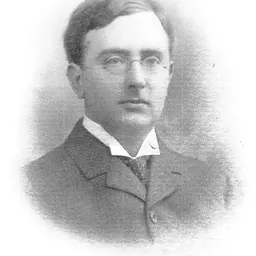

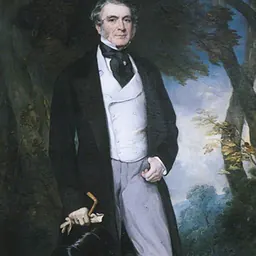
Related people
Same field, nearest in time

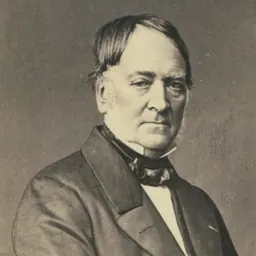
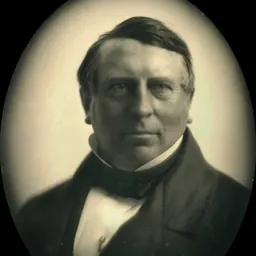
Contemporaries
People whose lives overlapped John Smith's





Frequently asked questions
Who was John Smith?
English banker (1792-1866)
When was John Smith born?
John Smith was born on 29 August 1797 in Aberdeen.
When did John Smith die?
John Smith died on 23 September 1866 in Harrogate.
What was John Smith's occupation?
John Smith was a banker.
Sources & further reading
· DBpedia: John Smith (banker)
Cite this page
APA: Biography.guide. (2026). John Smith. https://biography.guide/john-smith-banker/
MLA: "John Smith." Biography.guide, https://biography.guide/john-smith-banker/.
Chicago: "John Smith." Biography.guide. https://biography.guide/john-smith-banker/.
Data last updated: 2026-09-20 · Spot an error? Report a correction.
Page generated 2026-09-27 05:17 UTC