
About John Scott
Lived 1841 – 1904 (aged 62). John Scott was a British cricketer, judge and barrister.
Sir John Scott (4 June 1841 – 1 March 1904) was an English judge who became Deputy Judge Advocate-General and later Judicial Advisor to the Khedive in his adopted home, Egypt. He was also known as a cricketer in his youth, active from 1861 to 1863 when he played for Oxford University. Scott was renowned for wit, humour and humanity. His position in the annals of imperial legal jurisprudence contributed to the successful legal defence of British Egypt during two world wars. A sure touch, and a deft hand, he articulated a source of justice residing in the everlasting verities of English common law.
Early life
Scott was born in Standishgate Wigan to Edward Scott, a solicitor, and his first wife Annie Glover. After the death of his wife, Edward Scott married Laura Hill, the daughter of the headmaster of Bruce Castle School, Arthur Hill. They had a further two sons and two daughters, including Nora Lilian Alcock.
From 1852 to 1860 Scott was educated at his stepmother's family concern, the Bruce Castle School in Tottenham. The school founded by Laura's grandfather Thomas Wright Hill instructed their students in science and the arts in such a manner to give a student the ability to continue self-education throughout life. His sons, who all taught there at some point, went on to reform some aspect of Victorian life, from prisons (Matthew and Fredric), the postal service (Rowland, devisor of the penny post and penny black stamp) to envelopes (Edwin, invented a machine to fold envelopes). Her father Arthur was headmaster during Scott's time at Bruce Castle and her brother George Birkbeck Hill became his lifelong friend.
Matriculating at Pembroke College, Oxford, Scott graduated with a Bachelor of Arts degree in 1864 and became a Master of Arts in 1869. It was during this time his talent as a cricketer brought him recognition. He appeared in four first-class matches as a left-handed fast bowler.
Egypt
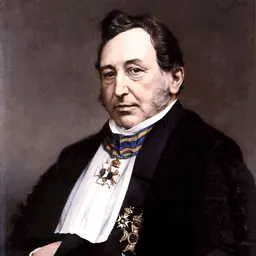
Called to the bar by the Inner Temple on 17 November 1865, he joined the northern circuit. He wrote on legal questions for "The Times", the "Law Quarterly" and other periodicals and his "Bills of Exchange" (1869) became a widely read textbook. A heart condition hampered him through life. Scott went to the French Riviera for a few months in 1871-72 for his health. While there he mastered French, Italian and the French legal system. At the end of 1872 he moved to Alexandria on medical advice to resume his profession. As Egypt's legal system ran on similar lines to the French and Italian jurisprudence the knowledge he had acquired in France proved invaluable. He established a flourishing practice at the British Consular Court. In 1874, on the recommendation of General Sir Edward Staunton, the British Agent and Consular General in Egypt, Scott became the British judge for the new International Courts of Appeal based in Egypt, becoming vice-president in 1881. During his time here Scott regularly contributed to The Times during the Alexandria riots of June 1882; he remained at the court house to assist the protection of the records, ensuring criminals were not let off scot-free from the contempt of destroyed evidence. In the following October the Khedive, Ismail Pasha, conferred the Order of the Osmanie (worn in the painting above) only awarded to civil servants and military leaders for outstanding services to the state. Scott took an interest in the conditions of the agricultural farmers and labourers known as the fellaheen, using his considerable influence to suppress slavery and mistreatment.
India
The end of 1882 Scott was appointed puisne judge of the high court of Bombay. Again he quickly mastered the customs and usages of Indian law whilst simultaneously continuing to write for local and London press, frequently taking note of Egyptian affairs. The diary of his wife published as "An Indian Journal" edited by their grandson, John Radford, covers a varied and interesting life in India, from trials to the elephants at Kandalla.
One trial she mentioned was about a pair of brothers, in her entry for 30 March 1884. "In this week’s Spectator there is a paragraph on a judgement John gave a few days ago. It was a curious case in which some brothers, who had been outcast, agreed to pay a large sum of money in order to be readmitted into their caste and be allowed to marry girls of the caste. The man who managed the whole thing brought an action for a part of the money that he said had not been paid. Certain sums were to be paid to the fathers of the brides through this man, and John ruled that he could not recover such money, as it was in the nature of a purchase of a wife, or wife brokerage, which is totally against English law; and John summed up by saying that although in the low castes the custom of paying for a wife did exist, there was not anywhere, even in Hindu law, any authority for the proceeding, and that it would be wrong "to give marriage brokers a legal status, such as would enable them to enforce their contracts by law." "I think it is immoral and against public policy," he said, "even in the present state of matrimonial relations in India. The tendency of such a decision would be to degrade still further the position of women, and to perpetuate the inequality of their relations with the other sex. In my opinion the contract is void under Section 23 of the Contract Act." The Indian Spectator approves of the decision, and thinks that it will do much good when the marriage brokers, or dalals, find that they have no legal claim for their money."
Return to Egypt
His reputation in Egypt had not diminished by his eight year absence. In 1874 Scott had been nominated to fill the position of English Commissioner of the Public Debt, but the Khedive did not want to deprive the court of appeal of his services. Major Baring, later Lord Cromer, who took the position, requested a loan of Scott’s services from the Indian Government in order that he might examine the whole system of Egyptian jurisprudence and make proposals for its amendment. Lord Cromer had further plans for Scott. He induced the Khedive to not only accept his recommendations but to also appoint Scott as his judicial adviser. The Egyptian Premier, Riaz Pasha, took exception to his appointment creating a tremendous hullabaloo, instructing the French Consular General against this intolerable extension of British power. Scott’s proposals and reputation spoke for themselves and he took the position in 1891, Pasha resigned in the May of that year on the grounds of ill health. It was later acknowledged that Scott’s appointment "has resulted in one of the greatest strides yet made by Egypt in the direction of ultimate self- government". At that time foreigners still enjoyed extraterritorial rights and were only amenable to their own consulate and laws in criminal matters. This privilege had been granted in medieval times to induce foreigners to settle in the Ottoman dominions. His chief aim was to ensure that eventually they could say "We can now give you justice in our own courts; we ask that all who dwell in our country shall be amenable to the ordinary municipal tribunals and law." During his year on loan he visited tribunals, assisting at the hearings, talking to the judges, examining their records and generally studying the actual system in its working all over the country from Assouan to Alexandria. By decreasing the number of judges per trial, increasing the number of courts in Upper Egypt, improving the law school, increasing the number of qualified Egyptian lawyers, reducing the cost of court fees and creating law reports to allow peer review of well-considered judgements and carelessness. He wanted reform not revolution. The people of Wigan were ahead of the Government by awarding him the Freedom of the Borough in 1893. As always the Wigan Observer gave their distinguished townsman several inches in their very small typeface, even though Old Wiganers would probably be pretty well acquainted with the career of, as he was known by the people of Upper Egypt, "Scott the Just". The objects are currently (February 2023) on display at the Museum of Wigan Life.
The collection spans 4000 years of Egyptian history and contains one of possibly only five gold coffin masks of its type in the world. The coffin mask has been dated to the iconic 18th dynasty (1570-1293BC) and was most likely owned by a member of the royal family. An item of particular interest from a language perspective is a fragment of approximately 1m in length from the lid of a 25th Dynasty coffin. It has two scenes painted between the hieroglyphs. One shows the weighing of the heart, where the deceased it judged to be worthy of the afterlife. To the ancient Egyptians Ma’at was the concept of truth, law and justice which everyone was judged by after death. It is fitting that Scott had this depiction in his collection. The second scene is an unusual one. At first glance it may too seem typical but on closer inspection the viewer will notice a reed hovering before each figure, seemingly out of context. But for those initiates of ancient Egyptian hieroglyphs this misplaced plant actually gives a voice to the grieving family. In ancient Egyptian language the reed followed by a figure with arm raised spells O! (A lament). The artist's remarkable combination of letters and images gives these mourners a voice forever, for the Egyptian belief that the spoken word endures for all eternity means that this lament will echo for all time.
Pendelbury Scott also has another odd connection to Egyptology. The house that he was born in was later bought by the grandfather of archaeologist John Pendlebury when he extended his department store.
Don’t just read it —
keep it.
Full-length biographies made to live with: read them, listen on the way to work, watch them tonight.
- E-book
- Audio
- Video
Instant download · yours to keep · every purchase keeps this site free
Important facts
People in John Scott's life
Named in this biography and alive at the same time



Related people
Same field, nearest in time


Contemporaries
People whose lives overlapped John Scott's
Frequently asked questions
Who was John Scott?
English judge (1841-1904)
When was John Scott born?
John Scott was born on 4 June 1841 in Wigan.
When did John Scott die?
John Scott died on 1 March 1904 in Surrey.
What was John Scott's occupation?
John Scott was a cricketer, judge and barrister.
What nationality was John Scott?
John Scott was British.
Sources & further reading
· DBpedia: John Scott (English judge)
Cite this page
APA: Biography.guide. (2026). John Scott. https://biography.guide/john-scott-cricketer-1841/
MLA: "John Scott." Biography.guide, https://biography.guide/john-scott-cricketer-1841/.
Chicago: "John Scott." Biography.guide. https://biography.guide/john-scott-cricketer-1841/.
Data last updated: 2026-09-26 · Spot an error? Report a correction.
Page generated 2026-09-27 05:15 UTC