
John Schuyler Crosby
American military officer and 5th Governor of Montana Territory
About John Schuyler Crosby
Lived 1839 – 1914 (aged 74). John Schuyler Crosby was an American politician.
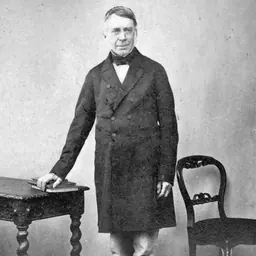
John Schuyler Crosby, usually referred to as J. Schuyler Crosby (September 19, 1839 – August 8, 1914) was an American military officer and government official. He was most notable for his service in the Union Army during the American Civil War. After leaving the Army, he served as United States Consul in Florence, Italy and as the fifth Governor of the Montana Territory.
The descendant of several prominent families in New York, Crosby attended the University of the City of New York (now New York University), but left before graduating so he could take an extended world tour. Having served in New York's militia before the Civil War, he was commissioned as a second lieutenant in the Union Army's 1st Artillery Regiment once hostilities commenced. He was later promoted to first lieutenant and brevet captain, and served as assistant adjutant general under General Banks and assistant inspector general under General Philip Sheridan. He remained in the Army after the war, receiving brevets as major and lieutenant colonel for his role in defending the U.S. border during the French occupation of Mexico and participation in Custer's campaigns during the Indian Wars.
After leaving the Army in 1871, Crosby worked as an engineer, designing and supervising the construction of lighthouses, breakwaters, and other marine projects. He served as U.S. Consul in Florence, Italy from 1876 to 1881, Governor of the Montana Territory from 1883 to 1884, U.S. First Assistant Postmaster General from 1886 to 1889, and as New York City school commissioner from 1889 to 1891.
Crosby died in Newport, Rhode Island, on August 8, 1914, and was buried at Albany Rural Cemetery.
Early life Crosby was born to Clarkson Floyd Crosby (1817–1858) and Angelica Schuyler (1820–1896) in Albany, New York, on September 19, 1839. He was a lineal descendant of Pieter Schuyler and the great-grandson of William Floyd, a signer of the United States Declaration of Independence.
Career Civil War At the beginning to the American Civil War he joined the Union Army and, having previous experience with the New York State Militia, was commissioned a second lieutenant in the First Artillery. His initial service was with the Army of the Potomac and he earned promotion to first lieutenant in August 1861. In 1862, Crosby was transferred to the Department of the Gulf and following the battles of Fort Bisland, Irish Bend and Vermilion Bayou was brevetted a captain for gallantry. The U.S. government later presented Crosby with a medal recognizing his heroic efforts to save lives during the boat's sinking.
Consul in Italy Crosby was appointed Consul for the United States delegation in Florence, Italy by President Ulysses S. Grant in 1876. While at this posting, he assisted the local government in the capture and prosecution of a group of forgers.
Upon his arrival, Crosby indicated his commitment to the territory by making over $20,000 of investments within Montana. Despite this level of dedication, the Republican governor still managed to antagonize the territory's Democratic majority through liberal use of his veto power. The most prominent example of his veto use was his blocking of a bill authorizing the establishment of a cattle commission and cattle inspection system. Despite the veto, Crosby did take steps to halt cattle infected with Texas fever from being imported into the territory. Other activities pursued by the governor were a strong anti-crime policy, opposition to polygamy, and an effort to reduce lands held by Native Americans. youngest daughter of General Stephen Van Rensselaer IV (1789–1868), She was the granddaughter of Stephen Van Rensselaer III and Margarita "Peggy" Schuyler, the daughter of Gen. and U.S. Senator Philip Schuyler. The marriage produced two children: who married Henrietta Marion Grew (1872–1957), sister-in-law of J. P. Morgan Jr. (1867–1943) Angelica Schuyler Crosby (1872–1907), who married John Brooks Henderson Jr. (1870–1923), son of U.S. Senator John B. Henderson (1826–1913) and Mary Foote (1841–1931)
During his final years, Crosby suffered from declining health. On January 20, 1913, while he was in his sick bed, one of his servants suddenly became crazed and he was forced to fight off and subdue the knife wielding valet. Crosby died in Newport, Rhode Island on August 8, 1914.
Descendants His grandson was Henry Sturgis Crosby (1898–1929), a bon vivant, poet, and publisher who for some epitomized the Lost Generation in American literature, who was married to Mary Phelps Jacob (1891–1970).
Don’t just read it —
keep it.
Full-length biographies made to live with: read them, listen on the way to work, watch them tonight.
- E-book
- Audio
- Video
Instant download · yours to keep · every purchase keeps this site free
Important facts
Family & relationships
People in John Schuyler Crosby's life
Named in this biography and alive at the same time




Related people
Same field, nearest in time





Contemporaries
People whose lives overlapped John Schuyler Crosby's


Frequently asked questions
Who was John Schuyler Crosby?
American military officer and 5th Governor of Montana Territory (1839-1914)
When was John Schuyler Crosby born?
John Schuyler Crosby was born on 19 September 1839 in Albany.
When did John Schuyler Crosby die?
John Schuyler Crosby died on 8 August 1914 in Newport.
What was John Schuyler Crosby's occupation?
John Schuyler Crosby was a politician.
What nationality was John Schuyler Crosby?
John Schuyler Crosby was American.
Sources & further reading
· Wikipedia: John Schuyler Crosby
· DBpedia: John Schuyler Crosby
Cite this page
APA: Biography.guide. (2026). John Schuyler Crosby. https://biography.guide/john-schuyler-crosby/
MLA: "John Schuyler Crosby." Biography.guide, https://biography.guide/john-schuyler-crosby/.
Chicago: "John Schuyler Crosby." Biography.guide. https://biography.guide/john-schuyler-crosby/.
Data last updated: 2026-09-20 · Spot an error? Report a correction.
Page generated 2026-09-27 05:31 UTC