
About John Rudge
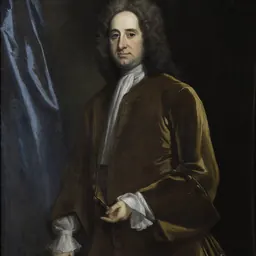
Lived 1669 – 1740 (aged 70). John Rudge was an English and British banker and politician.
John Rudge (15 August 1669 – 22 March 1740), of Mark Lane, London and Evesham Abbey, Worcestershire, was a London merchant and financier, and Whig politician who sat in the House of Commons almost continuously between 1698 and 1734. He was a Governor of the Bank of England from 1713 to 1715.
Early life and family John RudgeRudge was the eldest surviving son of Edward Rudge, merchant of London, and his wife Susanna Dethick, daughter of Sir John Dethick of London. His father had purchased the manor of Evesham in 1664, and represented the borough in Parliament. Rudge was chosen Mayor of Evesham for 1691. On his father's death in 1696, he succeeded to the estate of Evesham Abbey. He married Susanna Letten, the daughter and heiress of John Letten of London on 10 January 1699.
Business career Rudge quickly took control of his father's trading interests after his father's death and became a leading figure in the City of London. He was active in the Mediterranean trade, and lent money to the consul at Alicante. In 1696 he was appointed an assistant in the Royal African Company and to the committee of the East India Company. In June 1698 he provided £2,000 towards the incorporation of the New East India Company. In 1700 he signed a petition of merchants trading to Portugal. He was a director of the Bank of England from 1699 to 1711. By 1702 he had sold his stock in the Old East India Company, preferring to invest in the New East India Company, of which he was a director from 1704 to 1708. He subsequently resumed his directorship from 1715 to his death. He was also Deputy-Governor of the South Sea Company from 1721 to 1730.
Political career Rudge was elected Member of Parliament for Evesham at a by-election 11 March 1698. He was returned again in a contest at the general election later in 1698. After being returned unopposed in January 1701 he was defeated in the ballot for commissioners of accounts, receiving only 20 votes. He lost his seat at the election of November 1701, when his interest was weakened by a money dispute with his relatives in the town, but he regained it at the 1702 English general election. He was not active on important committees, possibly because of his responsibility as a director of the Bank, and later the New East India Company. He voted on 13 February 1703 for agreeing the Lords’ amendments to the bill extending the time for taking the abjuration oath. On 23 February 1705 he acted as a teller for a clause to be added to the bill prohibiting all trade and commerce with France.
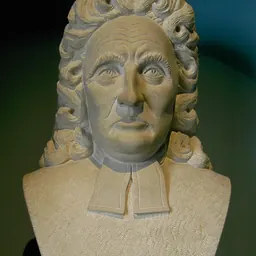
Death and legacy Rudge died on 22 March 1740. He had a son Edward, and two daughters. He was buried in Wheatfield, Oxfordshire where his son was living. His tomb was sculpted by Peter Scheemakers.
Don’t just read it —
keep it.
Full-length biographies made to live with: read them, listen on the way to work, watch them tonight.
- E-book
- Audio
- Video
Instant download · yours to keep · every purchase keeps this site free
Important facts
People in John Rudge's life
Named in this biography and alive at the same time


Related people
Same field, nearest in time



Contemporaries
People whose lives overlapped John Rudge's





Frequently asked questions
Who was John Rudge?
English merchant, banker and politician; (1669-1740)
When was John Rudge born?
John Rudge was born on 15 October 1669.
When did John Rudge die?
John Rudge died on 22 March 1740.
What was John Rudge's occupation?
John Rudge was a banker and politician.
What nationality was John Rudge?
John Rudge was English and British.
Sources & further reading
· DBpedia: John Rudge (banker)
Cite this page
APA: Biography.guide. (2026). John Rudge. https://biography.guide/john-rudge-banker/
MLA: "John Rudge." Biography.guide, https://biography.guide/john-rudge-banker/.
Chicago: "John Rudge." Biography.guide. https://biography.guide/john-rudge-banker/.
Data last updated: 2026-09-27 · Spot an error? Report a correction.
Page generated 2026-09-27 05:17 UTC