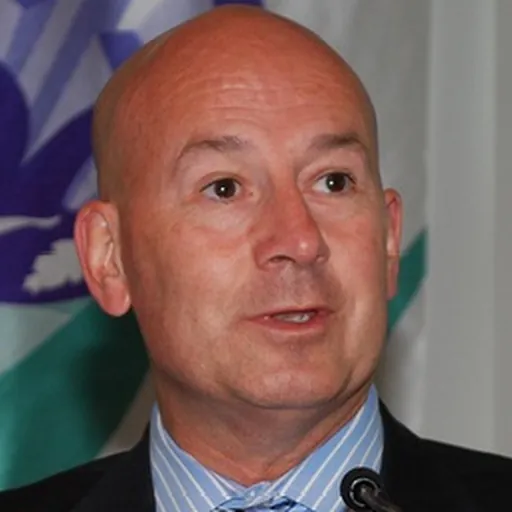
About John Robertson
Born 1962. John Robertson is an Australian politician, trade unionist and electrician.
John Cameron "Robbo" Robertson (born 16 November 1962) is a former Australian politician who served as the leader of the Labor Party in New South Wales from 2011 to 2014. Before entering politics he was prominent in the union movement.
Robertson was born in Sydney, and worked as an electrician before becoming an organiser for the Electrical Trades Union. He became an industrial officer with the Labor Council of New South Wales in 1991, and was elected assistant secretary in 1998 and secretary in 2001. He also served as a vice-president of the Australian Council of Trade Unions. Robertson entered the New South Wales Legislative Council in 2008, and was appointed to cabinet in 2009. He switched to the Legislative Assembly at the 2011 state election, where the Labor Party suffered a heavy defeat. Robertson was elected party leader following Kristina Keneally's resignation, becoming leader of the opposition. He resigned the leadership in the aftermath of the 2014 Sydney hostage crisis, after the disclosure of a minor link with its perpetrator. Robertson left politics in August 2017 to work in the non-profit sector. On 9 September 2017, it was announced that Robertson would chair the board for public insurer, icare.
Early life and personal background Robertson was born at Ryde Hospital in New South Wales to parents Don and Rowena Robertson, the elder of their two boys. Don Robertson conscripted his son into handing out how to vote cards in the 1972 Australian elections.
Robertson was educated at Denistone East Primary School and Ryde High School. His first job was working for Woolworths packing shopping bags at the age of 15. He left school at 16 and began working as an apprentice electrical fitter. He worked as an electrician from 1979 until 1987 and worked on the New South Wales Parliament building. In 2000, he ran the state wage case for the Labor Council before the Industrial Relations Commission of New South Wales. The case was historic in that it was the first one heard in Wollongong, New South Wales rather than Sydney. The Commission granted workers a $15 per week pay rise.
In 2001, Robertson was elected unopposed as the secretary of Unions NSW (formerly the Labor Council of New South Wales), replacing Michael Costa. One of his first acts as secretary was to organise a blockade of the New South Parliament to protest the introduction of workers compensation law reforms. Robertson denied the deal was at less than value, as it was an unconditional sale compared to other bids which were conditional on building approval.
Robertson has been on the Administrative Committee of the Australian Labor Party since 2005 and became the vice-president of the Australian Council of Trade Unions (ACTU) in 2006. As member of the group Labor for Refugees, Robertson fought in 2002 to overturn the Labor Party's policy on asylum seekers, which mimicked the policy of the Howard government at the time. Robertson was a pivotal player in the campaign to replace Federal Opposition Leader Kim Beazley with Kevin Rudd in 2006. He was subsequently appointed to the New South Wales Legislative Council (the state's upper house) to fill that casual vacancy. Costa was Robertson's predecessor at Unions NSW, and ironically, his role in blocking the privatisation of the NSW power industry was one of the causes that led to Costa's resignation.
Shortly after Robertson's swearing in, former Australian prime minister Paul Keating sent a scathing letter to Robertson stating that Keating was "ashamed to share membership of the same party" as him. Keating's view of Robertson was that his opposition to the privatisation bid would cost Labor dearly at the next State election.
Robertson won the seat of Blacktown in the New South Wales Legislative Assembly at the March 2011 election, despite the Labor government suffering the worst defeat of a sitting government in New South Wales since Federation. Robertson himself barely squeaked into office in what has historically been a comfortably safe Labor seat; he suffered a swing of 18.7 percent, cutting the Labor majority down to a very marginal three percent. After Kristina Keneally announced she was standing down as state Labor leader and returning to the backbench, Robertson was heavily tipped to succeed her. On 31 March, Robertson was elected unopposed as leader of the Labor Party and Leader of the Opposition. His immediate task was rebuilding a party that had seen its caucus more than halved in the election held a week earlier—a result that Robertson said the party deserved, calling it "a devastating result, a message that was sent to us."
In the aftermath of the 2014 Sydney hostage crisis, it was revealed that Robertson had previously sent a letter on behalf of the gunman, Man Haron Monis, a constituent in his Blacktown electorate, to the Department of Family and Community Services. The letter was, according to Robertson, routine procedure on behalf of a constituent and written in support of Monis' request for a supervised visit with his children on Father's Day in 2011 despite an apprehended violence order against him. The Department declined Monis' request. Pressure mounted on Robertson to resign as Leader of the Labor Party, with the 2015 state election three months away. ABC News reported that several members of the Labor caucus were gathering support to have Robertson voted out if he didn't resign. Robertson stood aside on 23 December 2014, saying that "the next election is so important that Labor must be united behind the leader. Robertson was initially replaced by Linda Burney on an interim basis, and then by Luke Foley. He was the first NSW Labor leader since Pat Hills not to go on to become premier, and only the third in almost a century not to take the party into an election.
On 3 August 2017, Robertson announced he would be resigning from parliament, which became effective on 25 August, to take up a position as executive general manager at Foodbank, a not-for-profit organisation which distributes excess food from retailers to the needy.
Don’t just read it —
keep it.
Full-length biographies made to live with: read them, listen on the way to work, watch them tonight.
- E-book
- Audio
- Video
Instant download · yours to keep · every purchase keeps this site free
Important facts
People in John Robertson's life
Named in this biography and alive at the same time

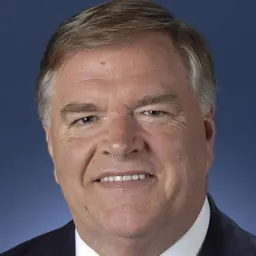
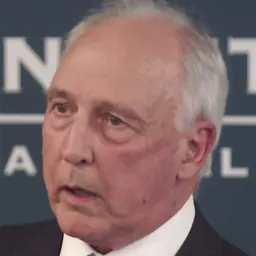

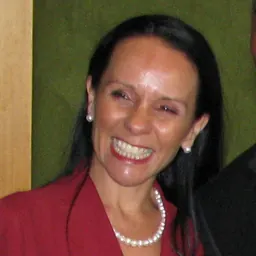


Related people
Same field, nearest in time


Contemporaries
People whose lives overlapped John Robertson's




Frequently asked questions
Who is John Robertson?
Australian politician, born 1962
When was John Robertson born?
John Robertson was born on 16 November 1962 in Ryde.
What is John Robertson's occupation?
John Robertson is a politician, trade unionist and electrician.
What nationality is John Robertson?
John Robertson is Australian.
Sources & further reading
· DBpedia: John Robertson (politician, born 1962)
Cite this page
APA: Biography.guide. (2026). John Robertson. https://biography.guide/john-robertson-politician-1962/
MLA: "John Robertson." Biography.guide, https://biography.guide/john-robertson-politician-1962/.
Chicago: "John Robertson." Biography.guide. https://biography.guide/john-robertson-politician-1962/.
Data last updated: 2026-09-20 · Spot an error? Report a correction.
Portrait: Wikimedia Commons · author & licence
Page generated 2026-09-27 04:58 UTC