
About John Reinhard Weguelin
Lived 1849 – 1927 (aged 77). John Reinhard Weguelin was a British painter, illustrator and writer.
John Reinhard Weguelin (23 June 1849 – 28 April 1927) was an English painter and illustrator, active from 1877 to after 1910. He specialized in figurative paintings with lush backgrounds, typically landscapes or garden scenes. Weguelin emulated the neo-classical style of Edward Poynter and Lawrence Alma-Tadema, painting subjects inspired by classical antiquity and mythology. He depicted scenes of everyday life in ancient Greece and Rome, as well as mythological subjects, with an emphasis on pastoral scenes. Weguelin also drew on folklore for inspiration, and painted numerous images of nymphs and mermaids.
Although his earliest work was in watercolour, all of Weguelin's important works from 1878 to 1892 were oil paintings. In order to supplement his income, he drew and painted illustrations for several books, most famously Macaulay's Lays of Ancient Rome. His subjects were similar to those of his contemporary, John William Waterhouse, who also specialized in painting the female figure against dramatic backgrounds, but unlike Waterhouse, many of Weguelin's subjects are nude or scantily-clad. Weguelin was particularly noted for his realistic use of light. Beginning in 1893, Weguelin devoted himself almost entirely to watercolour, and became a member of the Royal Watercolour Society. Weguelin's work was exhibited at the Royal Academy and a number of other important London galleries, and was highly regarded during his career. He was forgotten following the first World War, as his style of painting fell out of fashion, and he is best remembered as the painter of Lesbia, depicting the fabled muse of the Roman poet Catullus.
Life
John Reinhard Weguelin was born 23 June 1849, in the village of South Stoke, near Arundel. His father, William Andrew Weguelin, was Rector of South Stoke, When he was still a child, Weguelin's family departed Sussex for Italy, where they lived for several years. Weguelin spent much time at Rome, where he was inspired by art and history. Other than a few drawing lessons in Italy, Weguelin had no formal training in art during his childhood.
The Library described Weguelin as one of the few decorative artists who seldom relied on pen, and habitually expressed themselves in "wash" rather than by line: "Mr. Weguelin has illustrated Anacreon in a manner to earn the appreciation of Greek scholars, and his illustrations to Hans Andersen have had a wider and not less appreciative reception. His drawings have movement and atmosphere."
In 1893, Weguelin took up watercolour for the first time since leaving the Slade. He exhibited The Swing at the Royal Academy, and after a few months he was elected an associate of the Royal Society of Painters in Water Colours. He became a full member in 1897.
Artistic style
Weguelin's early works could be considered classicist, reconstructing images of daily life from Greek and Roman times. However, his work reflected a free adaptation of the pagan spirit of classical art, instead of adhering to a strictly historical interpretation. Writing in 1904, art critic Alfred Lys Baldry described Weguelin as "a painter of classic abstractions."
In an 1888 article on exhibitions at the New Gallery, The Art Journal compared the work of three contemporaries, Alma-Tadema, whose work had strongly influenced Weguelin, Charles Napier Kennedy, and Weguelin himself, to that of George Frederic Watts. All four artists treated similar subjects. Mr. Alma-Tadema's Venus and Mars, Mr. C.N. Kennedy's Fair-haired Slave who made himself a King, and Mr. J.R. Weguelin's Bacchus and the Choir of Nymphs are figure subjects of more realistic intention than the preceding
Weguelin's later work was described by Baldry in The Practice of Water-Colour Painting:It is especially as a painter of the nude figure in water-colour that Mr. J.R. Weguelin has made himself famous. He has taken up a class of subject that comparatively few artists attempt, and he has handled it in a long series of very attractive paintings with a charm and distinction that can be sincerely admired. He has a very pleasing fancy and a delightful sense of style; and his graceful draughtsmanship, his exquisite feeling for delicate harmonies of colour, and his brilliantly direct and expressive brushwork make his productions more than ordinarily important as examples of the judicious application of the water-colour medium. Baldry goes on to discuss Weguelin's principles and techniques.
The Eleventh Edition of the Encyclopædia Britannica mentions Weguelin as, "one of the most facile and expressive painters of fantastic figure subjects."
British Water-Colour Art lists the colours used by members and associates of the Royal Society of Painters in Water Colours. Weguelin's palette included "vermilion, light red, rose madder, purple madder, brown madder, yellow ochre, cadmium 1 and 2, oxide of chromium, oxide of chromium (transparent), black and Chinese white, Vandyke brown, raw umber, burnt umber."
The daughters of the Greek king Danaüs pour jugs of water into a bottomless jar that they are condemned to fill, in The Labor of the Danaïdes (1878).
Weguelin's most famous painting is probably Lesbia (1878), It was reviewed in The Dublin University Magazine: J.R. Weguelin's "Tired Dancer" is very clear and rich. The girl has flung herself upon a marble seat beneath a marble pillar; her loose dress of dark red gause forms a brilliant patch against the marble, and yet it does not hide the limbs beneath. Her dark hair is crowned with clustering yellow flowers, the face is utterly asleep, and the right arm flung out straight upon the marble slab behind her well conveys the idea of complete weariness. The execution of the marble is a kind of reminiscence of Alma Tadema's work.
A Portrait (1880) was exhibited at the Royal Academy.
Weguelin's illustrations for Macaulay's Lays of Ancient Rome appeared in the 1881 edition, the cover of which employed Weguelin's depiction of Horatius defending the Sublician bridge against the army of Lars Porsena.
In Bacchus Triumphant (1882, oil on canvas, 18 x 12 1/4"), the god is depicted as a child, being carried on a litter through a jubilant crowd. He is seated on a wild boar, and in his hand he clutches a thyrsus, which he raises triumphantly. In the background is an ancient tree trunk, and the pedestal of some monumental statuary. Poplars and the sea are visible in the distance.
The Feast of Flora (1882) was exhibited at the Royal Academy:
Habet! (1882) features a bather stooping down to assist a tortoise, whom she has inadvertently knocked over.
In The Maidens' Race, (1883) six virgins wearing chitons await the start of a footrace before an arena filled with cheering spectators. A seventh is preparing to give the signal for the race to begin. In a catalogue of works exhibited at the Royal Academy, a note reads, "During the games celebrated in honour of Here, it was the custom of the young girls of Elis to run in the Olympic stadium, which was shortened for them by one-sixth."
The Bath (1884, oil on canvas, 20 x 10") features a nude woman standing before a fountain, from which she has drawn water in an urn. The bather is pouring water from the urn over her left shoulder, while her face is turned away from the viewer.
In The Swing Feast (1885, oil on canvas, 51 x 33"),
The Fair Girl (1886) was also exhibited at the Grosvenor Gallery. Grosvenor Notes describes the subject: "dark hair, standing against a wall."
The Toilet of Faunus, or Adoring the Herm (1887, 20 x 22")
The Gardens of Adonis (1888, oil on canvas, 93 x 135 cm) was exhibited at the New Gallery,
Bacchus and the Choir of Nymphs (1888, oil on canvas, 49 x 108 1/2") was described as "one of the most important compositions in the New Gallery:" Bacchus with red garment lying on a leopard skin holds a thyrsus. The nymphs have pale draperies of pink, yellow and white; one has ivy in her hair, and another on the left some violet flowers; the sea lies blue below them, flecked with purple shadows; the rocks are grey; the picture is light in color throughout, and delicately harmonised. The painting was exhibited with the anonymous translation, perhaps that of the artist, of the first lines of Horace's Bacchum in remotis carmina rupibus vidi docentem (Odes 2.19): "I saw within remotest rocks/ (Believe that read in after time)/Bacchus who taught and nymphs in flocks/Who learnt the lesson of his rhyme."
The Study of Conchology (1888, 20 x 10") was exhibited at the Grosvenor Gallery. It features a young woman, nude, gathering seashells. Grosvenor Notes describes the background: "blue sea, with purple rocks showing through clear water."
The Yellow Sands (1888, oil on canvas, 10 x 20") is described as "a small nude study; back view." It features a woman sitting on the beach on a clear day, when the sea is calm. This painting was exhibited at the New Gallery.
Psyche (1890, oil on canvas, 24 x 20") was exhibited at the New Gallery, whose catalogue described it: "small head of a girl, with opal-tinted butterfly wings." She is holding the box of Pandora.
To Faunus is a drawing depicting a maiden and her companion behind a large rock on a hillside, as Faunus plays upon his flute nearby. The maiden wears a garland in her hair, and carries her drapery as she stands, listening. Her naked companion is rising from the ground. This illustration served as the frontispiece for the July, 1891 edition of Scribner's Magazine.
Old Love Renewed (1891) is an illustration for one of the poems of Horace, Book iii. Ode ix. It was exhibited at the New Gallery. Behind the dark-haired maiden, who stands looking back at her former lover, is the pale-blue sky and the warmer tinted sea, and in full contrast to them a branch of crimson rhododendron which grows out from behind the marble wall. The man who sits in the shadow of a cypress is clad in a pale purple cloak. In the middle distance the many-coloured town is seen in full sunlight. Mr. Weguelin's plates enhance greatly the value of the book. These consist of a charming frontispiece and six other illustrations, all equally graceful in design and execution. The first and most graceful of these is to the second ode, and presents Lesbia and her sparrow. The last illustration is to l. 35 of the 'Pervigilium Veneris.' Mr. Weguelin's designs have the grace and beauty of last century workmanship.
Heard Melodies are Sweet; but Those Unheard are Sweeter was exhibited at the New Gallery in 1892.
The Swing (1893) marked Weguelin's return to watercolour. This painting was exhibited at the Royal Academy.
In 1894, Weguelin illustrated Thomas Stanley's translation of Anacreon. His watercolor paintings were turned into photogravures for the book. Ten paintings from this collection were exhibited at the New Gallery, including a frontispiece, Love's Night Walk, Roses, The Wish, The Invitation, The Picture, Love Imprisoned, The Spring, The Bee, and On a Basin wherein Venus was Engraved.
Rustic Phidylé was also exhibited at the Royal Watercolour Society at its 1894 exhibition. The painting, depicting a young woman before a rustic altar, was pictured and described in The Studio as "draped and decorous, yet impulsive and fresh [...] seen in the gesture of the ancients as they addressed themselves to the celestial gods."
Pelagia, another watercolour displayed at the same exhibition, is described as a "nude figure...large and firm of contour, gleaming against southern waters".
The Piper and the Nymphs (1897) features a piper playing at the foot of a gnarled tree by the banks of a stream, as nymphs listen from their seats on roots on the other side. A young nymph stands on a rock overlooking the stream, rapt in the music. She is nude, and flowers fill her hair. This painting was exhibited at the Royal Academy.
In The Magic of Pan's Flute (1905, watercolour, 20 3/4 x 13 3/4"), the god Pan sits on a tree root, his back to the viewer, playing on a flute. On the opposite side of the twisted and gnarled tree stands a naked nymph, listening attentively. She is wearing flowers in her long, golden hair. Scattered rays of sunlight penetrate the misty forest, vaguely depicted in greens and purples. A Libation (19") Libation to the Nymph (1883) Solutis Gratiæ Zonis (1902, watercolour) Spring Blossoms and Youth (1904, watercolour, 15 1/2 x 20 3/4") Summer Afternoon (1886) Under the Hollow Hung Ocean Green Vanity Fair (1888, oil on canvas, 24 x 19cm) – head and shoulders of young woman wearing a bonnet Wishes
Don’t just read it —
keep it.
Full-length biographies made to live with: read them, listen on the way to work, watch them tonight.
- E-book
- Audio
- Video
Instant download · yours to keep · every purchase keeps this site free
Important facts
People in John Reinhard Weguelin's life
Named in this biography and alive at the same time

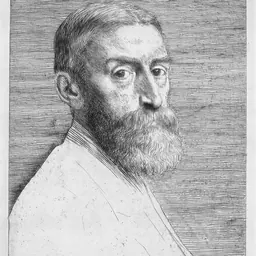
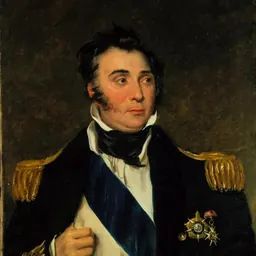

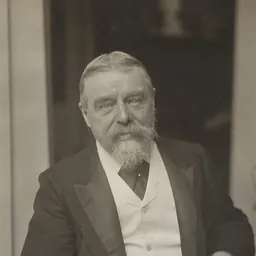



Related people
Same field, nearest in time
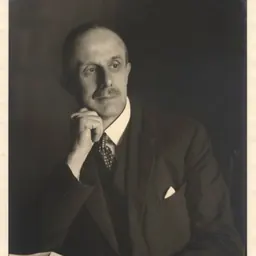

Contemporaries
People whose lives overlapped John Reinhard Weguelin's




Frequently asked questions
Who was John Reinhard Weguelin?
British painter (1849-1927)
When was John Reinhard Weguelin born?
John Reinhard Weguelin was born on 23 June 1849.
When did John Reinhard Weguelin die?
John Reinhard Weguelin died on 28 April 1927 in Hastings.
What was John Reinhard Weguelin's occupation?
John Reinhard Weguelin was a painter, illustrator and writer.
What nationality was John Reinhard Weguelin?
John Reinhard Weguelin was British.
Sources & further reading
· Wikipedia: John Reinhard Weguelin
· DBpedia: John Reinhard Weguelin
Cite this page
APA: Biography.guide. (2026). John Reinhard Weguelin. https://biography.guide/john-reinhard-weguelin/
MLA: "John Reinhard Weguelin." Biography.guide, https://biography.guide/john-reinhard-weguelin/.
Chicago: "John Reinhard Weguelin." Biography.guide. https://biography.guide/john-reinhard-weguelin/.
Data last updated: 2026-09-20 · Spot an error? Report a correction.
Page generated 2026-09-27 05:08 UTC