
John Ramsay McCulloch
Scottish economist, author and editor
About John Ramsay McCulloch
Lived 1789 – 1864 (aged 75). John Ramsay McCulloch was a British economist, historian, statistician, writer and political economist.
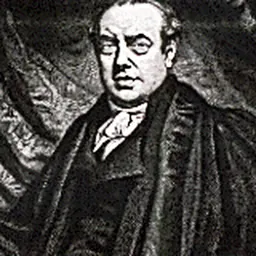
John Ramsay McCulloch (1 March 1789 – 11 November 1864) was a Scottish economist, author and editor, widely regarded as the leader of the Ricardian school of economists after the death of David Ricardo in 1823. He was appointed the first professor of political economy at University College London in 1828. He wrote extensively on economic policy, and was a pioneer in the collection, statistical analysis and publication of economic data.
McCulloch was a co-founder, and one of the first editors, of The Scotsman newspaper, and worked on the Edinburgh Review. He edited the 1828 edition of The Wealth of Nations.
Career McCulloch attended the University of Edinburgh, but did not graduate.
McCulloch collected the early literature of political economy, and wrote on the scope and method of economics and the history of economic thought. After his death his library was purchased by Lord Overstone and eventually presented to the University of Reading. He was a participant in the Political Economy Club, London, founded by James Mill and a circle of friends in 1821 for an ongoing discussion of the fundamental principles of political economy.
McCulloch's works include a textbook, Principles of Political Economy (Edinburgh 1825). He worked on subsequent editions until his death. This book contains a memorable discussion of the origins of profit or interest in the case of a cask of new wine.
"Suppose that a cask of new wine, which cost £50, is put into a cellar, and that, at the end of twelve months, it is worth £55, the question is: Should the £5 of additional value, given to the wine, be considered as a compensation for the time the £50 worth of capital has been locked up, or should it be considered as the value of additional labour actually laid out in the wine?"
This question is still used in discussions of the labour theory of value and related issues. McCulloch used it to illustrate that "time cannot of itself produce effect; it merely affords space for really efficient causes to operate, and it is therefore clear it can have nothing to do with value." Reflecting on discussions in the Political Economy Club, Ricardo had privately expressed his famous opinion about the "non-existence of any measure of absolute value."
McCulloch was an opponent of Robert Malthus, in response to Malthus's Definitions in Political Economy (1827) wherein Malthus criticized several contemporary economists, including Jean-Baptiste Say, James Mill, and McCulloch, for what he considered sloppiness in selection of, attachment of meaning to, and usage of their technical terms. In March 1827 McCulloch made a cutting reply on the front page of his Edinburgh newspaper, The Scotsman, implying that Malthus wanted to dictate terms and theories to other economists. McCulloch clearly felt his ox gored, and his review of Definitions is largely a bitter defence of his own Principles of Political Economy, and his counter-attack "does little credit to his reputation", being largely "personal derogation" of Malthus. The purpose of Malthus's Definitions was terminological clarity, and Malthus discussed appropriate terms, their definitions, and their use by himself and his contemporaries. This motivation of Malthus's work was disregarded by McCulloch, who responded that there was nothing to be gained "by carping at definitions, and quibbling about the meaning to be attached to" words. Given that statement, it is not surprising that McCulloch's review failed to address the rules of chapter 1 and did not discuss the definitions of chapter 10; he also barely mentioned Malthus's critiques of other writers. 2nd edition 1825. The Principles of Political Economy, with a sketch of the rise and progress of the science. 1825. An Essay on the Circumstances which Determine the Rate of Wages and the Condition of the Working Classes, 1826. "On Commercial Revulsions", 1826, Edinburgh Review "Abolition of the Corn Laws", 1826, Edinburgh Review "On Poor Laws", 1828, Edinburgh Review "Rise, Progress, Present State, and Prospects of the British Cotton Manufacture", 1827, Edinburgh Review. "Introduction" to An Inquiry into the Nature and Causes of the Wealth of Nations by Adam Smith, (ed. J.R. McCulloch), 1828. "Jones on the Theory of Rent", Edinburgh Review, 1831. Principles, Practice and History of Commerce, 1831. "Chalmers on Political Economy", 1832, Edinburgh Review. A Dictionary, Practical, Theoretical and Historical of Commerce and Commercial Navigation, 1832. A Descriptive and Statistical Account of the British Empire, exhibiting its extent, physical capacities, population, industry, and civil and religious institutions. 2 volumes, 1837 Statements Illustrative of the Policy and Probable Consequence of the Proposed Repeal of the Existing Corn Law, 1841. The Literature of Political Economy, 1845. The Works of David Ricardo, Esq. with a notice of the life and writings of the author (ed. J.R. McCulloch), 1846. A Treatise on the Succession to Property Vacant by Death, 1848. A Treatise on Metallic and Paper Money and Banks, 1858 Treatises and Essays, 1859. A Treatise on the Principles and Practical Influence of Taxation and the Funding System, 1863.
Don’t just read it —
keep it.
Full-length biographies made to live with: read them, listen on the way to work, watch them tonight.
- E-book
- Audio
- Video
Instant download · yours to keep · every purchase keeps this site free
Important facts
People in John Ramsay McCulloch's life
Named in this biography and alive at the same time


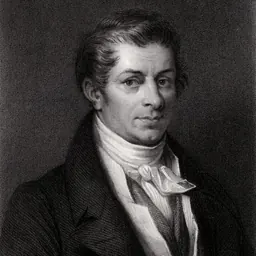
Related people
Same field, nearest in time
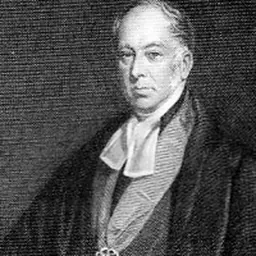


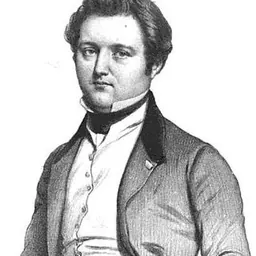
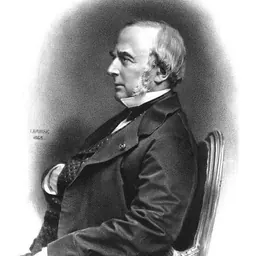
Contemporaries
People whose lives overlapped John Ramsay McCulloch's


Frequently asked questions
Who was John Ramsay McCulloch?
Scottish economist, author and editor
When was John Ramsay McCulloch born?
John Ramsay McCulloch was born on 1 March 1789 in Whithorn.
When did John Ramsay McCulloch die?
John Ramsay McCulloch died on 11 November 1864 in London.
What was John Ramsay McCulloch's occupation?
John Ramsay McCulloch was an economist, historian, statistician, writer and political economist.
What nationality was John Ramsay McCulloch?
John Ramsay McCulloch was British.
Sources & further reading
· Wikipedia: John Ramsay McCulloch
· DBpedia: John Ramsay McCulloch
Cite this page
APA: Biography.guide. (2026). John Ramsay McCulloch. https://biography.guide/john-ramsay-mcculloch/
MLA: "John Ramsay McCulloch." Biography.guide, https://biography.guide/john-ramsay-mcculloch/.
Chicago: "John Ramsay McCulloch." Biography.guide. https://biography.guide/john-ramsay-mcculloch/.
Data last updated: 2026-09-20 · Spot an error? Report a correction.
Page generated 2026-09-27 05:27 UTC